
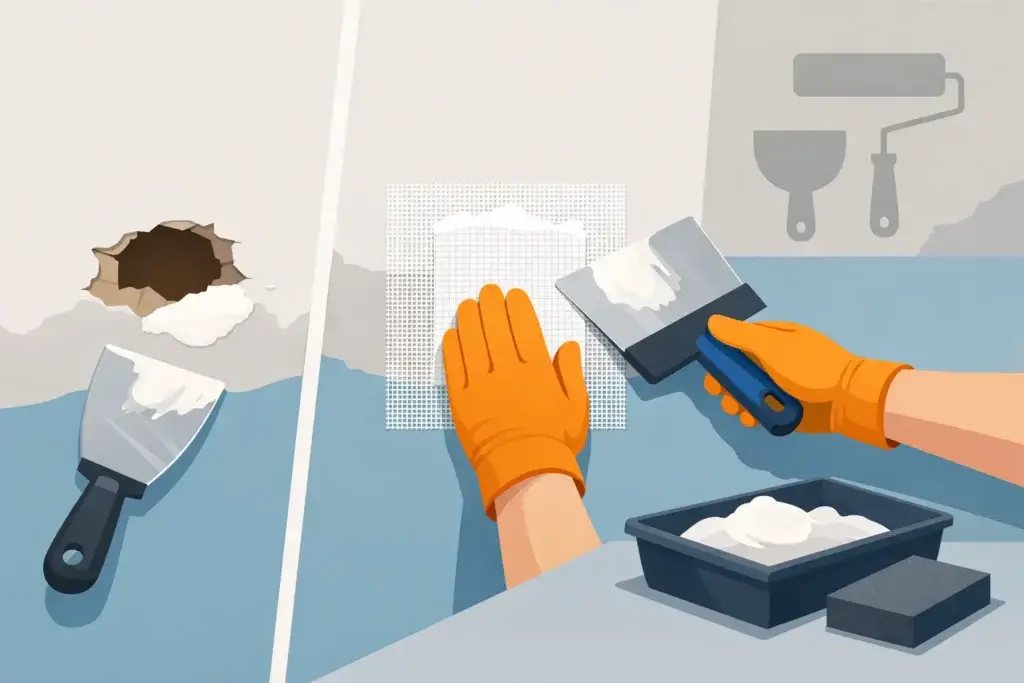
That doorknob hit, moving-day scrape, or old anchor hole can make an otherwise clean wall look worn out fast. If you’re wondering how to patch drywall holes without ending up with a lumpy, obvious repair, the difference usually comes down to using the right method for the size of the damage and taking your time on the finish.
Some holes are quick fixes. Others need backing, a proper patch, and careful sanding to disappear. The good news is that most common drywall damage can be repaired successfully with basic tools, a little patience, and a clear plan.
How to patch drywall holes based on size
The first step is knowing what kind of repair you’re dealing with. A tiny nail hole is not repaired the same way as a fist-sized opening or a broken section near a corner. If you skip that part and use one method for everything, the patch may crack, sag, or show through paint.
Small holes from nails, screws, or picture hangers usually only need lightweight spackle or joint compound. Medium holes, such as damage from a door handle or removed hardware, often need a mesh or metal patch. Larger holes usually require cutting out the damaged area and installing a new piece of drywall with support behind it.
Texture matters too. In many Oklahoma homes, matching the wall finish is the part that makes or breaks the final look. A patch can be structurally sound and still stand out if the texture is off.
What you’ll need before you start
For most repairs, you’ll want a putty knife, joint compound or spackle, sandpaper, a utility knife, and a drywall patch or scrap piece of drywall if the hole is larger. A sanding sponge, primer, and matching paint also help you get from repaired to finished.
If the hole is bigger than a few inches, you may also need a drywall saw, backing strips, drywall screws, and a drill. For textured walls, you may need spray texture or a hand-applied texture method depending on what is already on the wall.
Clean the area before you start. Loose paper, crumbling gypsum, and dust will keep the patch from bonding well. A clean edge gives you a stronger, smoother repair.
Repairing small drywall holes
For pinholes, nail holes, and tiny dents, the job is simple. Use a putty knife to press a small amount of spackle into the hole, then scrape it flush with the wall. Let it dry fully, sand lightly, and apply a second coat if the repair shrinks.
This is where many people rush. If you leave too much material on the wall, you’ll create a raised spot that shows under paint. If you sand too aggressively, you can dig the filler back out. The goal is flat and smooth, not overworked.
After sanding, wipe away the dust and prime the spot before painting. Even small patches can flash through the topcoat if they are not primed first.
Patching medium holes with a wall patch
If the hole is roughly 2 to 6 inches wide, a self-adhesive patch is often the most practical option. These patches work well for common wall damage and are available in mesh or thin metal-backed styles.
Start by trimming away any broken drywall paper and loose edges with a utility knife. You want a clean, stable surface. Place the patch over the hole, making sure it extends beyond the damaged area on all sides.
Next, apply joint compound over the patch using a wide knife. Spread it past the patch edges so the repair feathers into the wall instead of forming a visible mound. Let the first coat dry, sand lightly, and apply another coat if needed.
The trade-off with adhesive patches is convenience versus finish quality. They’re fast and effective, but if the compound is applied too thickly or not feathered wide enough, the repair can remain visible. A wider, thinner finish usually looks better than a smaller, heavier one.
How to patch larger drywall holes
When the hole is too large for a surface patch, it’s better to cut out the damaged section and install a new piece of drywall. This creates a more solid repair and usually gives you a better long-term result.
Begin by cutting the hole into a neat square or rectangle around the damaged area. Straight cuts are easier to patch than irregular shapes. Then cut two wood backing strips slightly longer than the opening. Insert them behind the drywall and secure them with screws through the existing wall.
Now cut a drywall patch to fit the opening. Screw the patch into the backing strips so it sits flush with the surrounding wall. Apply drywall tape over the seams, then add joint compound in thin coats.
This part takes patience. One heavy coat tends to crack and shrink. Two or three thinner coats, with drying and light sanding in between, usually produce a flatter finish. On the final coat, feather the edges wider than you think you need. That extra width helps the patch disappear once painted.
Sanding and finishing without making a mess
Sanding is where a decent patch becomes a clean one. It is also where people can damage the repair if they go too hard. Use a fine-grit sanding sponge or sandpaper and work gradually. You’re smoothing the transitions, not grinding down the whole patch.
Keep a light close to the wall if possible. Side lighting makes ridges and low spots easier to see before you paint. If the wall looks smooth in normal room light but rough under side light, it will probably still show after paint.
Dust control matters, especially in occupied homes and commercial spaces. Lay down a drop cloth, seal off nearby areas if needed, and wipe the wall clean before priming. A clean jobsite is part of a professional result, not an extra.
Matching texture and paint
A smooth patch on a textured wall stands out right away. Orange peel, knockdown, and hand texture all require a different approach. You may be able to match light texture with an aerosol product, but heavier or older textures often take some trial and error.
Test texture on scrap cardboard first if you’re unsure. It is easier to adjust there than on the wall. Once the texture dries, prime the area and paint it.
Paint matching can be tricky too. Even if you still have the original color, age and sun exposure may have changed the wall’s appearance. In some cases, touching up the patched area blends fine. In others, repainting the whole wall gives a more uniform finish. It depends on the sheen, the color, and how noticeable the wall is.
Common mistakes when patching drywall holes
The most common issue is choosing the wrong repair method. Small filler jobs are fine for tiny holes, but larger damage needs structure behind it. Without that support, the patch may fail.
Another frequent problem is applying compound too thick. Thick coats take longer to dry, shrink more, and are harder to sand smooth. Thin, controlled coats save time in the long run.
Skipping primer is another mistake that shows up after the job seems done. Unprimed patches absorb paint differently, which can leave dull or shiny spots even when the color matches.
And finally, there is the question of when to stop. If the wall has multiple damaged areas, water damage, cracked seams, or texture that is hard to match, a professional repair can save a lot of frustration. That is especially true in high-visibility rooms, rental turnovers, commercial spaces, or homes being prepared for sale.
When it makes sense to call a pro
If the hole is large, near an outlet, part of a ceiling, or tied to a bigger problem like moisture or movement, it is worth getting expert help. The same goes for repairs that need to blend into a finished room without obvious patch marks.
A professional crew can usually spot issues a homeowner may miss, like loose surrounding drywall, framing problems, or a finish mismatch that will show under paint. Companies like KCS Drywall handle these repairs with the kind of prep, clean execution, and finish work that helps the wall look whole again, not just covered up.
Patching drywall is one of those jobs that rewards careful work. Take the time to match the repair to the damage, build the patch in thin layers, and pay attention to the finish. When you do, the wall stops drawing attention and goes back to doing its job.