A bathroom remodel can look finished on day one and still hide a moisture problem behind the walls. That is why mold resistant drywall is worth discussing before new tile, paint, cabinets, or fixtures go in. For Oklahoma homeowners, moisture can come from steamy showers, plumbing leaks, humid weather, poor ventilation, or water intrusion after a storm. Choosing the right wall material gives that moisture fewer places to create costly damage.
Mold-resistant drywall is not a cure for an active leak or a substitute for proper waterproofing. It is a practical upgrade that helps walls hold up better in the right locations. The best results come from pairing the material with sound installation, ventilation, and prompt repairs when water problems occur.
What Is Mold Resistant Drywall?
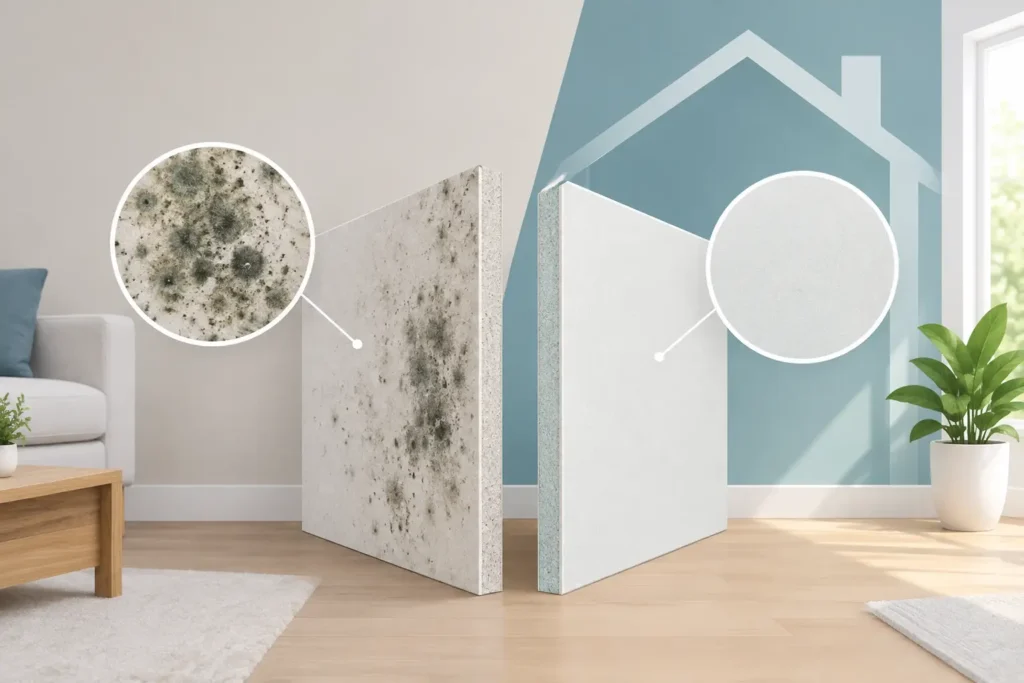
Traditional drywall has a gypsum core covered in paper. The paper facing is the weak point in damp conditions because organic materials can support mold growth when moisture is present long enough.
Mold resistant drywall is made to reduce that risk. Many products use a moisture-resistant gypsum core and a fiberglass mat facing instead of paper. Without a paper surface, mold has less material to feed on. Some boards also include additives intended to improve moisture resistance.
You may hear contractors refer to these products as green board, purple board, moisture-resistant board, or paperless drywall. The names are often used loosely, but product performance varies. Some moisture-resistant panels still have paper facings, while fiberglass-faced panels are generally designed for stronger mold resistance. A professional installer can help match the board to the room and the finish you plan to use.
Where Mold Resistant Drywall Makes Sense
This material is most useful where moisture is expected from normal daily use, even when the room does not have a known water problem. Bathrooms outside the direct shower area are a common choice. Laundry rooms, utility rooms, mudrooms, powder rooms, and finished basements may also benefit.
It can be a smart option behind a bathroom vanity, around a toilet, or on walls near a washing machine. These spaces see humidity, occasional splashes, and small leaks that may not be noticed immediately. For property owners managing rentals or commercial spaces, using a more moisture-tolerant board in these areas can reduce the chance that a minor issue turns into a larger drywall replacement project.
The value depends on the room. Installing mold-resistant board throughout a dry living room usually adds cost without delivering much practical benefit. Installing it in a basement with periodic humidity concerns or a frequently used family bathroom is easier to justify.
It Is Not for the Inside of a Shower
A common mistake is treating mold-resistant drywall as a shower wall system. It is not. Even high-performing drywall should not be used where it will receive direct, repeated water exposure unless the manufacturer specifically approves that assembly and it is installed exactly as required.
Shower surrounds, tub walls, and other wet areas typically need cement board, foam backer board, or another approved tile backer system. Those materials must be paired with a proper waterproofing method. Tile and grout are not waterproof by themselves, so the protection behind them matters just as much as the finished surface.
What It Can and Cannot Do
Mold-resistant drywall can slow down a problem and make normal humid conditions less damaging to the wall system. It can also provide peace of mind in rooms where moisture control is a regular concern. But it cannot keep mold from growing if a pipe leaks for weeks, a roof leak soaks the wall cavity, or a bathroom exhaust fan never gets used.
Mold needs moisture, time, and a food source. Reducing one of those factors helps, but water management is still the first priority. A clean installation includes checking for plumbing leaks, repairing exterior intrusion, sealing the appropriate areas, and allowing materials to dry before walls are closed.
Paint also plays a role. A quality moisture-resistant primer and paint can add another layer of protection in bathrooms and laundry areas. Still, paint should support the wall system, not carry the full responsibility for preventing moisture damage.
Mold Resistant Drywall vs. Standard Drywall
Standard drywall remains the right choice for most bedrooms, living rooms, hallways, offices, and other dry interior spaces. It is dependable, economical, and easy to finish when installed correctly. Mold-resistant drywall costs more per sheet, and certain products may require extra care during cutting, fastening, and finishing.
The added cost is usually modest compared with the expense of reopening a finished wall after moisture damage. That does not mean every project needs it. A thoughtful material plan uses it where risk is higher and standard drywall where it performs well.
For an Oklahoma City-area bathroom remodel, for example, a contractor may recommend mold-resistant drywall on the bathroom walls outside the shower, a proper backer board system in the shower, and standard drywall in the adjoining bedroom. That approach controls costs while using the right material in each area.
Signs Your Walls Need More Than New Drywall
If you are replacing damaged drywall, the cause of the damage deserves as much attention as the replacement itself. New board installed over an unresolved moisture issue will eventually fail too.
Watch for a persistent musty smell, peeling paint, soft or crumbling drywall, brown water stains, bubbling tape, warped baseboards, or visible dark spotting. Condensation on windows and walls after showers can also point to weak ventilation. In basements, damp air, foundation seepage, and poorly insulated exterior walls may all contribute.
If mold is visible over a large area, or if the moisture source is unclear, it is wise to address the underlying condition before reconstruction begins. Depending on the situation, that may involve plumbing repair, roof repair, drainage improvements, ventilation work, or professional remediation.
Installation Details Matter
Even the best drywall product will not perform as intended if the wall assembly is poorly built. Panels should be installed straight, securely fastened, and finished with compatible joint compound, tape, primer, and paint. Open gaps around plumbing penetrations, unsealed transitions, and damaged caulk can allow moisture behind the wall surface.
Bathroom exhaust fans deserve special attention. A fan should vent outdoors, not into an attic or enclosed space, and it needs enough capacity for the room. Running it during a shower and for a period afterward helps remove humid air before it condenses on walls and ceilings.
In a remodeling project, sequencing also matters. Walls should be dry before insulation and drywall go in. Plumbing should be tested. Shower waterproofing should be inspected before tile covers it. These details are not always visible at the end of a project, but they are what protect the finished space over time.
Choosing the Right Approach for Your Property
The right choice starts with how the room is used and what is happening behind the walls. A small half bath with good ventilation may need only a targeted upgrade. A laundry room with a floor drain, older plumbing, and frequent humidity may warrant mold-resistant drywall on more surfaces. A shower renovation needs a purpose-built wet-area backer and waterproofing system, not drywall alone.
At KCS Drywall, the goal is not to sell more material than a project needs. It is to build clean, durable walls that make sense for the space, the moisture exposure, and the finish you expect. A clear assessment before installation helps prevent avoidable repairs later.
When walls are being opened for a repair or remodel, it is the right time to make practical upgrades that protect the work behind the paint. Address the water source first, choose materials based on the room, and make sure the installation is done with the same care as the finish you will see every day.