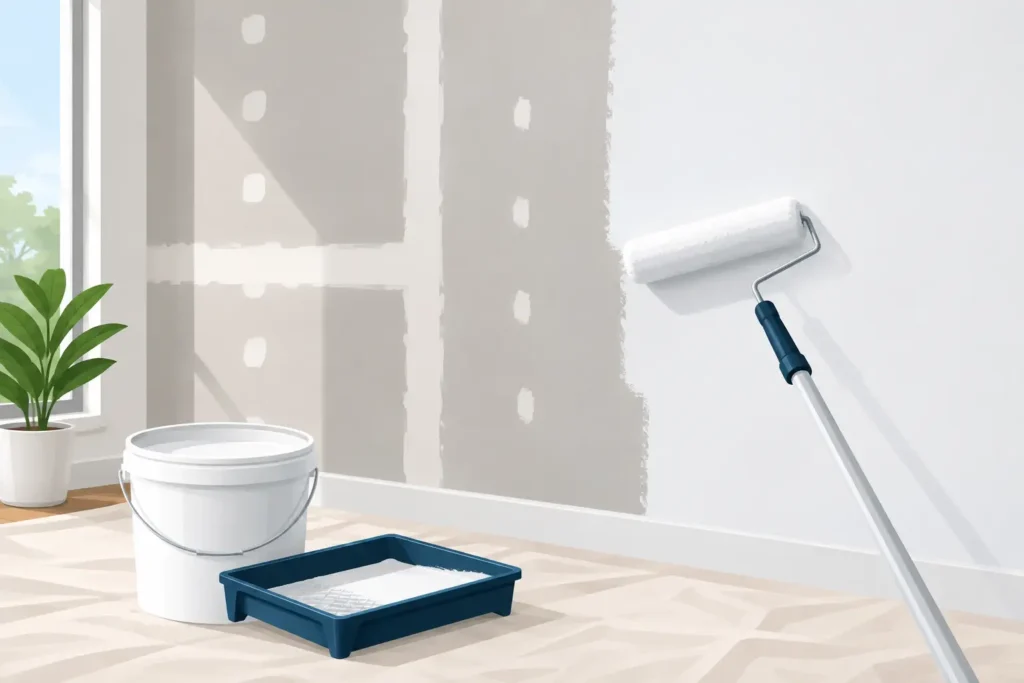
Fresh drywall can look ready for paint, especially after the final sanding leaves the wall smooth and clean. But does drywall need primer before painting? In nearly every case, yes. Primer is the step that helps a new or repaired wall take paint evenly, hold up better, and avoid the blotchy finish that can make quality paint look disappointing.
For homeowners, property managers, and builders, skipping primer may seem like a way to save a little time and material. In practice, it can lead to extra coats of paint, uneven color, visible drywall repairs, and a finish that wears sooner than it should. A properly primed surface gives the topcoat the consistent base it needs to perform well.
Why New Drywall Needs Primer
New drywall is not one uniform surface. The paper face absorbs paint differently than the joint compound used over seams, corners, fasteners, and patches. Even when the wall has been finished and sanded carefully, those materials remain different in porosity.
Without primer, paint soaks into the drywall paper and joint compound at different rates. This can create flashing, which is the uneven sheen or dull-and-shiny patchwork that becomes noticeable when sunlight hits the wall from an angle. Darker colors and paints with a sheen tend to make flashing even more obvious.
Drywall primer, often called PVA primer, seals those porous surfaces and creates a more consistent foundation for paint. It also helps the finish coat spread more evenly, reducing the risk of lap marks, uneven color, and unnecessary additional coats.
Primer does not replace good drywall finishing. If seams, fastener heads, texture transitions, or sanding scratches are visible before priming, paint will not hide them. The right process starts with clean, well-finished drywall, then uses primer to prepare that work for a durable painted finish.
Does Drywall Need Primer After a Repair?
Yes, repaired drywall should be primed before painting, even when the repair is small. A patched nail hole, dent, water-damage repair, or larger cutout will usually include fresh joint compound. That compound is more absorbent than the existing painted wall around it.
Painting directly over a patch can leave a flat-looking spot in an otherwise satin or eggshell wall. The color may appear slightly different as well, even if the paint is an exact match. A spot coat of primer over the repair is often enough for a small area. For a larger repair or a wall with multiple patches, priming the full wall gives the most uniform result.
Water stains need extra attention. Before applying standard drywall primer, the source of the moisture must be corrected and the area must be fully dry. If staining remains, use a stain-blocking primer designed to prevent discoloration from bleeding through the new paint. Painting over an active leak or damp drywall only hides the problem temporarily.
When a Standard Drywall Primer Is the Right Choice
For newly installed drywall in dry, clean interior rooms, a quality PVA drywall primer is usually the practical choice. It is made to seal porous drywall and joint compound efficiently before painting. This is the primer most professional painters use when preparing new walls and ceilings for standard interior latex paint.
A standard drywall primer works well when the surface is sound, dry, dust-free, and free of stains. It is a preparation coat, not a specialty problem-solver. If the wall has smoke residue, water staining, crayon marks, grease, mildew, or odors, a different primer may be necessary.
For example, kitchen walls with cooking residue may need a bonding or stain-blocking product after thorough cleaning. Bathrooms can require a mildew-resistant primer when moisture has been an issue. Commercial spaces may need primers selected for high-traffic conditions, maintenance requirements, or the specific coating system being used.
The best primer depends on the wall condition and the paint that will go over it. Choosing the lowest-cost option without considering the surface can create more work later.
Primer Versus Paint-and-Primer Products
Many interior paints are labeled paint and primer in one. These products can provide good coverage on previously painted walls that are clean and in good condition, especially when repainting with a similar color. They are convenient, but they are not always a substitute for a dedicated drywall primer.
On new drywall, paint-and-primer products may still absorb unevenly into the paper and joint compound. You may need more paint to achieve the same consistent finish, which can remove any savings from skipping the primer coat. A separate primer is generally the more reliable choice for bare drywall, large repairs, and major color changes.
There are exceptions. Some premium coating systems are designed for specific applications, and product instructions should always guide the process. Still, for most residential and commercial drywall projects, a dedicated primer coat followed by finish paint is the dependable route.
How to Prepare Drywall Before Priming
Primer works best when the wall is properly prepared. Rushing this stage can lock dust, rough spots, and other flaws beneath the paint. Before priming, inspect the wall in bright light and run a hand lightly across the surface to feel for ridges or rough patches.
Make sure joint compound is fully dry, then sand it smooth without damaging the drywall paper. Remove sanding dust thoroughly with a vacuum, microfiber cloth, or dry wall brush. Dust left on the wall can interfere with adhesion and leave a gritty finish.
Caulk small gaps where trim meets the wall if those areas will be painted, but do not use caulk to disguise poor drywall work or wide cracks. Larger gaps and damaged areas need the correct repair before paint preparation begins. Protect floors, fixtures, and trim, then apply primer evenly with the roller nap suited to the wall texture.
For smooth walls, a shorter nap roller helps keep the finish uniform. For textured walls, use a roller that can reach into the texture without leaving missed areas. Cut in edges carefully, maintain a wet edge, and allow the primer to dry according to the product instructions before painting.
What to Look for After Primer Dries
Primer often reveals imperfections that were easy to miss on bare drywall. This is one reason experienced drywall and painting crews consider priming part of the inspection process, not just a coat between finishing and paint.
Look along the wall with light coming from the side. Check for visible seams, uneven patches, sanding marks, raised fastener areas, or thin spots in the primer. Address those issues with additional skim coating or sanding as needed, remove dust again, and spot-prime the repaired area before applying finish paint.
This step takes patience, but it is much easier to correct a flaw before the final color goes on. Once sheen paint is applied, especially in hallways, living rooms, and rooms with large windows, surface defects can become much more noticeable.
Common Primer Mistakes to Avoid
The most common mistake is treating primer as optional on bare drywall. Another is applying it over sanding dust or damp joint compound. Both can compromise the appearance and adhesion of the finished paint.
Homeowners also sometimes use too little primer in an attempt to stretch the material. A thin, inconsistent coat does not properly seal the wall. Apply enough to achieve complete, even coverage, but avoid heavy application that causes drips or roller buildup.
Finally, do not assume every primer solves every problem. PVA primer is excellent for new drywall, but it will not reliably block water stains, nicotine, smoke residue, or strong odors. Match the primer to the surface condition, and make sure the underlying issue has been corrected first.
A Better Finish Starts Before the Paint
Primer is a modest investment compared with the cost of repainting a wall that looks uneven or wears poorly. It helps paint deliver the color, sheen, and durability you expected when you chose it.
If your drywall is newly installed, extensively repaired, stained, or showing visible imperfections, careful preparation matters as much as the paint itself. KCS Drywall approaches finishing with that standard in mind: clean surfaces, proper materials, and close attention to the details that make walls look right long after the crew has left.