A doorknob hole in the hallway is one thing. A ceiling stain that keeps growing, cracked seams, and soft drywall around a window is something else entirely. When homeowners and property managers start weighing drywall repair vs replacement, the real question is not just what costs less today. It is what gives you a clean, lasting result without wasting time or money.
The right answer depends on the type of damage, how far it has spread, and what caused it in the first place. A solid patch can make perfect sense for isolated damage. Full replacement is often the smarter choice when the board has lost its strength, moisture has spread, or the finish will never blend well enough to look right.
How to think about drywall repair vs replacement
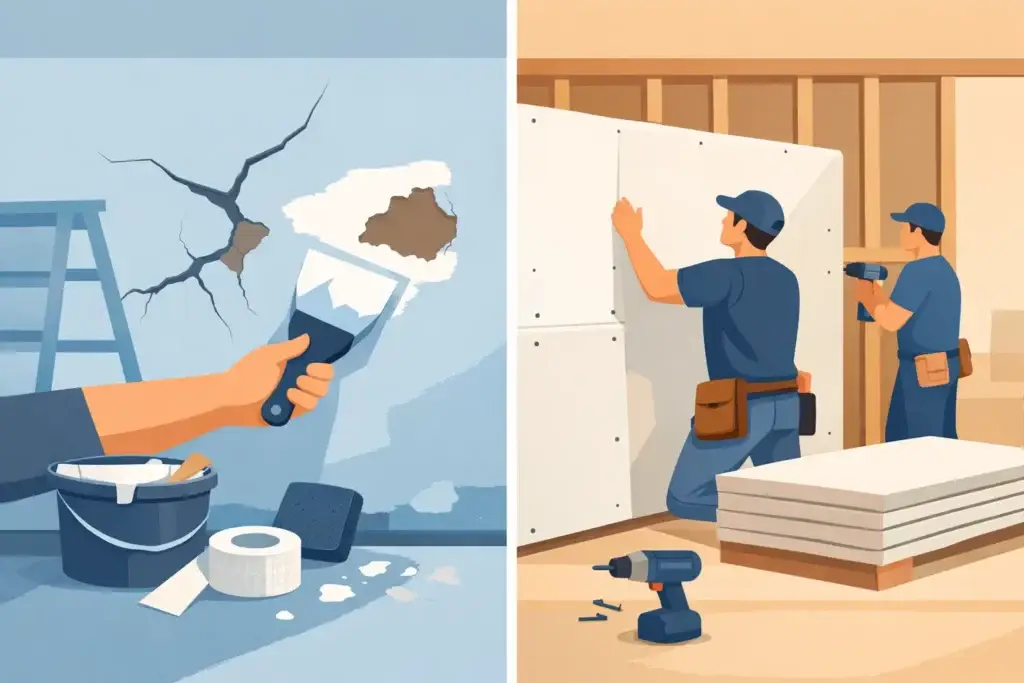
Drywall repair is usually the better option when the damage is limited and the surrounding material is still sound. Small holes, minor dents, popped nails, hairline cracks, and a few scuffs from normal wear can often be fixed without tearing out full sheets. If the drywall is dry, stable, and still attached properly, repair is often faster and more cost-effective.
Replacement becomes the better move when the drywall itself has failed. That can happen after leaks, flooding, mold, major impact damage, repeated stress cracking, or long-term deterioration. In those cases, patching the surface may hide the problem for a while, but it will not restore the strength or appearance of the wall or ceiling.
This is where experience matters. The surface can look simple, but drywall problems are often tied to framing movement, moisture intrusion, poor installation, or texture issues. A repair that ignores the cause usually turns into a second repair later.
When repair makes sense
If the damage is local, repair is usually the practical choice. A small hole from furniture impact, a section scraped during a move, or a few seam cracks from settling can often be corrected cleanly. The goal is not just to fill the damaged spot. It is to rebuild the area so it blends with the surrounding wall and holds up over time.
A good repair works best when the drywall panel around the damage is still solid. If you press around the area and it feels firm, with no swelling, crumbling, or moisture softness, that is a good sign. Cosmetic issues are usually repairable, especially in homes and offices where the rest of the wall is in good shape.
Repair is also a strong option when matching the existing finish is realistic. On a smooth wall, a skilled patch can disappear with proper mud work, sanding, and paint prep. On lightly textured surfaces, a trained crew can often blend the area well enough that it does not stand out once painted.
When replacement is the better investment
There are times when patching is technically possible but still not the best decision. Water damage is one of the most common examples. If drywall has absorbed moisture, sagged, stained heavily, or started to break down, replacement is usually the safer and cleaner route. Even after drying, the board may stay weak or warped.
Large damaged sections also lean toward replacement. If a wall has multiple holes, widespread cracking, impact damage across several areas, or old failed patches, piecing it together can take more labor than installing new drywall in that section. The finished result is often better with a reset rather than trying to rescue tired material.
Ceilings deserve special attention. Sagging drywall overhead is not something to ignore. Once a ceiling panel loosens, swells, or bows from moisture or fastening failure, replacement is often the right call. The risk is not only cosmetic. It is structural and safety-related.
Replacement also makes sense when mold is involved. If drywall has been contaminated, cutting out affected sections and addressing the source of moisture is usually the responsible path. Painting over stains or patching soft areas does not solve the underlying issue.
Cost is part of the decision, but not the whole decision
Most people start with price, and that is understandable. Repair usually costs less upfront than replacement because it uses less material and takes less demolition. For small damage, that cost difference is real and worth considering.
But lower initial cost does not always mean better value. If the drywall is compromised and a repair fails in six months, you pay twice. If water damage spreads behind the wall or if the patched area still flashes through paint and texture, the savings disappear quickly.
Replacement costs more because it involves removal, disposal, new board, finishing, and repainting. Even so, it can be the more efficient investment when damage is extensive. It gives you a fresh surface, corrects hidden issues, and often delivers a more consistent final appearance.
The best cost question is this: are you paying for a short-term cover-up or a durable fix? That is the difference that really matters.
Finish quality matters more than many people expect
Homeowners often focus on whether a wall can be fixed. Contractors also have to think about whether it can be fixed well. Those are not always the same thing.
A repair may solve the damage but still leave visible texture differences, uneven sheen, or a slight hump where the patch meets the old wall. In a low-traffic closet, that may be acceptable. In a living room, entryway, office, or commercial space with strong lighting, it often is not.
Replacement can improve finish quality when the damaged area is large or highly visible. New drywall over a defined section gives the finisher a cleaner starting point. That usually means straighter lines, more consistent texture, and a better paint result.
This matters even more in commercial settings, rental turnovers, and homes being prepared for sale. People notice wall and ceiling flaws quickly. Clean surfaces signal that the property has been cared for.
Hidden causes change the answer
The visible damage is only one part of the job. What caused it is just as important.
If a crack came from minor settling and has stayed stable, repair may be enough. If the crack keeps returning because of framing movement or fastening issues, replacement of the affected section and correction of the underlying problem may be the better route. The same goes for damage around windows, doors, and ceilings, where movement and moisture often show up first.
Water is the biggest deciding factor. A roof leak, plumbing leak, or exterior penetration can turn what looks like a drywall issue into a broader repair. Before any finish work is done, the source has to be fixed. Otherwise, the same stain, bubbling, or soft spot comes back.
That is why a reliable contractor does not just patch and leave. The job should start with identifying whether the drywall is truly the problem or just the surface where a bigger problem is showing itself.
What property owners should look for before deciding
A quick visual check can tell you a lot. If the damage is small, dry, and isolated, repair may be all you need. If the area feels soft, looks swollen, smells musty, or affects a wide section of wall or ceiling, replacement is more likely.
Pay attention to how many problem spots you have. One hole is a repair. Multiple failed areas in the same room may point to aging material, previous poor workmanship, or moisture exposure. Also consider the location. Damage in a garage or utility room may allow for a more basic repair approach, while a main living area usually calls for a cleaner finish standard.
For commercial spaces and rentals, downtime matters too. Sometimes replacing a larger section is faster and more predictable than trying to repair several scattered defects. The cleaner path is not always the smaller patch.
The value of getting it done right the first time
Drywall work looks simple until the finish is off by just enough to catch every bit of light in the room. Good repair and good replacement both depend on preparation, proper fastening, clean mud work, texture matching, and attention to the surrounding surfaces.
For Oklahoma homes and commercial properties, that also means working with someone who understands how moisture swings, settling, and daily wear affect interior walls. A dependable crew will give you a clear recommendation based on the condition of the material, not just the easiest item to quote. That is the standard KCS Drywall believes in – honest guidance, clean workmanship, and a result that holds up.
If you are stuck between drywall repair vs replacement, the smartest move is to think beyond the damaged spot. Look at the cause, the extent of the issue, and the finish you want when the work is done. The best choice is the one that leaves you with a wall or ceiling you do not have to think about again.
Pingback: Can Cracked Drywall Be Painted? What to Do First - KCS Drywall Company | Oklahoma’s Trusted Drywall & Remodeling Experts