
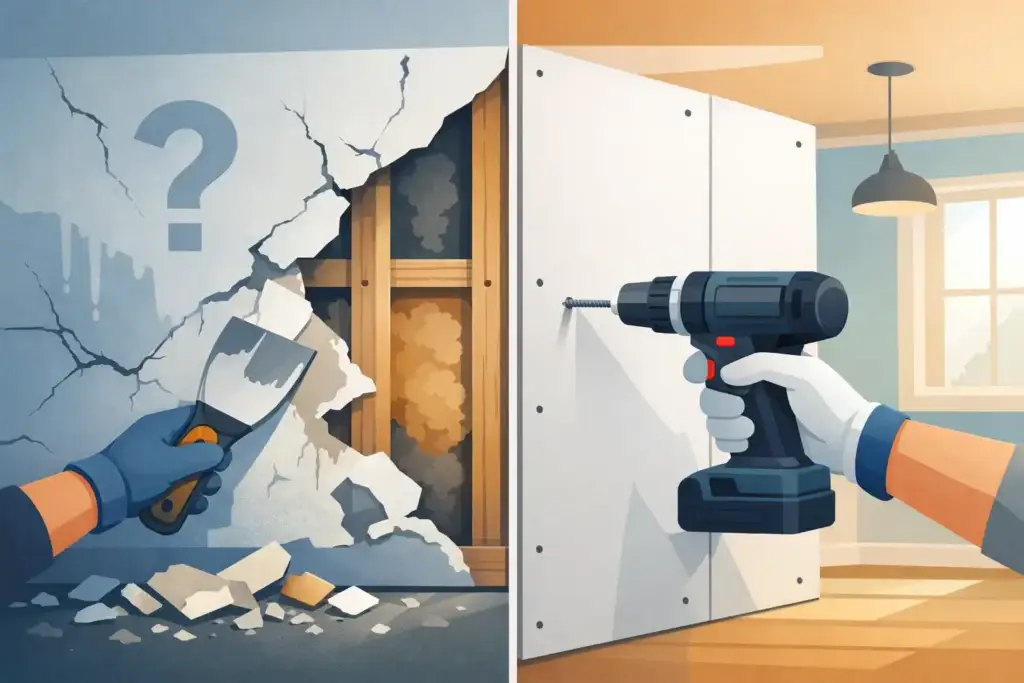
A wall with a small dent is one thing. A wall that stays soft after a leak, smells musty, or shows spreading cracks is a different problem entirely. If you are asking when should drywall be replaced, the short answer is this: replace it when the damage goes beyond a clean, lasting repair.
That line matters because not every damaged wall needs to be torn out. Drywall is built to handle minor wear, and good repairs can make a room look like new again. But some issues affect the strength of the panel, the finish quality, or even the health of the space. In those cases, patching saves money today but often leads to more repairs later.
When should drywall be replaced instead of repaired?
The biggest factor is the type and extent of damage. Small nail holes, minor dents, and isolated scuffs are usually repair jobs. A professional can patch, tape, float, sand, and texture those areas without replacing the full sheet.
Replacement becomes the better option when the drywall has lost its integrity. If the panel is sagging, crumbling, soaked through, moldy, or damaged across a wide section, repairs may not hold well or look consistent. At that point, replacing the affected area gives you a cleaner result and a more dependable wall.
There is also a practical side to this decision. Sometimes drywall can technically be repaired, but the labor required to patch multiple weak spots, blend texture, and chase hidden damage makes replacement the smarter investment. A solid new section often costs less in time and frustration than trying to rescue material that has already failed.
Water damage is one of the clearest signs
In Oklahoma homes and commercial buildings, water damage is one of the most common reasons drywall needs to come out. Roof leaks, plumbing issues, appliance failures, and storm-related moisture can all soak drywall quickly.
If the drywall only got lightly damp and dried fast, it may be repairable. But if it swells, stains heavily, softens, bubbles, or starts to crumble, replacement is usually the safer route. Drywall acts like a sponge. Once water gets deep into the panel, the core can weaken and the face paper can separate.
Another issue is what you cannot see. Water can move behind the wall, affecting insulation, framing, and adjacent materials. If a section has been wet long enough to support mold growth or persistent odor, cutting out the damaged drywall allows the area to be inspected and dried properly. Covering over that kind of problem rarely ends well.
Mold changes the equation fast
Drywall and mold are a bad combination. The paper facing on drywall can feed mold growth when moisture is present, and once growth spreads through the material, cleaning the surface is not always enough.
A tiny, surface-level area in a low-risk situation may be manageable, depending on the cause and how quickly it is addressed. But if the mold is widespread, keeps returning, or is tied to a leak inside the wall, replacement is often necessary. The key is not just removing the visible spot. The moisture source has to be corrected, and the affected drywall has to be removed to create a clean, stable surface again.
For homeowners and property managers, this is where a professional assessment matters. What looks like a paint problem can actually be a moisture problem, and moisture problems rarely stay small for long.
Cracks can be cosmetic or structural
Cracks do not always mean replacement, but they should not be ignored either. Hairline cracks from normal settling are often repairable. These usually show up around seams, corners, or over doors and windows. With proper prep and finishing, they can often be corrected without removing large sections of drywall.
Wider cracks, recurring cracks, or cracks paired with nail pops, door alignment issues, or uneven floors may point to movement in the framing or foundation. In that case, drywall repair alone will not solve the root issue. If the panel has fractured badly or the damage keeps reopening, replacement may be needed after the underlying cause is addressed.
The trade-off here is simple. Cosmetic cracks can often be repaired well. Structural movement creates ongoing stress, and replacing drywall before the structure is stabilized usually means doing the same job twice.
Holes, impact damage, and repeated patching
One hole in one wall is usually not a big deal. Drywall repair is made for situations like accidental impacts, doorknob damage, or small cutouts from previous work. If the surrounding material is solid, a patch can restore the area cleanly.
Replacement makes more sense when the hole is large, when the damage affects multiple studs or seams, or when the same area has been patched several times already. Too many repairs in one spot can leave the wall uneven, weak, or difficult to texture-match. In visible areas like living rooms, hallways, offices, and commercial spaces, that finish quality matters.
This is especially true if the wall has older texture or previous poor-quality repairs. At some point, starting fresh gives a better result than layering one more fix over an already rough surface.
Smoke, stains, and odor can mean deeper damage
Drywall can also hold onto problems that are not purely structural. Smoke damage, nicotine staining, long-term cooking residue, and persistent odors sometimes soak into the paper and core. Primers can help in some situations, but not always.
If odor keeps bleeding through after cleaning and sealing, replacement may be the only way to fully reset the surface. The same goes for stains that continue to reappear because the underlying material has been compromised. This often comes up during remodels, rental turnovers, and fire or water restoration work.
A wall can look mostly intact and still not be worth saving. If it cannot be cleaned, sealed, and finished with confidence, replacement is often the more reliable option.
Age and remodel goals matter too
Sometimes drywall is replaced not because it failed, but because the space is being upgraded. During kitchen remodels, bathroom updates, room reconfigurations, or major electrical and plumbing work, removing drywall may be part of doing the job correctly.
Older drywall may have uneven surfaces, outdated textures, poor previous repairs, or damage hidden behind cabinets and fixtures. If a remodel is already opening walls, it can make sense to replace sections rather than spend time blending old material with new finishes.
This is not always necessary. In some homes, selective repair works well and keeps costs down. But when appearance, durability, and a clean final result are priorities, strategic replacement often helps the whole project come together better.
What a professional looks for before recommending replacement
A dependable drywall contractor does not jump straight to tear-out. The right call depends on moisture history, panel condition, finish expectations, and the size of the affected area.
A proper assessment usually looks at how soft or brittle the drywall feels, whether the paper face is intact, how far the damage spreads, whether there are signs of mold or odor, and whether the framing behind it may also be affected. The texture and paint finish matter too. A wall can be structurally repairable but still hard to blend cleanly if the damage runs through a large, highly visible section.
That is why honest guidance matters. Good contractors know the difference between a repair that will last and a repair that only looks acceptable for a short time.
Repair vs. replacement comes down to long-term results
If the drywall is dry, solid, and only damaged in a limited area, repair is usually the cost-effective choice. If it is soft, contaminated, unstable, or damaged across a broad section, replacement is often the better value. The goal is not just to make the wall look better this week. It is to make sure it stays sound, clean, and finish-ready.
For homeowners, that means fewer repeat issues and better-looking interiors. For property managers and commercial clients, it means more predictable results, cleaner turnover work, and less risk of hidden damage causing bigger problems later.
When there is any doubt, have the wall looked at before repainting or covering it up. A straightforward inspection can save you from spending money on repairs that were never going to hold. If the drywall is telling you it has reached the end of its life, replacing it now is often the cleanest path to a better finished space.