
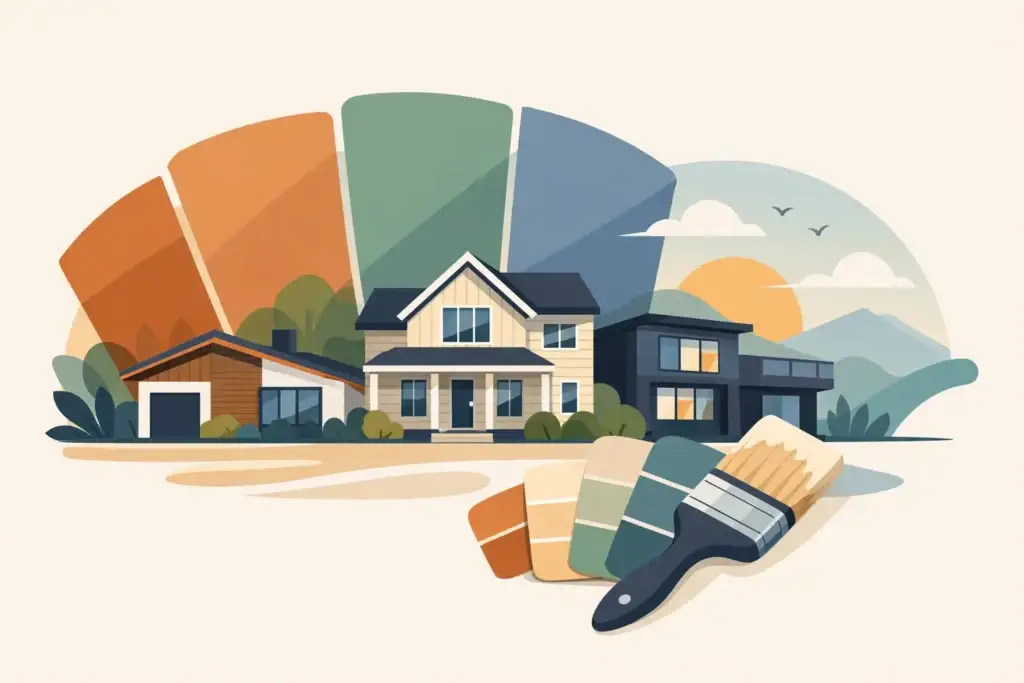
A house can look dated before anything is actually broken. Faded siding, a flat-looking trim color, or a paint choice that worked ten years ago can quietly pull down curb appeal. That is why exterior paint color trends 2026 matter to homeowners who want a home that feels current, holds value, and still makes sense for the way they live.
For 2026, the shift is clear. Homeowners are moving away from stark, high-contrast exteriors and toward colors that feel grounded, warmer, and easier to live with over time. The strongest trend is not chasing something flashy. It is choosing exterior colors that look clean, natural, and durable in real light, on real homes, in real neighborhoods.
What exterior paint color trends 2026 are really showing
The biggest change is a move toward balance. Instead of bright white houses with black trim on every block, more property owners are choosing softer combinations with more depth. Warm whites, greige, taupe, clay-inspired neutrals, muted greens, and weathered blue-grays are showing up more often because they age better and tend to work across different architectural styles.
That matters in Oklahoma, where sunlight can be strong and exterior surfaces take a beating from heat, wind, rain, and seasonal swings. A paint color that looks great on a tiny swatch or a filtered social media photo can look completely different on a full exterior in direct sun. In practice, the best color trends are the ones that still look good at 3 p.m. in July and do not feel harsh or washed out.
This is also why 2026 is leaning into colors with undertones that feel a little more forgiving. Harsh cool grays are losing ground. Softer shades with brown, green, or creamy undertones are replacing them because they create a more settled, finished look.
The top exterior color directions for 2026
Warm whites instead of stark whites
White is not going away, but the version of white is changing. Clean, bright whites can still look sharp on modern homes, but many homeowners are now choosing warmer whites that feel less severe. These shades pair well with stone, brick, natural wood accents, and darker roofing materials.
A warm white exterior usually reads cleaner for longer and hides dust and surface variation better than a blue-based white. It also gives more flexibility with trim and front door colors. If you want a house that feels fresh but not cold, this is one of the safest 2026 updates.
Greige and taupe are getting stronger
Neutral does not mean boring when the undertone is right. Greige and taupe are growing because they offer more depth than basic beige and more warmth than flat gray. They work especially well on larger homes, mixed-material exteriors, and neighborhoods where resale value matters.
These colors also tend to blend better with driveways, sidewalks, brickwork, and landscaping. That makes the whole property look more intentional, not just recently repainted.
Earthy greens are becoming a go-to choice
Muted olive, sage, eucalyptus, and dusty green tones are among the most noticeable exterior paint color trends 2026. They feel natural without disappearing, and they pair especially well with cream trim, stained wood, black fixtures, and stone accents.
Green is a good example of a trend that can look custom when handled well. On the right home, it feels updated and established at the same time. The trade-off is that green can shift fast in outdoor light. A color that looks soft and balanced in shade may turn brighter or muddier in full sun, so testing matters.
Blue-gray is staying, but it is softening
Cool blue-grays are not gone, but the sharper versions are fading. In 2026, the stronger choices are muted coastal blues, stormy blue-grays, and softer slate tones that have a bit of warmth mixed in. These shades still give a classic, dependable look, especially on Craftsman, Colonial, and traditional homes.
The difference now is restraint. Instead of using a dark blue body color with bright white trim and dramatic black accents, homeowners are choosing more blended combinations. The result is a house that feels finished rather than high-contrast for the sake of trend.
Dark exteriors are becoming more selective
Charcoal, deep bronze, and near-black exteriors still have a place, but they are no longer the automatic modern choice for every property. In 2026, darker colors are being used more carefully, often as accent colors for trim, shutters, doors, or specific architectural features.
Full dark exteriors can look impressive, but they come with trade-offs. They absorb more heat, show dust and fading more quickly, and can feel heavy on certain home styles. For some homeowners, a dark trim with a lighter body color gives the same updated feel with less maintenance risk.
Trim, doors, and accents are getting less dramatic
One reason exteriors are looking more polished in 2026 is that the supporting colors are calming down too. Black trim is still around, but it is being used with more purpose instead of as the default contrast option. Softer off-whites, warm beige trim, bronze accents, and natural wood tones are all gaining ground.
Front doors are also shifting. Instead of bright red or glossy statement colors, the newer look leans toward earthy, richer shades such as muted navy, forest green, dark brown, clay, or softened terracotta. These colors still add personality, but they do not fight the rest of the house.
This is a good direction for homeowners who want curb appeal without choosing something that feels too trendy two years from now.
How to choose a trend that actually works on your home
Following exterior paint color trends 2026 does not mean copying the most popular house on your feed. The right color depends on your home’s fixed features and the conditions around it. Brick tone, roof color, stonework, soffits, gutters, landscaping, and even the amount of shade on the lot all affect how paint will read.
A warm greige can look excellent with brown or weathered roofing, but it may feel dull against a red-toned brick. A soft green might bring out beautiful natural stone, but it can clash with cool gray concrete if the undertones are off. That is why color selection should start with what cannot easily be changed.
It also helps to think about scale. Darker colors can make a large house feel more grounded, while lighter colors can open up a smaller home and make details read more clearly. If your home has a lot of trim, columns, or texture changes, too much contrast can make it feel busy fast.
The practical move is to test large samples on multiple sides of the home and check them at different times of day. Morning shade, afternoon sun, and cloudy weather can all change the result.
Trendy is fine. Durable is better.
A good exterior paint job is not just about color. Surface prep, product quality, and application matter just as much as the shade you choose. Even the best-looking color will not perform well if the underlying surface was not repaired, cleaned, and primed correctly.
That is especially true on homes with prior peeling, wood exposure, patched siding, or weather-worn trim. If those issues are ignored, the finish may fail early no matter how current the color looks. For homeowners planning to invest in curb appeal, this is where dependable workmanship matters as much as design.
The same goes for sheen and finish. Higher sheen can add durability to trim and doors, but too much shine on broad siding areas can highlight surface flaws. A more balanced finish often gives a cleaner final look.
Best 2026 exterior color combinations to watch
The combinations gaining the most traction are the ones that look natural and easy on the eyes. Warm white with taupe trim and a wood-stained door is one strong direction. Sage body color with cream trim and dark bronze accents is another. Soft greige with deeper charcoal shutters or a muted navy door also fits the 2026 shift.
These combinations work because they create contrast without looking forced. They feel updated, but they still respect the architecture of the house.
For Oklahoma homeowners, there is an added benefit to these softer combinations. Dust, sun exposure, and seasonal wear tend to show less aggressively on mid-tone, warm, and earthy palettes than on ultra-bright or ultra-dark exteriors. That can help your home stay looking cleaner between washings and touch-ups.
When homeowners ask what color will still look good several years from now, that is usually the right question. Trends come and go, but a well-chosen exterior should not need an apology in three seasons.
If you are planning an exterior update, the smartest move is to use 2026 trends as direction, not as rules. Choose colors that fit your home, your lot, and the amount of upkeep you want to take on. A reliable paint job should make your property look better now and still feel like the right call long after the ladders are gone.
Pingback: Best Exterior Paint for Brick That Holds Up - KCS Drywall Company | Oklahoma’s Trusted Drywall & Remodeling Experts