
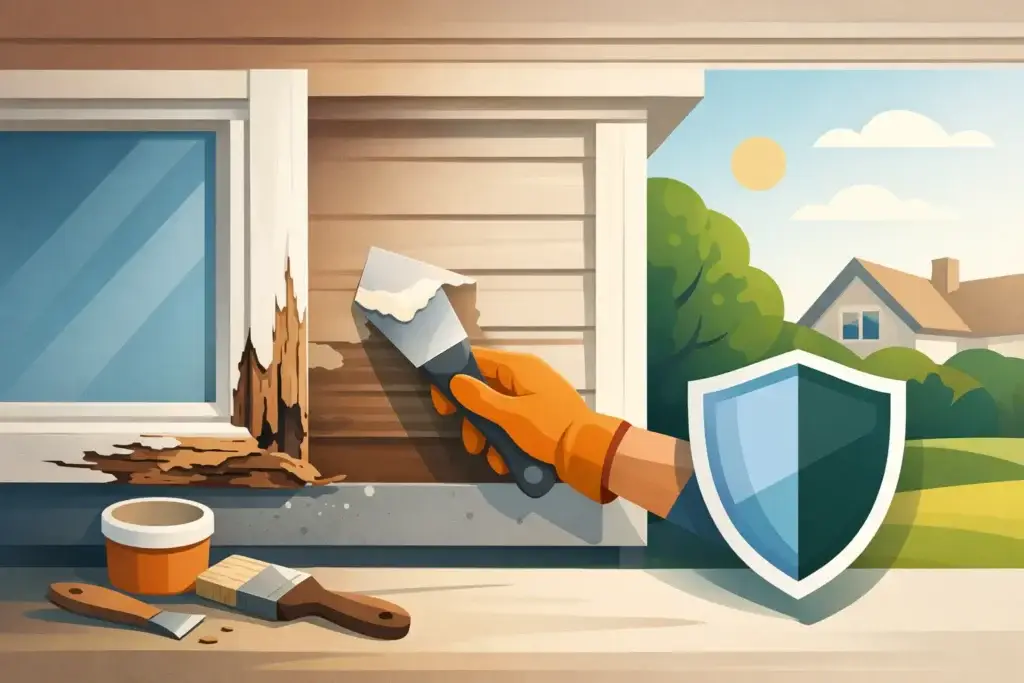
That soft spot on a window trim board or porch column usually starts small. Then one rainy season later, paint begins to bubble, the wood feels spongy, and what looked like a cosmetic issue turns into a repair that cannot wait. Exterior wood rot repair is really about two jobs at once – fixing the damaged area and stopping the moisture problem that caused it.
For Oklahoma homeowners, that matters more than most people realize. Heat, wind-driven rain, humidity swings, and deferred maintenance can all work together against exterior wood. If the damage is caught early, repair is often straightforward. If it is ignored, rot can spread into trim, siding, framing, and even the areas around doors and windows.
What causes exterior wood rot
Wood rot does not happen just because wood gets wet once. It happens when moisture sticks around long enough for fungi to break the wood fibers down. In other words, the real problem is not always the rotten board you can see. It is often the failed caulk joint, bad flashing, peeling paint, clogged gutter, or poor drainage that kept feeding water into that spot.
The most common trouble areas are window trim, fascia, soffits, door frames, garage trim, deck components, and lower sections of siding close to the ground. These areas take repeated weather exposure, and if paint or sealant fails, water has an easy way in.
This is why a proper repair should never start with filler alone. If the moisture source stays in place, the rot usually comes back.
Signs you need exterior wood rot repair
Some signs are obvious, and some are easy to miss until the damage spreads. Soft or crumbling wood is the clearest red flag. You might also notice paint that blisters or peels in one concentrated area, boards that look darker than the surrounding trim, cracks at joints, or a musty smell near an entry point.
In some cases, the wood still looks mostly intact from the outside but gives way under light pressure with a screwdriver. That is common around windows, door bottoms, and horizontal trim where water tends to sit. If insects are present, that can make the problem worse, but rot and termites are not the same thing. A good inspection separates one issue from the other before repair begins.
Repair or replace? It depends on the damage
One of the biggest questions homeowners ask is whether rotten wood can be repaired or if full replacement is the better move. The honest answer is that it depends on depth, location, and how much structural strength the wood has lost.
If the damage is shallow and limited to a small section of non-structural trim, repair may be the right option. The decayed wood is removed, the area is dried and treated, and a high-quality exterior filler or epoxy system is used to rebuild the profile before priming and painting. Done correctly, this can save money and preserve surrounding materials.
If the board is heavily deteriorated, water has spread behind it, or the piece plays a structural role, replacement is usually the smarter investment. Trying to patch badly compromised wood may look fine for a short time, but it often fails early because the surrounding material is already too weak. On columns, framing edges, and support components, replacement is usually the safer and more durable choice.
This is where experience matters. A quick patch can make damage less visible, but a lasting repair depends on how much solid wood is actually left.
How exterior wood rot repair should be done
A reliable process starts with inspection. The damaged area needs to be probed, surrounding surfaces checked, and the moisture entry point identified. Without that first step, repairs are just guesswork.
Next comes removal of all compromised wood. This part matters. Leaving soft, damp, or infected material behind can shorten the life of the repair. Once the bad wood is removed, the area should be allowed to dry properly. In some cases, a wood hardener or consolidant is used to strengthen adjacent sound wood before rebuilding the area.
For smaller repairs, an exterior-grade epoxy or filler can restore shape and create a paintable surface. For larger or deeper damage, replacing the trim board, siding section, or affected component is often cleaner and stronger. After the repair, joints should be caulked where needed, surfaces primed, and the finish coat applied to seal the wood against future moisture.
If flashing, drainage, or gutter performance contributed to the problem, that should be addressed too. Otherwise, the repair is only solving half the issue.
Why paint alone will not stop rot
A fresh coat of paint can improve appearance, but it does not reverse decayed wood. In fact, painting over rot can trap moisture and hide active damage for a while, which makes later repairs bigger and more expensive.
Paint works as a protective finish when the surface underneath is sound, dry, and properly prepared. If the wood is already breaking down, paint is just a temporary cover. The same goes for heavy caulk applied over failed areas. It may reduce water entry for a short time, but it will not restore strength.
That is why many exterior repairs need a combination of carpentry, prep work, sealing, and painting. Good results come from treating the cause and the visible damage together.
Oklahoma weather makes timing important
In Oklahoma, exterior materials take a beating. Intense sun can dry out caulk and paint, storms can force water into tiny gaps, and freeze-thaw cycles can open joints wider over time. That means a small soft spot in spring can turn into a much larger repair by fall.
Scheduling repairs early usually gives you more options. Minor trim rot may still be repairable before it spreads into adjacent boards or framing. Once water gets behind the outer surface, costs tend to rise because the work shifts from surface repair to partial rebuild.
For commercial properties and rental homes, timing matters even more. Rot around doors, fascia, or visible trim affects appearance, but it can also lead to tenant complaints, code concerns, and larger maintenance issues if ignored.
Choosing materials that hold up better
Not every replacement board performs the same way. When rotten wood has to be replaced, material selection should match the location and exposure. In some cases, primed wood trim is appropriate. In others, engineered trim or composite materials may offer better long-term resistance to moisture.
There is always a trade-off. Traditional wood can be easier to match on older homes and may be preferred where appearance matters most. Alternative materials can reduce future maintenance, but they are not right for every detail and still need proper installation. What matters most is that the replacement is installed cleanly, sealed well, and finished correctly.
When to call a professional
Small cosmetic issues sometimes tempt homeowners to handle repairs themselves, and minor surface filling can be manageable if the damage is truly limited. But once rot extends behind trim, affects multiple boards, or shows up near windows, doors, roofing edges, or structural elements, professional repair is usually the better call.
A trained crew can tell whether the issue is isolated or part of a larger moisture problem. That helps avoid spending money on a patch that does not last. It also helps protect nearby finishes, siding, drywall, and framing from secondary damage.
For property owners who want the job handled cleanly and correctly, KCS Drywall approaches exterior repair the same way it approaches every project – clear communication, dependable scheduling, and workmanship that is built to hold up.
What a lasting repair really looks like
Good exterior wood rot repair should blend in visually, restore the surface, and give you confidence that water is no longer getting where it should not. You should not be left wondering if the same spot will soften again after the next storm.
That is the difference between a quick cover-up and a professional repair. One hides damage for now. The other solves the cause, restores the material properly, and protects the rest of the home from avoidable problems.
If you have peeling trim, soft wood, or a spot that just does not look right, it is worth checking sooner rather than later. Catching rot early is not just about saving a board. It is about protecting the work and value around it before a small exterior issue turns into a bigger repair inside the home.