
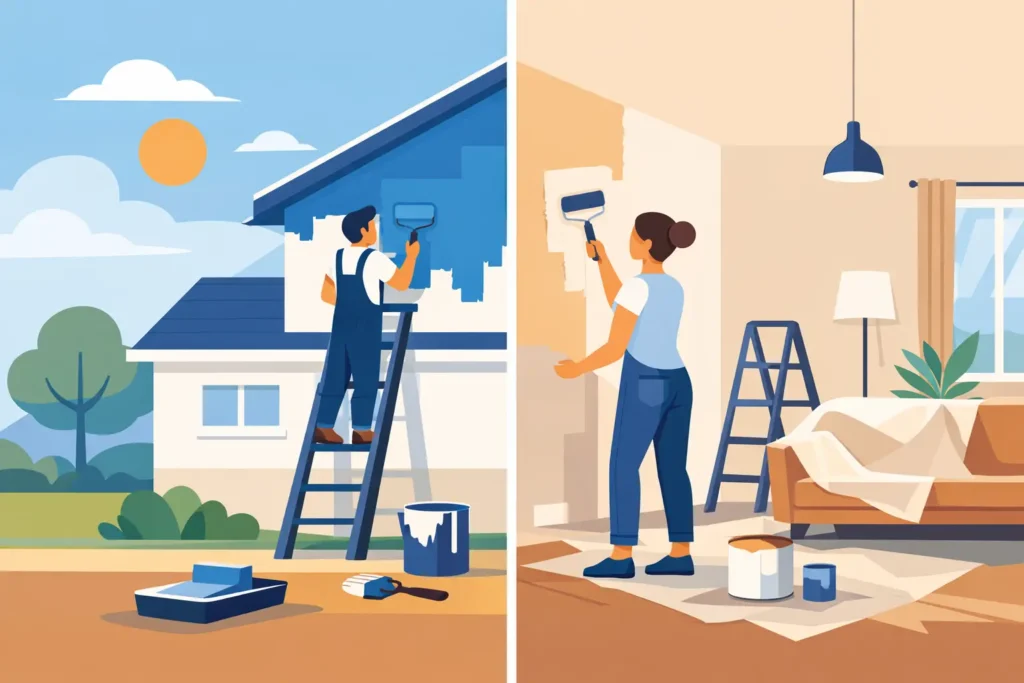
If you have leftover exterior paint in the garage, it is fair to ask: is exterior paint better than interior? On the surface, it can seem like the tougher option should work everywhere. But paint is made for specific conditions, and using the wrong type can create problems with finish, odor, durability, and even indoor air quality.
The short answer is no. Exterior paint is not automatically better than interior paint. It is better for outdoor surfaces because it is designed to handle sun, rain, temperature swings, and moisture. Interior paint is better for indoor walls and ceilings because it is made for scrub resistance, appearance, and lower odor in enclosed spaces. Better depends on where the paint is going and what that surface has to deal with every day.
Is exterior paint better than interior for durability?
This is where a lot of confusion starts. Exterior paint is built to be flexible and weather-resistant. It needs to expand and contract with changing temperatures and hold up against UV rays, wind, and moisture. That sounds tougher, and in some ways it is. But toughness outside does not always translate to better performance inside.
Interior paint is made for a different kind of wear. Inside a home or commercial space, walls are more likely to deal with scuffs, fingerprints, cleaning, furniture bumps, and day-to-day traffic. Interior formulas are designed to resist staining and allow for easier cleaning without sacrificing the final look on drywall, trim, or ceilings.
So if you are asking whether exterior paint lasts longer on an interior wall, the answer is not necessarily. It may stick, but it is not optimized for that environment. In many cases, it creates a finish that is harder to live with and harder to maintain properly.
The real difference between exterior and interior paint
The biggest difference is not just strength. It is formulation.
Exterior paint includes additives and resins that help it survive outdoor exposure. It is built to resist fading, mildew, cracking, and moisture intrusion. Because it has to face harsher conditions, it often contains ingredients that are less ideal for enclosed indoor areas.
Interior paint is formulated with appearance and indoor use in mind. It usually has lower volatile organic compounds, or VOCs, and is designed to cure well in stable indoor conditions. It also tends to provide a more controlled finish on drywall and other finished surfaces, which matters if you want clean walls that look smooth under indoor lighting.
That is why professional painters do not treat these products as interchangeable. They may both be called paint, but they are meant to solve different problems.
Can you use exterior paint inside?
Technically, yes. Practically, it is usually a bad idea.
Exterior paint can release stronger fumes because of the additives used to protect it outdoors. In a garage, workshop, or utility space, some people still consider it. In bedrooms, living rooms, offices, hallways, or commercial interiors, it is generally not the right choice. Even if it dries, it may continue off-gassing longer than interior paint, which is not something most property owners want in occupied spaces.
The finish can also be an issue. Exterior paint is not made to deliver the same smooth, predictable appearance on interior drywall. You may end up with walls that look slightly off, feel tackier than expected, or do not clean up the way you hoped.
For Oklahoma homeowners, that matters more than people think. Strong summer heat can already put enough stress on a building. Indoors, you want paint that cures properly in conditioned space and gives you a reliable finish without unnecessary odor or maintenance concerns.
Is exterior paint better than interior in kitchens, baths, or laundry rooms?
This is one of the most common reasons people consider using exterior paint indoors. Since kitchens, bathrooms, and laundry rooms deal with moisture, some assume exterior paint must be the better option.
Not quite.
These rooms do need paint that can handle humidity and cleaning, but that does not mean they need exterior paint. A quality interior paint made for bathrooms, high-moisture spaces, or washable wall surfaces is usually the better fit. It gives you the moisture resistance you need without bringing in the drawbacks of an outdoor formula.
The same logic applies to commercial properties. Restrooms, break rooms, and back-of-house areas need durable interior coatings selected for those conditions. Choosing the right sheen and product line matters more than simply reaching for the “toughest” can on the shelf.
What happens if you use interior paint outside?
This is where the risk is much clearer.
Interior paint should not be used on exterior surfaces. It is not built to handle weather exposure, UV rays, or wide swings in temperature. On siding, trim, soffits, doors, or exterior wood, interior paint can peel, fade, crack, or fail much faster than expected.
That failure does not just affect appearance. Once the coating breaks down, the surface underneath becomes more vulnerable to moisture damage, wood rot, and higher repair costs. On drywall-related exterior structures, such as covered outdoor ceilings or protected patio areas, product selection still matters. Even surfaces that look somewhat sheltered can be exposed to enough moisture and heat to need an exterior-grade system.
Using the right paint from the start is usually much cheaper than repainting early or repairing damaged materials later.
When exterior paint might make sense indoors
There are a few limited cases where people use exterior paint inside, but they are more exception than rule.
Some detached storage buildings, unfinished utility spaces, or areas with constant exposure to the elements may lead a contractor to consider an exterior product. Even then, ventilation, occupancy, and substrate all need to be considered carefully. It is not a general recommendation for normal interior living areas or professional commercial interiors.
Most of the time, if someone is choosing exterior paint for an indoor project, it is because they have leftover material or they assume it is the stronger option. Neither reason is enough on its own.
A better approach is to match the product to the surface, room use, and expected wear. That is how you get a finish that looks right and lasts.
How to choose the right paint for the job
If you are planning an interior or exterior painting project, start with the conditions the surface actually faces.
For interior drywall, common questions include how much traffic the room gets, whether the walls need frequent cleaning, how much moisture is present, and what finish you want under indoor lighting. For exterior surfaces, the questions shift to sun exposure, rain, substrate type, temperature changes, and long-term weathering.
That is why professional prep and product selection matter just as much as color. A good paint can still fail if the surface is dirty, damaged, glossy, damp, or patched poorly. On the other hand, the right coating applied over solid prep work will almost always outperform a mismatched product used as a shortcut.
At KCS Drywall, that is part of the value of working with a crew that understands both wall systems and finishes. Paint is not just color. It is the final protective layer, and it has to work with the surface underneath.
A better question than is exterior paint better than interior
The better question is this: what paint is right for this space?
That shift matters because every project has its own demands. A living room wall, a bathroom ceiling, a storefront exterior, and a garage door all need different things from a coating. One product is not better across the board. The right product is the one designed for the job, applied with proper prep, and expected to perform in that exact environment.
If you are standing in front of two cans of paint trying to save time or use up leftovers, it helps to think past the label and look at the surface, the setting, and the long-term result. The best paint choice is not the one that sounds tougher. It is the one that gives you a clean finish, dependable performance, and fewer problems down the road.
When the goal is a paint job that looks right and holds up, matching the product to the space is what makes the difference.