
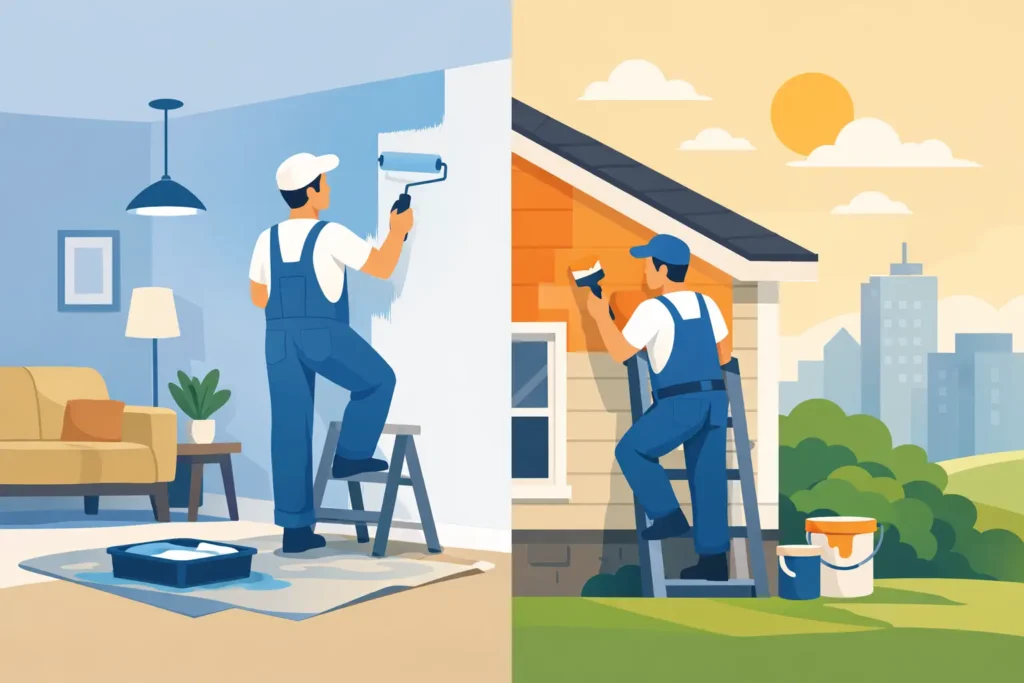
A fresh coat of paint can make a room feel finished or give a building a cleaner, newer look from the street. But when people ask what is interior and exterior painting, they are usually asking about more than color. They want to know what the work includes, why the process matters, and how to make sure the finish lasts.
Interior and exterior painting are two related services, but they are not the same job. Each one uses different products, prep methods, and application standards because the surfaces, conditions, and performance demands are different. If you are planning updates to a home, office, rental property, or commercial building, it helps to understand where those differences start.
What Is Interior and Exterior Painting?
Interior and exterior painting refers to the professional preparation and coating of surfaces inside and outside a property. Interior painting focuses on walls, ceilings, trim, doors, and other indoor surfaces. Exterior painting covers siding, stucco, brick, wood trim, fascia, doors, shutters, and other outside areas exposed to weather.
The goal is not just to improve appearance. Good painting work also protects surfaces, extends the life of materials, and helps a property stay easier to maintain. That is especially true in Oklahoma, where heat, wind, rain, and temperature swings can be hard on exterior finishes.
A quality paint job is really a system. Surface repair, cleaning, patching, sanding, caulking, priming, and product selection all play a role in how the final result looks and how long it holds up.
What interior painting includes
Interior painting usually starts with evaluating the condition of the surface. That may mean checking for nail holes, drywall cracks, peeling paint, water stains, dents, or rough texture. In many homes and commercial spaces, the painting stage only looks clean if the repair stage was done right first.
For that reason, interior painting often overlaps with drywall repair and finishing. Small flaws in drywall become much more visible once a new paint color goes on, especially in rooms with natural light or smooth wall finishes. Prep work may include patching damaged areas, skim coating uneven spots, sanding, and applying primer before any finish coats are applied.
From there, the work may include walls, ceilings, baseboards, crown molding, window trim, doors, cabinets, and built-ins. Not every project includes all of those surfaces. A simple room repaint is different from a full interior refresh, and both are different from painting after a remodel.
Indoor paint products are made with interior performance in mind. Depending on the space, the right paint may need better washability, stain resistance, moisture resistance, or a specific sheen level. A flat finish may work well on ceilings, while satin or semi-gloss may be better for trim, bathrooms, kitchens, or high-traffic areas.
What exterior painting includes
Exterior painting deals with a different set of challenges because the surfaces are exposed to sun, moisture, dirt, and seasonal weather. A good-looking finish matters, but durability matters just as much.
Exterior prep is often more labor-intensive than people expect. Surfaces may need pressure washing, scraping loose paint, sanding rough edges, replacing damaged trim, sealing gaps, and priming bare areas. If that step is rushed, even the best paint will struggle to perform.
Common exterior surfaces include wood siding, fiber cement, stucco, metal, brick accents, soffits, fascia, doors, garage doors, railings, and porches. Each material may require different primers or coatings. A painter cannot treat every exterior surface the same and expect a consistent result.
Weather timing also matters. Exterior paint needs the right conditions to cure properly. If it is applied when surfaces are too hot, too cold, or too damp, the finish can fail early. That is one reason experienced scheduling and job planning make a real difference.
Interior and exterior painting are not interchangeable
One of the biggest misconceptions is that painting is painting, no matter where it happens. In practice, interior and exterior work require different products and methods.
Interior paints are designed for appearance, cleanability, and indoor air considerations. Exterior paints are made to expand and contract with weather changes, resist UV damage, and stand up to moisture. Using the wrong type of paint in the wrong place can lead to peeling, fading, blistering, or poor adhesion.
The prep standards are different too. Inside, the focus is often on smoothness, clean lines, and protecting floors, furniture, and fixtures. Outside, the focus shifts toward surface stability, weather resistance, and protection against water intrusion. Both require attention to detail, but the details are not the same.
Why prep work matters so much
Most paint problems are not really paint problems. They are prep problems.
If drywall dust is left on walls, paint may not bond well. If cracks are not repaired, they can show through the finish. If exterior wood has rot or moisture issues, paint can start failing long before it should. If caulking is skipped around trim and joints, water can get behind the coating and create bigger repair issues later.
That is why a professional paint job should begin with surface correction, not just color selection. On interior projects, that might mean repairing drywall or texture damage before painting starts. On exterior work, it may mean replacing compromised trim boards or addressing peeling areas back to a sound surface.
For homeowners and property managers, this is where price differences often come from. One quote may look lower because it includes less preparation. That can save money upfront, but it often costs more when the finish does not last.
Choosing the right finish for the space
Paint selection is partly about color, but finish and product type matter just as much.
Inside a home or business, different rooms have different needs. Bedrooms and living spaces may prioritize appearance and even coverage. Kitchens, bathrooms, hallways, and commercial interiors usually need more durability because they see more moisture, cleaning, or daily wear. Trim and doors also take more abuse than walls, so they usually benefit from a tougher finish.
Outside, product choice depends on the surface material and the amount of sun and weather exposure. South- and west-facing walls often take more direct sun. Horizontal surfaces and trim details may hold moisture longer. The right coating should match both the material and the environment.
This is one of those areas where it depends. The best product for stucco is not always the best choice for wood trim, and the best sheen for a ceiling is not the right sheen for a front door. Matching the coating to the job is part of getting a result that looks good and holds up.
When painting is cosmetic and when it is protective
Some painting projects are primarily about updating the look of a space. Maybe the walls are outdated, the exterior color is faded, or a property needs a cleaner appearance before sale or lease. That kind of visual improvement has real value.
But painting can also be protective maintenance. Exterior coatings help shield siding and trim from moisture and sun exposure. Interior paint helps walls and trim handle everyday wear, especially in busy households and commercial spaces. In both cases, delaying repainting too long can allow minor wear to turn into more serious damage.
If paint is cracking, chalking, peeling, or pulling away from trim and siding, the issue is no longer just cosmetic. It may be a sign that the underlying surface is exposed and needs attention.
What to expect from a professional painting project
A dependable painting contractor should offer more than labor and materials. The process should be organized from the start, with clear communication about scope, prep, scheduling, and cleanup.
For interior work, that includes protecting floors and furniture, repairing surface defects, applying even coats, and leaving the space clean when the job is complete. For exterior work, it includes proper washing and prep, protecting landscaping and surrounding areas, and planning around weather conditions.
Professional results also show up in the details. Straight cut lines, smooth repaired surfaces, consistent coverage, and a clean jobsite all reflect the quality of the work behind the paint. That is especially true when painting is tied to drywall repair, remodeling, or exterior improvement work. Companies like KCS Drywall understand that the finish only looks as good as the surface underneath it.
Is interior or exterior painting worth it?
For most properties, yes, but the value depends on timing and execution. A well-done paint job can improve appearance, protect materials, support property value, and reduce the need for more expensive repairs later. A rushed job with poor prep can do the opposite.
If you are deciding between interior and exterior updates, the better priority usually depends on the condition of the property. Interior painting may make more sense if the goal is improving daily comfort, refreshing worn rooms, or finishing a remodel. Exterior painting may need to come first if the outside surfaces are exposed, peeling, or showing signs of deterioration.
The right painting project should solve a real problem, not just add color. When the surfaces are repaired properly, the products fit the conditions, and the work is done with care, painting becomes one of the most practical ways to improve a property.
Whether you are updating one room or protecting the whole outside of a building, the best results come from treating painting as finish work and surface protection at the same time.