
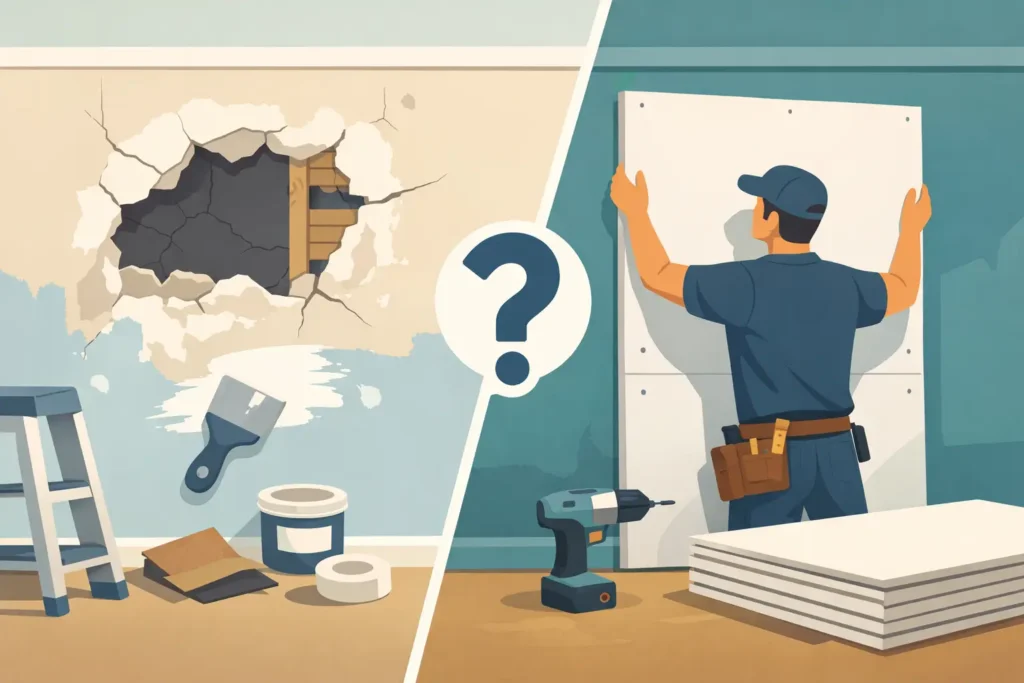
A dent from moving furniture and a soft, stained wall after a plumbing leak may both look like drywall damage, but they should not be handled the same way. Should damaged drywall be replaced? Sometimes, yes. In many cases, a properly completed repair is all that is needed. The right choice depends on what caused the damage, how far it extends, and whether the wall or ceiling is still dry, solid, and structurally sound.
For Oklahoma homeowners and property managers, quick action matters. A small problem can become a larger repair when moisture, mold, loose framing, or repeated settling is left behind the finished surface. A professional assessment helps identify the real condition of the drywall so the repair lasts and the finished area blends cleanly with the rest of the room.
When Damaged Drywall Can Be Repaired
Drywall repair is often the most efficient and cost-effective option when the damage is limited to one area and the surrounding board remains firm. Small nail holes, picture-hanger holes, minor dents, scuffs, and cracks can usually be filled, sanded, textured, primed, and painted without removing a full sheet of drywall.
Larger holes can also be repaired successfully when the edges are solid and there is no moisture issue behind the wall. A skilled drywall contractor can cut the damaged section back to clean, stable material, install a fitted patch, tape the seams, and apply joint compound in thin layers. Once the repair is sanded and texture is matched, it should look like part of the original wall rather than an obvious patch.
Cosmetic damage is generally a good candidate for repair. That includes damage caused by door handles, minor impacts, removed wall décor, or everyday wear in high-traffic areas. The key is that the drywall has not lost its strength.
Hairline cracks may also be repairable, especially when they are isolated and not growing. Some cracks develop as a house settles or materials expand and contract with seasonal temperature changes. Repairing the crack with proper tape and compound can restore a smooth finish. However, recurring or widening cracks deserve a closer look before cosmetic work begins.
Should Damaged Drywall Be Replaced After Water Damage?
Water damage changes the decision. Drywall is made with a gypsum core covered by paper, and that paper facing can absorb moisture. Once drywall becomes saturated, it may swell, soften, crumble, or support mold growth. Drying the surface alone does not always mean the material is safe to keep.
Replacement is often the better choice when a leak, flood, roof issue, or appliance failure has soaked the drywall for an extended period. The source of water must be fixed first. Installing new drywall over an active plumbing or roof problem only delays the same damage from returning.
A small, clean-water leak caught quickly may allow for drying and limited repair if the drywall remains firm and there are no signs of contamination or mold. But if the wall feels soft, the paper is peeling, the area is bowed, or staining keeps coming back, removal is usually the more dependable solution.
Ceilings need extra attention after water damage. Sagging drywall can become a safety concern, particularly when it has pulled away from fasteners or feels heavy with retained moisture. A stained ceiling may look minor from below, yet the material above it could be weakened. In that situation, replacement protects both the appearance of the room and the people using it.
Signs Replacement Is the Better Long-Term Fix
Replacing drywall is not always necessary, but it is the right call when repairs would only cover up a compromised surface. Watch for these conditions:
- Drywall that is soft, swollen, sagging, crumbling, or separating from the wall or ceiling framing.
- Visible mold, musty odors, or staining that continues after the water source has been repaired.
- Large sections with multiple holes, deep cracks, or extensive damage that would require repeated patches.
- Damage from contaminated water, including sewage backups or floodwater, which may require removal for health and safety reasons.
- Cracks that return after repair, especially around doors, windows, ceilings, or long wall seams.
Replacement may also make more sense during a remodeling project. If a wall needs new wiring, insulation, plumbing access, framing work, or a layout change, removing and replacing the affected drywall can create a cleaner and more durable result than attempting several small patches.
For rental properties and commercial spaces, replacement can be the practical choice when wall damage is widespread. A smooth, newly finished surface is easier to paint, maintain, and present professionally than a wall with visible patchwork from years of repairs.
The Cause Matters as Much as the Damage
The visible mark on drywall is only part of the story. Before deciding to repair or replace it, find out why it happened. Impact damage is usually straightforward. Moisture, movement, and structural issues require more investigation.
For example, a crack above a doorway may be a normal settling crack, but it can also point to framing movement. A brown ceiling stain might come from an old roof leak that has already been repaired, or it could be evidence of an active leak. A bulge in a wall can result from water, loose drywall, damaged framing, or pressure from something behind the surface.
Repairing the finish without correcting the cause is rarely a good investment. The patch may look good for a while, then crack, stain, or loosen again. Reliable drywall work starts with a clear diagnosis, followed by the right repair plan for the condition of the wall.
Why a Proper Drywall Repair Is More Than Patching a Hole
A lasting drywall repair requires more than applying compound over damaged material. The damaged area must be cleaned up, stabilized, and supported correctly. Seams need proper tape, and joint compound must be applied in controlled layers so it dries evenly and sands smooth.
Texture matching is another detail that makes a major difference. Walls and ceilings may have orange peel, knockdown, smooth finishes, or other textures that are difficult to blend without experience. Even a structurally sound patch can stand out if the texture, primer, or paint sheen does not match the surrounding surface.
When replacement is needed, careful installation matters just as much. New drywall should be cut accurately, fastened securely, taped cleanly, and finished to match adjacent surfaces. Dust control, protection for floors and furniture, and a clean jobsite also make the process easier for homeowners and occupants.
Repair vs. Replacement: Considering Cost and Value
A simple repair generally costs less than replacement because it uses less material and labor. That makes repair the sensible option for limited cosmetic damage. But choosing the least expensive immediate fix can cost more later if the drywall is wet, weak, mold-affected, or repeatedly cracking.
Replacement has a higher upfront cost because it may involve removing damaged material, inspecting the area behind it, installing new board, finishing seams, matching texture, and repainting. In return, it provides a fresh, stable surface and allows hidden issues to be addressed before they cause further damage.
The best value comes from choosing the solution that fits the condition of the drywall, not simply the smallest initial estimate. An honest contractor should explain whether a repair is likely to hold, where replacement is necessary, and what steps are needed to restore the area properly.
Get a Clear Answer Before Work Begins
If you are unsure whether a damaged wall or ceiling can be repaired, avoid pressing on soft areas, scraping possible mold, or painting over water stains before the cause is known. Take note of when the damage appeared, whether it has changed, and whether there has been a leak, storm event, or impact nearby.
KCS Drywall helps Oklahoma property owners make practical decisions about damaged drywall, from clean minor repairs to full section replacement and refinishing. A careful evaluation can prevent unnecessary replacement when a repair will do the job, while also preventing a temporary patch from hiding a problem that needs real attention.
A solid wall should look clean, feel firm, and stay that way. When the damage raises doubts, addressing it correctly now is the simplest way to protect the finish, the structure behind it, and the value of your property.