
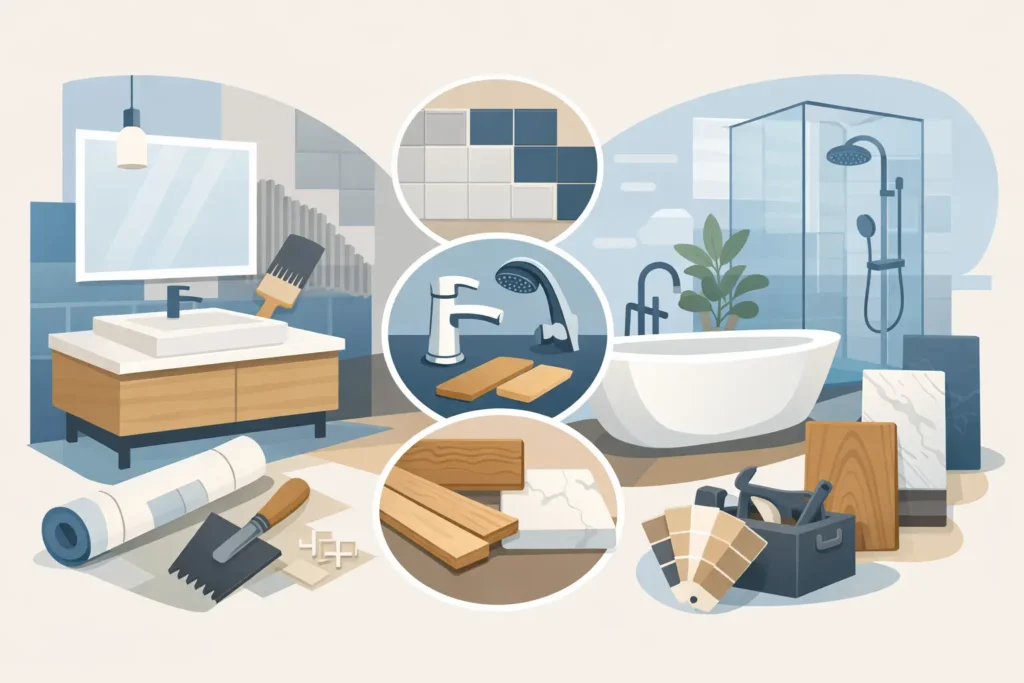
A bathroom can look finished on installation day and still become a problem within a few years if the materials were not chosen for moisture, daily use, and easy maintenance. The best bathroom remodel materials are not always the most expensive options. They are the ones that fit the room, hold up to real family routines, and are installed correctly from the framing and drywall to the final finish.
For homeowners in the Oklahoma City metro, a smart bathroom remodel starts with the wet areas. Showers, tub surrounds, floors, and vanity walls need materials that can handle humidity and occasional splashes without swelling, staining, or failing behind the surface. From there, you can balance style, budget, and long-term upkeep.
How to Choose the Best Bathroom Remodel Materials
Before selecting tile samples or a vanity color, consider how the bathroom will be used. A primary bathroom shared by two adults has different demands than a busy hall bath used by children, guests, or tenants. A material that looks great in a low-traffic powder room may not be the right choice for a full bathroom with daily showers.
Start with moisture resistance. Bathrooms need more than surfaces that simply look water-resistant. The materials behind the finished surface matter just as much. Proper backing board, waterproofing, sealed joints, ventilation, and careful installation protect the structure of the home and help prevent hidden damage.
Next, think about maintenance. Natural stone, for example, has a high-end appearance, but it usually needs periodic sealing and can be more sensitive to certain cleaners. Porcelain tile offers a similar polished look in many styles while requiring less upkeep. There is no single right answer, but there should be a clear understanding of what each finish requires.
Finally, choose materials that work together. A durable floor can be undermined by weak subfloor preparation. A quality vanity top can still fail if moisture reaches unprotected cabinet edges. Reliable remodeling is built in layers, not just in the final details that are visible after the work is complete.
Best Bathroom Remodel Materials by Area
Flooring: Porcelain Tile Leads for Durability
Porcelain tile is one of the strongest choices for bathroom flooring. It is dense, highly water-resistant, available in a wide range of colors and patterns, and suitable for busy bathrooms. Wood-look porcelain can bring warmth to a room without the concerns that come with using real hardwood near water.
For safety, choose a tile with enough texture or slip resistance for a wet environment, especially near a shower or tub. Large-format tile can create a clean, modern look with fewer grout lines, but smaller tile may provide better traction in a shower area. The best choice depends on the layout and who uses the room.
Luxury vinyl plank and luxury vinyl tile can also work well in bathrooms when installed over a properly prepared floor. They are comfortable underfoot, budget-friendly, and available in convincing wood and stone looks. However, vinyl is not the best answer for every project. Standing water can still work its way into seams or around edges, particularly if installation is rushed. It is often a practical option for a guest bath or a budget-conscious update, while porcelain is usually the stronger long-term choice for a heavily used bathroom.
Natural stone flooring offers a distinctive look, but it is typically more expensive and requires more maintenance. If you choose marble, travertine, or another natural stone, plan for sealing and use cleaners approved for the material. It is a worthwhile choice when its character is a priority and the homeowner is comfortable with the upkeep.
Shower Walls: Tile or Solid Surface, Done Right
Tile remains a trusted choice for shower walls because it gives homeowners flexibility in size, color, pattern, and price. Ceramic tile can be a good value for walls, while porcelain provides added durability and lower water absorption. Both can perform well when installed over the correct waterproof system.
The most important point is that tile and grout are not the waterproofing layer. The wall assembly behind them must be protected. Cement board or another approved tile backer, properly sealed seams, and a complete waterproof membrane help keep moisture from reaching framing and drywall. Water-resistant drywall is useful in some bathroom areas, but it should not be used as a direct backer for a tiled shower.
Solid-surface shower panels are another excellent option. These panels have fewer seams than tile, are easier to clean, and can give a bathroom a clean, updated appearance. They are especially appealing for homeowners who want to reduce grout maintenance. The trade-off is less design flexibility than tile, though modern panel styles offer more choices than many people expect.
For tub surrounds, acrylic and fiberglass units are often practical, affordable, and easy to maintain. A quality unit installed correctly can provide years of service. They may not offer the custom appearance of tile or solid surface, but they are a sensible solution for rental properties, secondary bathrooms, and projects where cost control matters.
Walls and Ceilings: Use the Right Drywall and Paint
Bathroom walls outside the shower area need a smooth, durable finish that stands up to humidity. Moisture-resistant drywall is often a good choice in areas prone to dampness, while standard drywall may be appropriate in well-ventilated parts of the room. What matters is matching the material to the location and finishing it carefully for a clean surface.
A quality bathroom paint is just as important. Choose a mildew-resistant interior paint designed for humid spaces, typically in an eggshell or satin finish. These finishes are easier to wipe down than flat paint and hold up better around sinks and toilets. Semi-gloss can work in certain areas, but it may highlight wall imperfections more easily.
Ceilings deserve attention as well. Steam rises, and a poorly ventilated bathroom can show peeling paint or staining overhead before other damage becomes visible. Proper surface preparation, the right primer when needed, and bathroom-rated paint help protect the finish.
Vanity Cabinets and Countertops: Focus on Water Exposure
Vanity cabinets see more water than many homeowners realize. Drips around sinks, wet towels, and leaks from plumbing connections can damage low-quality particleboard cabinets quickly. Plywood-box construction, solid wood components, or well-made moisture-resistant engineered materials are generally better investments for a frequently used bathroom.
Quartz is one of the best countertop materials for a bathroom vanity. It is nonporous, durable, and easy to clean without routine sealing. It also comes in a wide range of looks, from simple white surfaces to patterns that resemble natural stone.
Solid-surface countertops are another dependable choice. They offer a smooth appearance, resist moisture well, and can sometimes be repaired if scratched. Granite remains popular, but it usually needs sealing and may have more variation than homeowners want in a smaller room. Marble is beautiful but can etch or stain, making it better suited for homeowners who appreciate a lived-in patina rather than a flawless surface.
Grout, Caulk, and Fixtures: Small Materials, Major Impact
The details around tile and plumbing fixtures often determine how well a bathroom ages. Epoxy grout offers strong stain resistance and less maintenance than traditional cement grout, though it costs more and requires experienced installation. High-quality cement grout with a proper sealer can also perform well, especially when the project budget calls for it.
Use flexible, mildew-resistant silicone caulk where different surfaces meet, such as around tubs, shower pans, backsplashes, and corners. Grout is not a replacement for caulk in movement joints. This small distinction helps prevent cracks and water entry over time.
For fixtures, brushed nickel and chrome remain dependable choices because they are widely available, easy to coordinate, and forgiving of water spots. Matte black creates a strong modern contrast but can show residue more easily in some homes. More important than the finish is choosing quality valves, shower components, and faucets from established manufacturers with available replacement parts.
Do Not Overlook Ventilation and Installation
Even the best material selection cannot overcome poor ventilation. A correctly sized exhaust fan removes moisture after showers and helps protect paint, drywall, cabinetry, and trim. If the existing fan is loud, weak, or rarely used, replacing it should be part of the remodel conversation.
Installation quality also matters at every stage. Floors need a sound substrate, shower systems need complete waterproofing, and drywall seams need professional finishing before paint goes on. KCS Drywall approaches bathroom remodeling with the same attention to clean preparation and durable finishes that every hard-working home deserves.
When you are choosing bathroom materials, spend where moisture and daily use are toughest, then select finishes that fit your maintenance expectations. A well-built bathroom should feel good to use every morning and give you confidence long after the remodel is complete.