
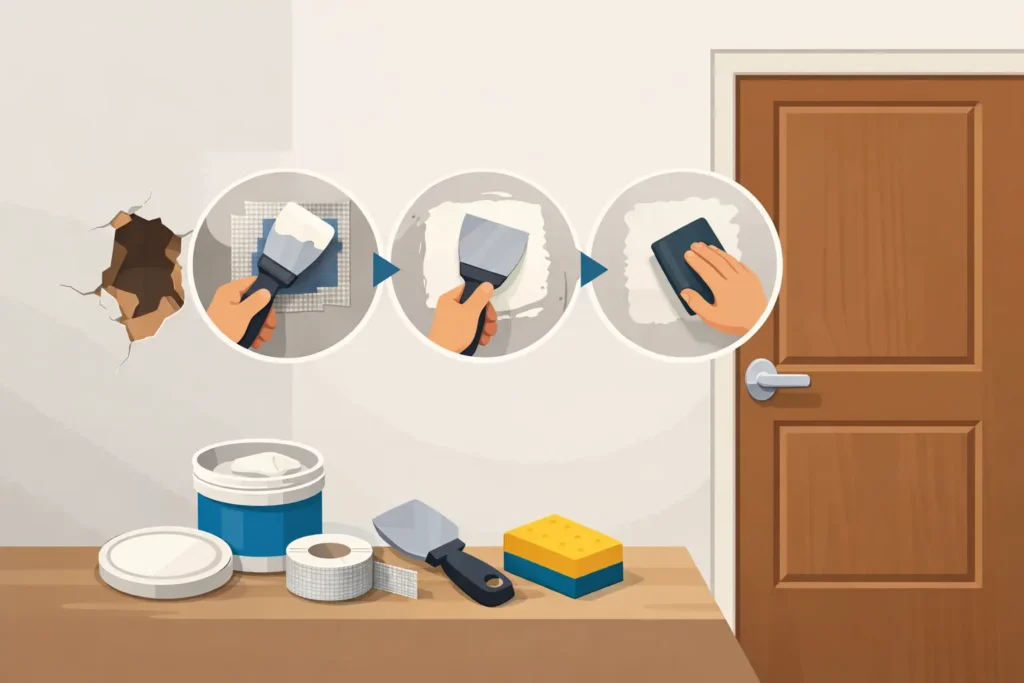
A doorknob hole in drywall rarely stays small. What begins as a dent behind a bedroom or bathroom door can turn into cracked paper, broken gypsum, and a patch that is hard to hide after painting. Knowing how to repair door holes correctly helps you restore the wall, but the method needs to match the size and condition of the damage.
Most holes behind doors are caused by missing, loose, or poorly placed door stops. Repairing the drywall without fixing that cause means the new patch may be damaged the next time the door swings open. A durable repair starts with a sound patch and ends with proper protection for the wall.
First, Identify What the Door Damaged
Before gathering materials, confirm whether the hole is in the drywall or the door itself. A doorknob that punches through a wall creates drywall damage. A hollow-core interior door with a puncture needs a different repair approach, often involving foam filler, a patch, and careful refinishing.
For drywall, look beyond the visible opening. Press gently around it. If the surface feels soft, cracked, or loose beyond the hole, remove that weakened material before patching. Covering damaged drywall paper or crumbling gypsum with joint compound may look acceptable at first, but it can crack or bubble later.
Small dents and holes under about 2 inches are typically simple repairs. Larger openings, especially those with broken edges or damage near a corner, need a backing piece or a properly fitted drywall patch. If the impact cracked a broad area of wall, a larger square patch often produces a cleaner result than trying to fill every fracture individually.
Tools and Materials for a Clean Repair
The exact materials depend on the hole, but a standard drywall repair kit should include a utility knife, sanding sponge, drywall saw, joint compound, drywall tape, and a putty knife or taping knife. For medium and large holes, you will also need a small piece of matching drywall, drywall screws, and wood backing strips.
Keep a drop cloth below the work area and use a dust mask when sanding. Drywall dust travels farther than most homeowners expect, particularly in bedrooms, hallways, and finished living areas. Taking a few minutes to protect floors and nearby furniture makes cleanup much easier.
How to Repair Door Holes Under 2 Inches
For a shallow doorknob dent or small puncture, start by trimming away loose paper and rough gypsum with a utility knife. The goal is not to make the hole bigger without reason. It is to create firm, clean edges that will hold compound.
Apply a thin coat of joint compound with a putty knife, pressing the material into the damaged area. For a deep dent, it is better to use two or three thin coats than one thick application. Thick compound shrinks as it dries and often leaves a low spot, crack, or uneven texture.
Let each coat dry fully, then sand it lightly before applying the next. Feather the final coat several inches beyond the original hole so the repair blends gradually into the wall. When the surface feels flat under your hand and does not show an edge in side lighting, it is ready for primer and paint.
A self-adhesive mesh patch can work for a small puncture, but it is not always the best choice for a shallow dent. Mesh adds thickness, which means you must feather more joint compound over a wider area. For a simple indentation, compound alone usually creates the least noticeable repair.
Repairing a Medium Doorknob Hole
Holes from 2 to 6 inches wide need more support than joint compound can provide on its own. A mesh patch is a practical option when the drywall around the opening is solid and flat. Place the patch over the clean opening, then apply joint compound across it with a wide taping knife.
The first coat should cover the mesh completely without building excessive thickness. After it dries, apply a second and then a final coat, each one wider than the last. This gradual feathering is what prevents a visible raised square after painting.
If the surrounding drywall is cracked or broken, skip the mesh patch and cut out the damaged section instead. A solid drywall patch takes a little more work, but it will generally hold up better where doors receive repeated impact and vibration.
Repairing Large Holes Behind a Door
For a large door hole, cut the damaged area into a clean square or rectangle. Use a drywall saw and make the opening large enough to remove all compromised material. Straight edges are easier to patch, tape, and finish than jagged broken drywall.
Slide two wood backing strips into the opening, one on each side, leaving enough wood exposed to support the replacement drywall. Drive drywall screws through the existing wall and into the strips. Then cut a new piece of drywall to fit the opening, secure it to the backing, and check that it sits flush with the surrounding wall.
Cover the seams with drywall tape. Paper tape creates a strong, flat seam when installed properly with joint compound underneath, while mesh tape is convenient for many small repairs. For a larger patch, paper tape and thin coats of compound often provide the smoothest finish.
Apply three coats of joint compound. The first embeds the tape, the second builds out the transition, and the third feathers the patch into the surrounding wall. Allow proper dry time between coats. Rushing this step is one of the main reasons repaired walls show ridges, cracks, or flashing after paint is applied.
Match the Wall Texture Before Painting
A flat patch on a textured wall can stand out just as much as an unpainted hole. Oklahoma homes may have smooth walls, orange peel texture, knockdown texture, or heavier hand-applied finishes. Matching texture takes patience because the repair can look different as it dries.
For light orange peel, use a texture spray on a test piece of cardboard first. Apply it lightly, allow it to set, and compare the pattern to the wall before spraying the patch. Knockdown texture requires another step: spray or apply the texture, let it firm up slightly, then lightly knock down the peaks with a wide knife.
Do not texture over an unsanded or uneven patch. Texture can hide very minor variation, but it will not correct raised tape joints, deep sanding scratches, or an obvious hump in the drywall.
Prime and Paint for an Invisible Finish
Always prime fresh joint compound before painting. Drywall compound absorbs paint differently than a finished wall, and skipping primer can leave dull spots or uneven sheen. A quality drywall primer seals the patch and gives the finish coat a more consistent appearance.
For the best color match, paint from corner to corner when possible. Touching up only the patch can work with newer paint and flat finishes, but older walls often have fading, cleaning marks, or slight color changes that make the touch-up visible. Satin and semi-gloss paint are especially likely to show a difference in sheen.
Use the same roller nap as the original paint when you can. A different roller can leave a noticeably different texture even if the color is an exact match.
Prevent the Next Door Hole
After the repair is complete, install a reliable door stop. A baseboard-mounted stop works well when there is room for it. Hinge-mounted stops are useful where a baseboard stop could damage trim, and wall-mounted bumper plates can protect an area that is already vulnerable.
Check that the stop catches the door before the knob reaches the wall. If a stop is loose, replace it rather than tightening it repeatedly into stripped wood. For heavy exterior or utility doors, choose hardware designed to handle the additional force.
When It Makes Sense to Call a Drywall Professional
A homeowner can handle many small holes with basic tools and careful preparation. Professional help is often worthwhile when the damage is large, the wall has a difficult texture, the hole is near electrical wiring, or the repair must blend into a high-visibility space. Rental turnovers, commercial properties, and multi-room paint projects also benefit from efficient, consistent finishing.
KCS Drywall provides dependable drywall repair and finishing for homeowners and property owners throughout the Oklahoma City area. A properly repaired wall should look clean, feel solid, and stay that way long after the paint dries. Address the door stop along with the drywall, and that repaired wall can remain one less thing to worry about.