
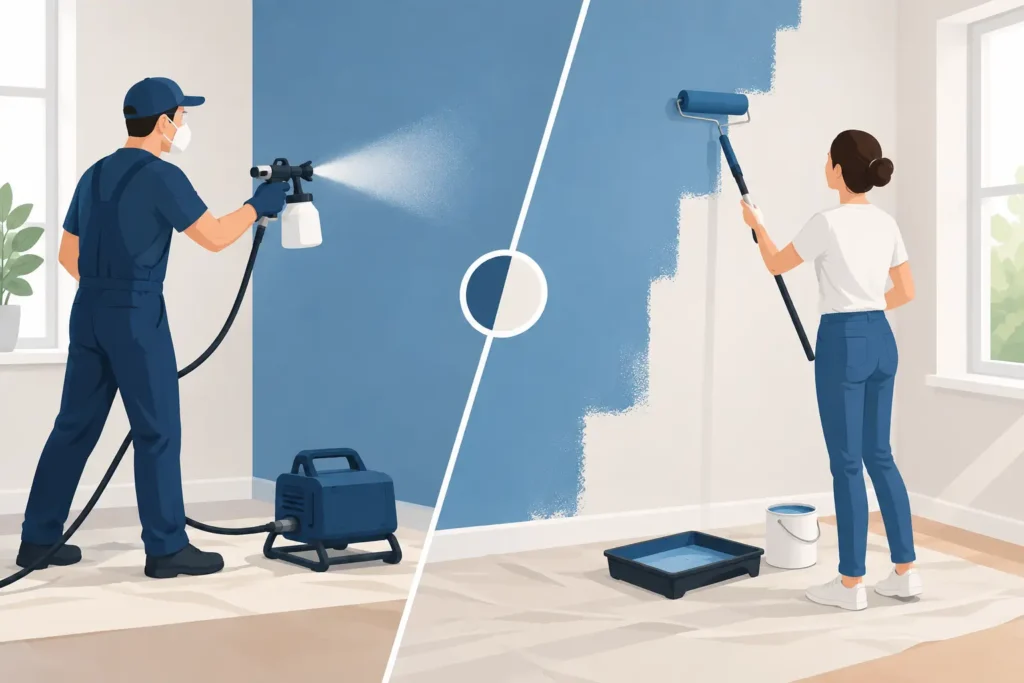
A freshly repaired living room can look nearly finished until the paint goes on. That is when homeowners often face the paint sprayer vs roller indoors decision. A sprayer can cover a room quickly and leave a smooth, even coat. A roller is simpler to control, easier to protect around furniture, and usually the better choice for an occupied home.
Neither method is automatically right for every room. The best choice depends on the condition of the walls, the amount of masking the space requires, the type of paint, and whether the priority is speed, finish quality, or minimal disruption.
Paint Sprayer vs Roller Indoors: The Real Difference
A paint sprayer turns paint into a fine mist and applies it across a surface in overlapping passes. On open walls, ceilings, doors, trim, and new drywall, this can produce fast, consistent coverage with very little roller texture. Professional painters often spray large vacant spaces, especially during new construction or extensive remodeling.
A roller applies paint through direct contact. It is slower across a large open area, but it places paint exactly where it belongs. Rollers are practical for bedrooms, hallways, furnished homes, touch-ups, and projects where homeowners want to keep preparation and cleanup manageable.
The decision is not simply about which tool paints faster. It is about total job time. Spraying may take less time to apply paint, but it can require significantly more time to protect floors, windows, cabinets, fixtures, outlets, and every item left in the room.
When an Indoor Paint Sprayer Makes Sense
A sprayer earns its place when the room is empty or nearly empty and there is enough square footage to justify the setup. It is particularly useful for ceilings, wide walls, unfinished rooms, garage interiors, and full-home repainting projects. It is also a strong option when painting detailed trim, doors, cabinets, or textured surfaces that are difficult to cover evenly with a roller.
Speed on large, prepared projects
Once masking is complete, a sprayer can cover broad surfaces much faster than a roller. This helps on projects with several rooms, high ceilings, or extensive new drywall. Speed matters most when the work area is clear and the crew can move efficiently from surface to surface.
Sprayers also provide a consistent coat across large areas when used correctly. A professional maintains the right distance, overlap, pressure, and spray pattern. Those details prevent thin spots, heavy edges, runs, and uneven sheen.
A smoother finish on the right surfaces
A roller leaves a light stipple texture, even with a quality cover. In most rooms, that texture is normal and not noticeable. But smooth walls, cabinet doors, trim, and doors can benefit from sprayed paint because the finish can look more uniform.
This advantage is especially noticeable under bright windows or overhead lighting. A sprayed finish can reduce visible lap marks and heavy roller texture, provided the drywall has been properly finished and sanded first.
Where spraying can create problems
Overspray is the biggest indoor concern. Fine paint particles can travel farther than expected and settle on floors, glass, hardware, light fixtures, appliances, and nearby surfaces. A room must be carefully sealed and masked before spraying begins.
Spraying can also magnify wall imperfections. Patches, poorly feathered drywall repairs, uneven texture, and sanding scratches may become more visible after paint dries. The paint application method cannot replace quality surface preparation. Clean drywall repair, proper priming, and careful sanding are what make a painted wall look finished.
When a Roller Is the Better Indoor Choice
For most single-room repaints, a roller is the dependable choice. It allows a homeowner or painter to work carefully around occupied spaces without turning the room into a full containment area. Drop cloths, painter’s tape, a brush for cutting in, and a quality roller are usually enough to get started.
Better control in furnished rooms
If a room contains furniture, rugs, electronics, window treatments, or belongings that cannot easily be moved, rolling is typically safer and more efficient. You still need to protect the floor and cover nearby items, but the risk of paint drifting across the room is much lower.
A roller also gives the painter immediate feedback. It is easy to see where paint has been applied, maintain a wet edge, and correct a missed area before it dries. That control is valuable in spaces with lots of corners, built-ins, windows, and wall-mounted fixtures.
Easier setup and cleanup
A roller project has a lower barrier to entry. There is no sprayer to strain, prime, test, disassemble, and thoroughly clean. For a bedroom or accent wall, the time saved on setup can outweigh the slower application speed.
Cleanup is more straightforward as well. Roller covers, trays, brushes, and liners are easier to wash or dispose of than a sprayer with hoses, tips, filters, and internal components. If paint dries inside a sprayer, it can lead to clogs and poor performance on the next project.
The finish can still look professional
A quality roller finish is not a compromise when the right materials and technique are used. Use a roller nap that suits the wall texture, avoid overloading the cover, and maintain a wet edge from top to bottom. For smooth drywall, a shorter nap helps keep texture subtle. For lightly textured walls, a medium nap provides better coverage without leaving dry spots.
The key is not rushing the final pass. Consistent pressure and a properly loaded roller help create an even coat with a uniform sheen.
Preparation Matters More Than the Tool
The best paint jobs start before the first coat. Walls should be clean, dry, and free of loose drywall compound, dust, grease, and peeling paint. Nail pops, dents, cracks, and damaged corners should be repaired before priming. If drywall repairs are new, they need to be sanded smooth and primed so they do not flash through the finish coat.
With a sprayer, preparation means masking nearly everything that should not receive paint. Floors need full protection. Plastic sheeting may be needed over doors, cabinets, windows, vents, and fixtures. Nearby rooms may need to be sealed off to limit drifting paint particles.
With a roller, preparation is more focused but still important. Protect flooring, remove outlet covers when appropriate, cut in cleanly around trim, and use a high-quality tape where a crisp edge is needed. Skipping prep rarely saves time once you are cleaning paint off a baseboard or replacing a stained carpet section.
Cost, Paint Use, and Practical Considerations
Rollers cost less to purchase and are generally more forgiving for occasional projects. A good roller frame, extension pole, tray, covers, brush, and drop cloths can handle most interior repainting work without a large equipment investment.
A sprayer costs more upfront and may use more paint because some material becomes overspray. Paint also needs to be strained, and some sprayers require thinning depending on the product and equipment. For a larger project, those costs can be worthwhile. For one small room, they often are not.
Ventilation deserves attention with either method. Keep the room ventilated as recommended by the paint manufacturer, especially when using primers or coatings with stronger odors. Spraying requires additional protection, including the correct respirator and eye protection. A simple dust mask is not adequate protection from airborne paint mist.
A Practical Choice for Your Interior Project
Choose a sprayer when you have an empty, well-protected space, a substantial amount of surface area, and a reason to prioritize production speed or an exceptionally smooth finish. It is most effective when the walls are properly repaired and the painter has the experience to control overspray and maintain an even coat.
Choose a roller when you are repainting one or two occupied rooms, working around furniture, handling touch-ups, or looking for a reliable finish with less setup. It may take longer to cover the walls, but it often saves time overall and reduces the risk of a costly mess.
For homes with patched drywall, texture concerns, or visible wall damage, address the surface first. Paint looks only as good as the wall beneath it. A careful repair and a clean, properly applied finish will make the room feel renewed, whether the final coat comes from a sprayer or a roller.