
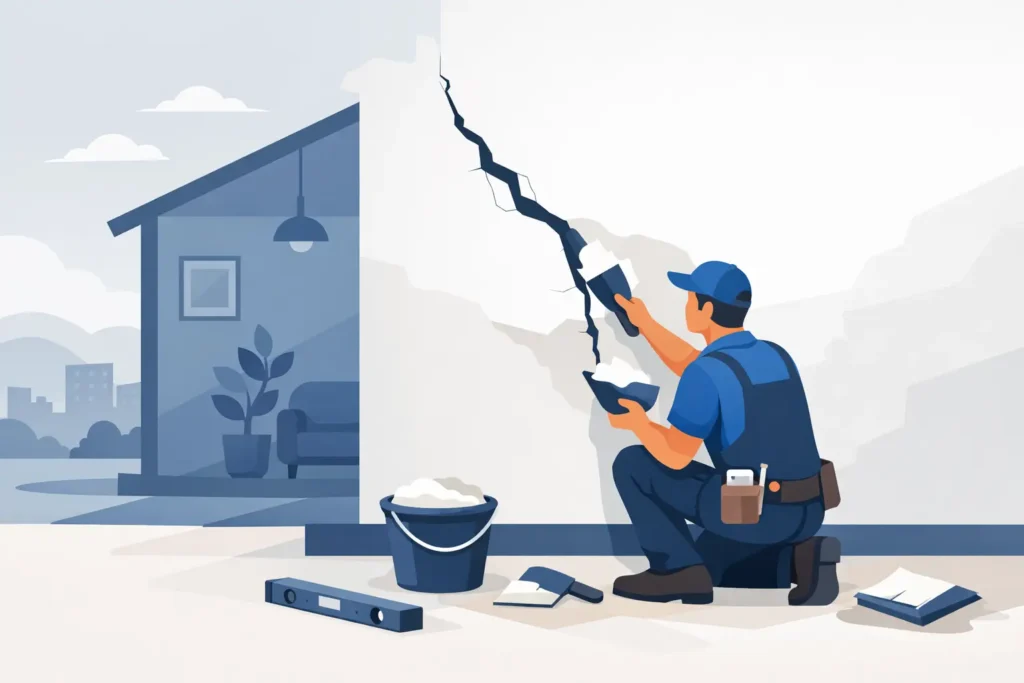
A crack above a doorway, along a window corner, or across a living room wall can make an otherwise well-kept home look neglected. Repairing settlement wall cracks is not just a matter of adding joint compound and paint. A lasting repair begins with understanding whether the movement has stopped, what caused the damage, and how to restore the wall without leaving a visible patch behind.
In Oklahoma, seasonal weather changes, expanding clay soils, moisture issues, and normal home aging can all contribute to minor settlement cracks. Some are cosmetic. Others deserve a closer look before any drywall work begins. The right approach protects your investment and gives the repaired area a clean, durable finish.
What Settlement Wall Cracks Usually Mean
Homes naturally move over time. Framing materials adjust, foundations settle, and changes in temperature and humidity cause materials to expand and contract. Small hairline cracks in drywall are common, especially near doors, windows, ceiling corners, and wall transitions.
Settlement cracks often appear where different parts of a home meet or where stress collects around openings. A thin vertical or diagonal crack may result from ordinary movement, but the location, width, and pattern matter. A crack that has been repaired before and returns may mean the surface was patched without addressing movement beneath it.
Drywall itself is not usually the source of the problem. It is often the first surface to show that the structure, framing, or foundation has shifted. That distinction matters because a perfect-looking drywall repair will not stay perfect if the underlying issue is still active.
When a Wall Crack Needs More Than a Cosmetic Repair
Not every crack calls for a structural evaluation, but homeowners should avoid assuming every crack is harmless. Watch for cracks that widen over time, measure more than about one-eighth inch, run diagonally from window or door corners, or appear alongside doors that stick or gaps around trim.
Cracks accompanied by uneven floors, separated brick or exterior siding, water intrusion, or noticeable changes in more than one room should be evaluated before drywall repair begins. In those cases, a foundation or structural professional can determine whether movement is active and whether repairs are needed below the finished surface.
If the cause has been corrected or the movement is minor and stable, professional drywall repair is the next step. This is where careful preparation makes all the difference. Filling a crack alone may hide it briefly, but it does not create the reinforcement needed for a dependable result.
Repairing Settlement Wall Cracks for a Lasting Finish
A quality repair starts with preparing the damaged area properly. Loose compound, cracked tape, and weak material need to be removed so the repair is built on a solid surface. The crack may be opened slightly to create room for new compound and to ensure the damaged edges are fully addressed.
For cracks at drywall seams, fresh tape is often necessary. Paper tape or mesh tape can reinforce the joint, but the best material depends on the crack location and the condition of the surrounding drywall. Corners, ceiling lines, and areas with repeated movement may require a more specialized approach than a simple flat-wall seam.
After reinforcement, the wall is finished in thin, controlled coats of joint compound. Each coat is allowed to dry before sanding and applying the next. Rushing this process can lead to shrinkage, ridges, or a repair that shows through after painting.
The final challenge is matching the existing wall texture. Smooth walls require careful feathering so the patch disappears into the surrounding surface. Orange peel, knockdown, and other textures require a trained eye and the right application method. Even a structurally sound repair can stand out if the texture or paint sheen does not match.
Once the wall is smooth and properly textured, it should be primed before paint is applied. Primer helps create an even surface and prevents the repaired area from flashing differently under light. Depending on the age and condition of the existing paint, painting the full wall may provide the most consistent final appearance.
Why Quick Patches Often Fail
The most common mistake is applying spackle or joint compound directly over a crack without tape or reinforcement. This may look acceptable at first, especially on a small hairline crack, but the same line can reappear as the wall experiences normal movement.
Another problem is skipping proper surface preparation. Old loose tape and failed compound cannot support new material. Covering them adds thickness but does not fix the weak point underneath. Poor sanding, an unmatched texture, or spot painting without primer can also leave a repair visible from across the room.
There is also a timing issue. Repairing a crack while moisture problems, drainage issues, or structural movement continue can waste time and money. The drywall work should come after the source of the issue is understood and addressed. That does not always mean a major foundation repair is needed, but it does mean the wall should not be treated as an isolated problem.
DIY Repair vs. Hiring a Drywall Professional
A homeowner may be able to handle a very small, stable hairline crack in an easy-to-reach area. The work still requires patience, careful sanding, and a willingness to repaint enough of the wall to blend the finish. Small repairs can become frustrating when the existing texture is difficult to match or when light from windows exposes every imperfection.
Hiring a professional is often the better choice for recurring cracks, cracks along seams, long ceiling cracks, damaged corners, or repairs in visible spaces such as entryways, living rooms, and kitchens. Professional drywall crews have the tools and experience to remove failed material, reinforce the repair correctly, blend texture, and leave the area ready for paint.
For property managers and commercial clients, professional repair also helps keep interiors presentable with less disruption. A clean jobsite, contained dust, dependable scheduling, and a consistent finish matter when tenants, customers, or employees use the space every day.
Preventing Future Drywall Cracks
No home can be completely free of minor movement, but a few maintenance steps can reduce conditions that contribute to cracking. Keep gutters and downspouts directing water away from the foundation. Make sure soil grades away from the home rather than allowing water to collect near exterior walls. Address plumbing leaks and roof leaks quickly before moisture damages framing or drywall.
Inside the home, maintain reasonably consistent temperatures and humidity when possible. Large swings can cause wood framing and drywall materials to expand and contract more noticeably. If a crack returns after repair, take a photo, note the date, and watch for changes. That record can help determine whether the issue is active or simply a finish failure.
A Better Repair Starts With the Right Diagnosis
Settlement wall cracks can be unsettling, but they do not always signal a serious structural problem. What matters is treating the crack according to its cause, not just covering the visible line. Once movement has stabilized and the damaged drywall is repaired with the right preparation, reinforcement, texture work, and paint finish, the wall can look clean again and stay that way.
For homeowners in the Oklahoma City area, KCS Drywall provides professional drywall repair with the careful workmanship needed to make damaged walls look finished, not patched. A clear assessment and a properly completed repair can bring confidence back to the rooms you use every day.