
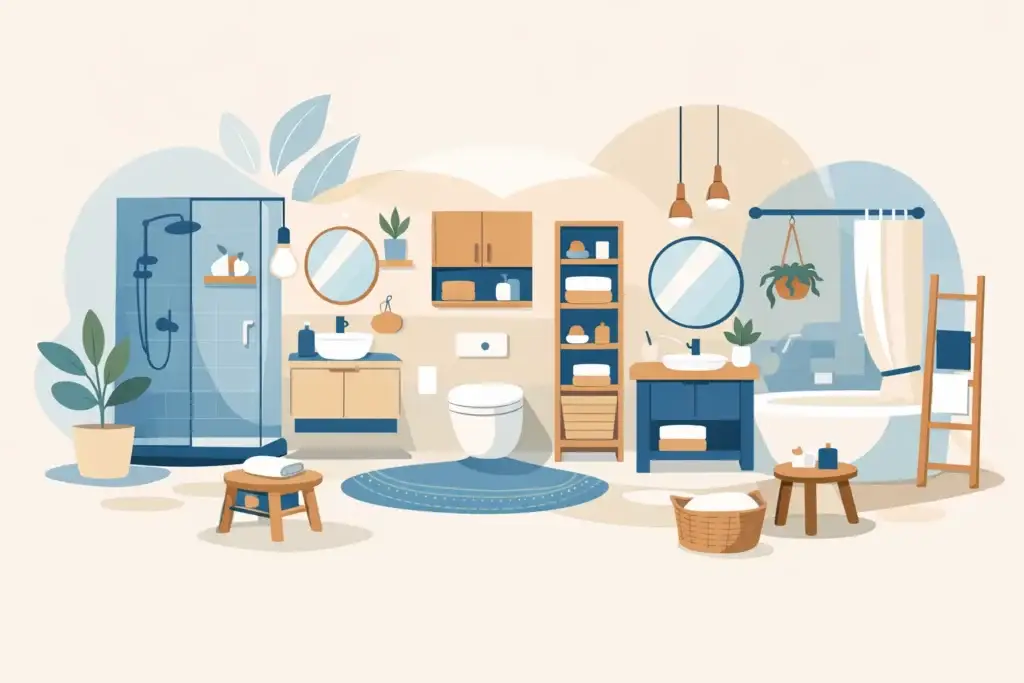
A small bathroom tells on the whole house. When it feels cramped, dated, or hard to clean, you notice it every day. The best small bathroom remodel ideas are not about forcing in more features. They are about making the room work better, look cleaner, and hold up to daily use.
In Oklahoma homes, that usually means balancing appearance with durability. Bathrooms deal with constant moisture, heavy traffic, and tight layouts that leave little room for mistakes. A smart remodel starts with choices that improve function first, then uses finishes and details to make the space feel larger and more polished.
Small bathroom remodel ideas that improve function first
The biggest upgrade in a small bathroom is often the layout. If the room feels awkward, no tile or paint color will fix that. Before choosing finishes, look at how the door swings, where storage is missing, and whether the vanity, toilet, and shower leave enough room to move comfortably.
A common fix is replacing a bulky vanity with a slimmer model that still gives you useful storage. Even a few extra inches of open floor area can make the room feel less crowded. Wall-mounted vanities can help with that visual openness, but they are not always the right fit if you need maximum cabinet space. It depends on whether your priority is storage, floor visibility, or both.
Another practical move is changing the tub-shower setup. In many smaller bathrooms, a rarely used tub takes up valuable room. A walk-in shower with a clear glass panel can make the space feel more open and easier to maintain. That said, if this is the only bathroom with a tub, resale and family needs may matter. For some homeowners, keeping a tub is the better long-term decision.
Choose storage that does not crowd the room
Storage is where many small bathrooms go wrong. People add bigger cabinets, deeper shelves, or extra furniture, and the room gets tighter. Better storage works with the wall space you already have instead of taking over the floor.
Recessed niches in the shower are one of the cleanest upgrades you can make. They keep bottles off the corners and ledges, which helps the shower look neater and feel more intentional. Recessed medicine cabinets can do the same near the vanity, giving you hidden storage without projecting into the walkway.
Open shelving can work above the toilet or on a narrow wall, but it needs discipline. If you know the shelves will collect clutter, closed storage is usually the stronger choice. Remodel decisions should match how you actually live, not just how a staged photo looks.
Use light and color to make the room feel larger
One of the most reliable small bathroom remodel ideas is simple – brighten the room. Small bathrooms often have limited natural light, so the finish choices carry more weight. Lighter wall colors, reflective surfaces, and a thoughtful lighting plan can make a major difference without changing the footprint.
Soft whites, warm grays, light beige tones, and muted greige colors tend to work well because they keep the room open without feeling stark. Pure bright white can look clean, but in some bathrooms it can also feel flat or harsh under the wrong bulbs. A slightly warmer shade often gives a better result.
Lighting should come from more than one source if possible. A single overhead fixture usually creates shadows that make the room feel smaller. Vanity lighting at eye level or a well-placed sconce can improve both the look of the space and the daily routine. Good lighting also highlights finish quality, which matters in a remodel where clean lines and professional installation should stand out.
Tile choices matter more in a small bathroom
Tile has a big job in a compact space. It affects moisture resistance, cleaning, style, and how large the room feels. Large-format tile is often a smart choice because fewer grout lines create a cleaner visual field. That can make the room feel less busy and easier to maintain.
Still, large tile is not always ideal in every small bathroom. Tight layouts with lots of corners or uneven walls may require more cuts, and that can affect labor and waste. Smaller tile may fit better in shower floors where slip resistance matters. The best result usually comes from using larger tile on the walls or main floor and a more practical mosaic or textured option where traction is needed.
If you want a timeless look, keep the tile field simple and let one feature carry the design. That could be a vertical shower accent, a patterned floor, or a textured niche. Too many competing materials can make a small room feel crowded fast.
Upgrade the vanity without overspending
The vanity is often the first thing people notice, so it is worth getting right. In a small bathroom, the best vanity is not necessarily the biggest one you can fit. It should support the sink, offer practical storage, and leave enough clearance around the door, toilet, and shower.
Floating vanities are popular because they open the floor visually and make cleaning easier. Standard vanities with drawers, though, often win on pure function. Drawers are usually more useful than deep cabinets where items get lost in the back. If your bathroom is used every day by multiple people, practical drawer storage may beat a trendier look.
Countertop choice matters too. Durable, easy-to-clean surfaces tend to be the best investment in hardworking bathrooms. You want something that stands up to moisture, soap, and daily wear without demanding too much upkeep.
Do not overlook drywall, texture, and paint
This is where a remodel can either look sharp or feel unfinished. In a small bathroom, every wall is close up. Uneven drywall, poor patching, bad texture matching, or sloppy paint lines are easier to spot because there is nowhere to hide them.
Clean wall preparation makes the entire room look better, especially under brighter lighting and next to fresh tile. Moisture-resistant materials in the right areas also help the remodel last longer. A bathroom may be small, but the finish quality still needs to hold up under real use.
This is one reason many homeowners work with experienced remodelers who understand how all the surfaces tie together. At KCS Drywall, that attention to clean finishes, proper prep, and dependable execution is a major part of what makes an updated space feel complete instead of pieced together.
Fixtures can save space and sharpen the look
Swapping out fixtures is not the most dramatic part of a remodel, but it can have a strong effect in a small bathroom. A compact toilet with a more streamlined profile can create a little more breathing room. A frameless shower door or fixed glass panel can reduce visual barriers. Even updated faucets and hardware can make the room feel current without adding clutter.
Try to keep finishes consistent. Mixing too many metals can make a small bathroom feel busy. Matte black, brushed nickel, and warm brass can all work well, but one clear direction usually gives the cleanest result.
Mirrors also deserve more attention than they often get. A larger mirror reflects light and helps the room feel more open. If storage is limited, a mirrored medicine cabinet may be one of the hardest-working upgrades in the entire space.
Ventilation and moisture control are worth the investment
A bathroom remodel should look good on day one and still perform years later. That is why ventilation matters. In small bathrooms especially, steam builds up fast. Without proper exhaust, you are more likely to deal with peeling paint, mildew, and premature wear on finishes.
Upgrading the exhaust fan is not the glamorous part of a remodel, but it protects the work you are paying for. The same goes for waterproofing behind tile and making sure materials are installed correctly around wet areas. These details are easy to overlook during planning, but they matter just as much as the visible design choices.
Spend where it counts
Not every upgrade needs to be top tier. In a small bathroom, you can often get a high-end look by choosing a few strong materials and keeping the rest simple. Invest in the parts that take daily wear, like tile installation, waterproofing, cabinetry function, and finish work. Save on areas where a modest material still performs well.
That approach usually leads to a better result than trying to pack the room with expensive features. A small bathroom does not need more stuff. It needs better planning, cleaner lines, and materials that hold up.
The right remodel should make the room easier to use every morning and easier to maintain every week. If your bathroom feels tight, outdated, or underbuilt, the smartest path is usually not bigger ideas. It is better decisions, made early, and built to last.