
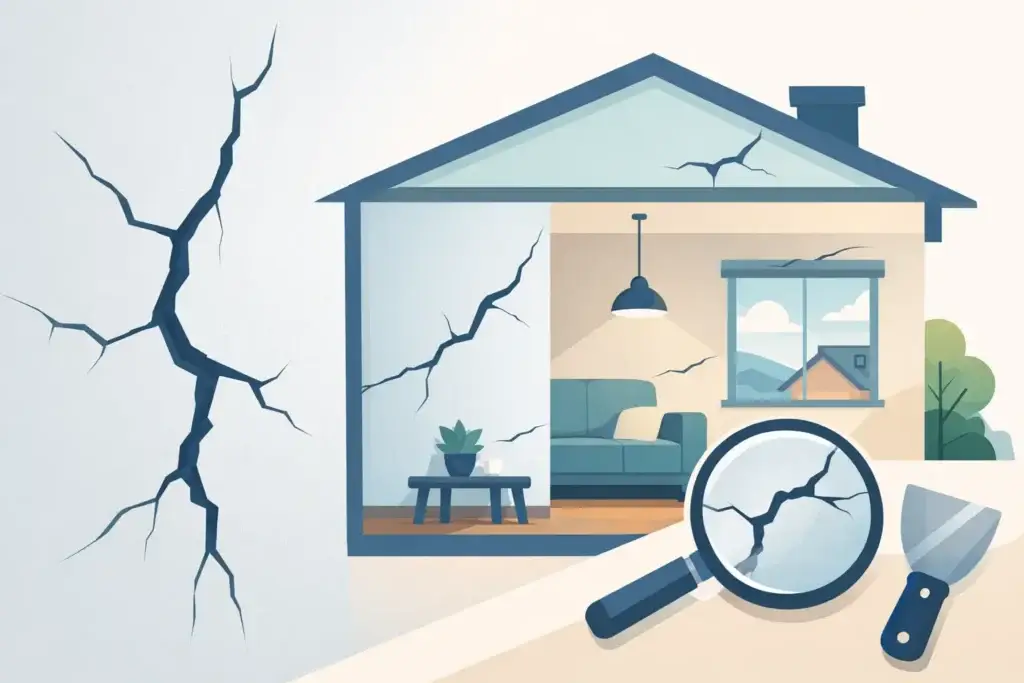
A hairline crack above a doorway can seem minor until it keeps coming back after every paint touch-up. That is usually when homeowners start asking what causes drywall cracks and whether the problem is cosmetic or something more serious.
The honest answer is that drywall cracks happen for several different reasons. Some are part of normal house movement. Others point to moisture, poor installation, or structural stress that should not be ignored. The key is knowing what kind of crack you are looking at, where it is showing up, and whether it is changing over time.
What causes drywall cracks most often?
In most homes, drywall cracks show up because the house moves. That movement can be small and expected, especially as materials expand and contract with seasonal temperature changes or as a newer home settles. Drywall is strong, but it is not flexible. When framing shifts even a little, the finished surface can show that stress.
That does not mean every crack is a major warning sign. Many are cosmetic and repairable. But recurring cracks usually mean the surface repair did not address the real cause underneath.
Normal settling vs. a bigger problem
One of the most common answers to what causes drywall cracks is normal settling. As a home ages, the foundation, framing, and drywall all adjust to weight, weather, and soil conditions. In Oklahoma, that can be more noticeable because soil movement and seasonal moisture swings can put extra stress on a structure.
Settling cracks are often thin and slow to develop. You might see them over doors and windows, at wall corners, or along ceiling joints. These areas naturally collect stress because openings in the framing create weak points in the wall surface.
The bigger concern is movement that is active or uneven. If a crack widens, reappears quickly after repair, or shows up with sticking doors, sloping floors, or gaps around trim, it may be tied to structural movement rather than simple settling. That is where a closer inspection matters.
Poor drywall installation can lead to cracking
Not every crack starts with the house itself. Sometimes the issue is in the drywall work.
If sheets were not hung correctly, if joints were poorly taped, or if too little mud was used over seams, the finished wall may not hold up well over time. Fasteners placed incorrectly can also create stress points that show through the surface. In some cases, installers use the wrong spacing or fail to account for framing irregularities, and the drywall ends up carrying stress it was never meant to handle.
Cracks caused by poor workmanship often show up in straight lines along seams or around corners where tape begins to fail. You may also notice nail pops or screw pops nearby. These problems are frustrating because they can make a relatively new wall look older than it is.
A proper repair usually means more than filling the visible line. The loose joint or weak seam has to be reinforced so the finish has a better chance of lasting.
Moisture is a common cause that gets missed
Water changes everything with drywall. Even a small leak can weaken the panel, soften joint compound, and cause swelling that leads to cracking. Roof leaks, plumbing leaks, window leaks, and poor exterior sealing can all show up as interior drywall damage.
Moisture-related cracks do not always appear alone. You may also see staining, bubbling paint, soft spots, or tape that starts to separate from the wall. In bathrooms, laundry rooms, kitchens, and around ceilings below plumbing lines, moisture should be high on the list of possible causes.
The repair approach matters here. If you patch the crack without fixing the water source, the problem usually returns. In more severe cases, the drywall may need to be removed and replaced rather than repaired.
Temperature and humidity changes put stress on walls
Drywall and framing materials react to environmental changes. Wood framing can expand and contract with humidity, while indoor temperature shifts affect the finished wall system. Over time, that repeated movement can create stress fractures, especially at seams and corners.
This is one reason cracks can appear more noticeably during seasonal transitions. A house may seem fine for months, then a cold snap or a hot, dry stretch makes a crack suddenly stand out.
These cracks are often cosmetic, but there is still a right way to repair them. Flexible finishing methods and sound joint reinforcement help more than a quick patch job. If the home is dealing with major indoor humidity swings, improving ventilation or moisture control can also help reduce repeat problems.
Foundation movement and structural stress
When homeowners worry about drywall cracks, this is usually the cause they fear most. Sometimes that concern is justified.
Foundation movement can transfer stress through the framing and into the drywall, creating cracks around windows, doors, ceilings, and long wall runs. In Oklahoma, shifting soil conditions can put pressure on foundations, especially during cycles of drought and heavy rain.
A structural crack is not always dramatic. It may begin as a small diagonal line at the corner of a door or window. Over time, more signs can appear. Doors stop latching properly. Windows become harder to open. Baseboards separate from the wall. Cracks form in brick, masonry, or exterior siding too.
Drywall does not cause these issues. It only reveals them. If the wall surface is showing movement that seems tied to the structure, repairing the drywall before the underlying problem is addressed is usually money wasted.
What causes drywall cracks on ceilings?
Ceiling cracks deserve extra attention because gravity works against every repair. Some ceiling cracks come from the same normal movement that affects walls, but others relate to sagging framing, truss uplift, poor fastening, or moisture above the ceiling.
Truss uplift is a seasonal framing movement that can cause ceiling-to-wall cracks, especially near interior partitions. It is not always a sign of structural failure, but it can keep repairs from holding if the wrong method is used.
A long crack running across a ceiling seam may point to a failed joint. A stained ceiling crack may suggest a roof or plumbing issue. If the ceiling is bowing, soft, or dropping, that is no longer a simple cosmetic repair and should be looked at right away.
When a drywall crack is usually cosmetic
Many cracks are repairable without major reconstruction. Hairline cracks that stay narrow, do not spread, and appear in common stress areas are often surface-level problems. Small seam cracks, minor corner bead separation, or occasional screw pops can usually be handled with skilled drywall repair and proper finishing.
That said, cosmetic does not mean careless. A clean, lasting repair depends on preparation, not just filler and paint. If the damaged area is not stabilized, the crack tends to telegraph back through.
When it is time to call a professional
If you are seeing repeated cracking, wider gaps, diagonal cracks from window and door corners, or signs of water damage, it is smart to bring in a professional. The same goes for ceiling cracks that keep growing or any drywall damage paired with framing movement, sticking doors, or uneven floors.
An experienced drywall contractor can help determine whether the issue is a failed seam, a moisture problem, poor prior work, or something more structural. That saves time and avoids repairing the same area over and over.
For property owners, this matters beyond appearance. Cracked drywall can make a home, office, or rental unit look neglected even when the real issue is manageable. A proper diagnosis protects the finish and helps protect the property itself.
KCS Drywall works with homeowners and property managers who want repairs handled the right way – clean work, clear communication, and no guessing about what is happening behind the surface.
The real question is not just what caused the crack
What causes drywall cracks is only the first part of the conversation. The better question is whether the crack is stable, what is driving it, and what kind of repair will actually last.
A small crack may be nothing more than normal movement and age. Or it may be the first visible sign of moisture intrusion, weak installation, or foundation stress. Looking at the pattern, location, and timing usually tells the story.
If a crack has appeared once, watch it. If it has come back, changed shape, or spread, do not treat it like a paint problem. Drywall is often the messenger. Paying attention early is what keeps a small repair from turning into a bigger one later.