
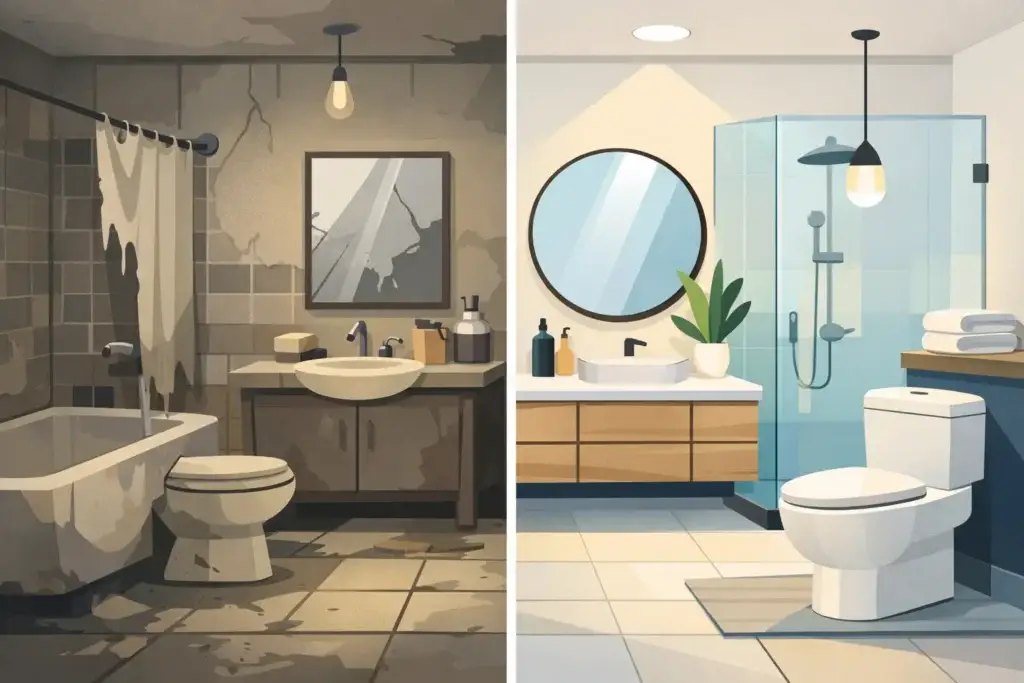
A great bathroom makeover before after is not just about prettier tile or a new vanity. It is about walking into the room and feeling like it finally works – better lighting, cleaner lines, smarter storage, and finishes that hold up to daily use. That is usually the difference between a quick cosmetic update and a remodel that actually improves the home.
Bathrooms are small spaces, but they carry a lot of weight. They deal with moisture, heavy traffic, constant cleaning, and daily routines that need to run smoothly. When a bathroom feels dated, cramped, or worn out, the problem is rarely one thing. It is often a mix of old surfaces, poor layout choices, weak lighting, and damage that has built up over time behind paint and caulk.
What a bathroom makeover before after really shows
Most before-and-after photos focus on the obvious visual change. The old bathroom looks dark, stained, crowded, or out of style. The finished bathroom looks brighter, cleaner, and more organized. That part matters, but the real value is in what changed underneath the surface.
In many remodels, the biggest improvement comes from correcting the basics. That can mean replacing moisture-damaged drywall, fixing uneven walls, updating framing around a shower, or improving ventilation so the room stays in better shape long term. A new mirror and faucet can help, but they will not solve a bathroom that has movement in the walls, peeling paint, or soft spots from hidden water issues.
A strong remodel starts by asking a simple question: what is making this bathroom feel old or frustrating right now? Sometimes the answer is style. Just as often, it is function.
The biggest changes homeowners notice first
When homeowners compare a bathroom makeover before after, a few upgrades tend to stand out right away. The first is usually light. Older bathrooms often feel dim because they rely on one overhead fixture and have little reflection. A brighter color palette, a better vanity light, and a mirror sized for the room can change the space immediately.
The second is visual clutter. A crowded vanity, outdated wall color, bulky storage, or too many mismatched materials can make even a decent-sized bathroom feel smaller. Cleaner finishes and simpler lines tend to make the room feel more open without moving a single wall.
The third is surface quality. Fresh paint looks better on properly repaired walls. Tile looks better when transitions are clean. A vanity looks more expensive when it is installed against straight, finished surfaces. Good craftsmanship ties the whole room together, and people notice that even if they cannot name every detail.
Why drywall and wall condition matter more than people expect
Bathrooms get judged by tile and fixtures, but wall condition has a huge impact on the final result. If drywall has swelling, tape failure, previous patchwork, or moisture damage, those flaws can keep showing through no matter how nice the new materials are.
This is especially true in older homes and bathrooms that have had piecemeal repairs over the years. One section may have been patched after a plumbing issue. Another wall may have texture that does not match. Paint can hide some problems for a while, but not for long in a humid room.
That is why a reliable remodel plan looks at the full surface, not just the finish layer. Proper drywall repair, finishing, and paint prep create the clean backdrop that makes everything else look right. For homeowners in Oklahoma, where homes range from older builds to newer developments with builder-grade finishes, this step can make a major difference in the final before-and-after result.
Layout changes can matter more than luxury materials
A lot of people assume the best bathroom makeover before after comes from expensive upgrades. Sometimes it does. But in many bathrooms, a better layout does more for daily comfort than premium materials ever will.
If the vanity is too large for the room, the walkway feels tight every morning. If the shower door swings into everything, the space never feels easy to use. If storage is missing, countertops stay cluttered. These are not design problems only. They are use problems.
A well-planned remodel solves those friction points. That might mean switching to a more practical vanity size, adding recessed storage, changing the tub or shower footprint, or adjusting how the room opens up visually. It depends on the space and the budget, but the point is the same – function should lead, and style should support it.
The finishes that make the biggest impact
Not every upgrade carries the same weight. In a bathroom, a few finish choices usually do the heavy lifting.
Vanities and mirrors set the tone fast because they take up so much visual space. Flooring matters because it grounds the room and gets constant use. Shower and tub surrounds matter because they often show age first. Paint color matters because bathrooms can easily feel closed in if the color is too dark or too dull.
That said, there are trade-offs. Bright white can look clean and timeless, but it also shows dirt faster. Trend-forward finishes can look impressive today, but they may date more quickly. Large-format tile can make a bathroom feel modern and spacious, but installation quality becomes even more noticeable. The best choice is usually the one that balances appearance, durability, and maintenance.
Before-and-after success depends on planning, not just products
The bathrooms that turn out best are usually not the ones with the biggest material budget. They are the ones where the scope was clear from the start. That means deciding what stays, what goes, and what has to be fixed before finish work begins.
A homeowner may start by wanting a new vanity and paint, then discover that the wall behind the mirror has damage, the lighting is poorly placed, and the old trim does not match the rest of the home. None of that means the project is off track. It just means the plan needs to account for the room as a whole.
This is where working with an experienced remodeling team matters. Clean execution, dependable scheduling, and honest communication are not extras on a bathroom project. They help prevent delays, reduce surprises, and keep the final result consistent. Companies like KCS Drywall understand that the details behind the finish are what make the finish last.
Common mistakes that weaken the final result
One of the most common mistakes is spending heavily on visible items while ignoring prep work. A high-end vanity installed against damaged walls will not look high-end for long. The same goes for paint applied over poor repairs or tile installed next to uneven surfaces.
Another mistake is trying to follow every trend at once. Too many statement choices can make a small bathroom feel busy instead of updated. A better approach is to choose one or two focal elements and keep the rest simple and durable.
The last issue is underestimating moisture. Bathrooms need materials and finishes that can stand up to humidity. If ventilation, wall repair, and proper sealing are skipped, the after photo may look good now but age fast.
How to judge whether your bathroom is worth remodeling
If your bathroom has visible wear, poor lighting, damaged walls, outdated finishes, or a layout that frustrates you every day, it is probably a good candidate for improvement. You do not have to gut the whole room for the change to be meaningful.
Some projects are best handled as focused updates. Others make more sense as full remodels, especially if there is water damage, failing surfaces, or several issues stacked together. It depends on condition, goals, and budget. The right answer is not always the biggest project. It is the one that solves the right problems.
That is what makes a real before-and-after worth it. The best bathroom transformations are not just easier on the eyes. They are easier to live with every single day. If your current bathroom feels like one more problem to work around, that is usually the clearest sign that a better version is possible.