
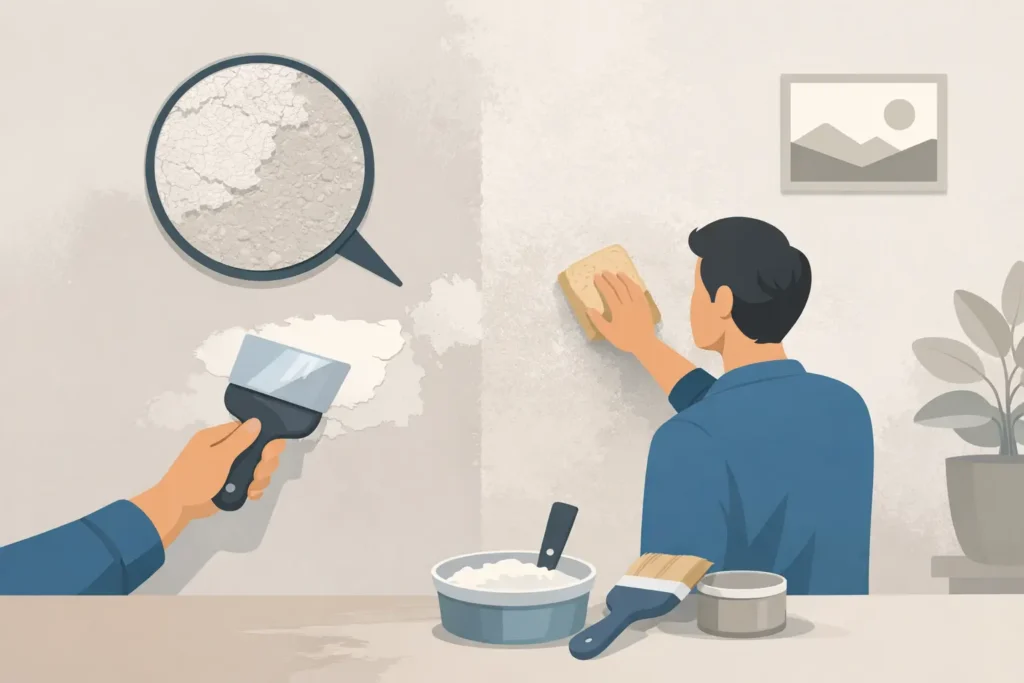
A drywall patch can be perfectly smooth and still look wrong. What gives most repairs away is not the joint or the paint – it is the texture. If you are figuring out how to match wall texture, the real job is not just covering a patch. It is making the repair disappear under normal room lighting, at different angles, and next to the original finish.
That takes a little patience, and it also takes honesty about what you are looking at. “Orange peel” is not always orange peel. A knockdown finish can be light in one room and heavy in the next. Even two walls in the same house may not match if they were done years apart or repaired more than once.
Start by identifying the existing texture
Before you spray, stomp, or roll anything, stop and study the wall. The most common residential textures are orange peel, knockdown, skip trowel, slap brush, and hand-applied finishes. Some walls are nearly smooth with only a light roller stipple from paint. That matters, because a light painted stipple cannot be fixed with a can of heavy orange peel texture and expect to blend in.
Look at the wall from the side with a work light or flashlight. Raking light shows the high and low spots better than overhead lighting. Check not only the damaged area, but a few feet around it. You want to know the pattern, how dense it is, and whether it was machine-applied or done by hand.
This is also where many repairs go off track. People focus on the type of texture but ignore the scale. A fine orange peel and a heavy orange peel are not close enough. The size of the droplets, the spacing, and the amount of flattening all affect whether the repair stands out.
How to match wall texture without guessing
The fastest way to get a poor result is to treat texture like paint and hope close is good enough. Texture is more visible than people expect, especially in hallways, living rooms, and rooms with natural side light.
Start with a test surface. Use a scrap piece of drywall, cardboard, or even the inside wall of a garage if you need a practice area. Apply the texture there first, let it set, and compare it to the wall. This small step saves a lot of sanding and repainting later.
You also need to account for paint buildup. Older walls may have several coats of paint on them, which softens the original texture and makes it appear slightly fuller. Fresh texture on a new patch often looks sharper until it is primed and painted. So when matching, aim for the same general profile, not necessarily the same raw look before paint.
Prepare the repair the right way
Texture will not hide a bad patch. If the repaired area is humped, sunken, rough, or dusty, the final finish will still show.
Feather the joint compound smoothly beyond the patch, then sand it flat without polishing it too much. Wipe away dust. Prime fresh joint compound before applying most texture products unless the product instructions say otherwise. Unprimed compound can absorb moisture unevenly and change the texture pattern.
The edge of the patch matters as much as the center. A repair usually becomes visible where the new texture meets the old one. You want a gradual transition, not a hard border.
Choose the right method for the texture type
Different textures need different tools. Aerosol cans work well for small orange peel and some knockdown repairs. Hopper guns are better for larger areas or when you need better control over pattern size. Hand-applied textures such as skip trowel or slap brush usually need the same hand technique that created them in the first place.
For orange peel, use a fine or medium spray and build slowly. It is easier to add more than to scrape off a heavy application. Let it set briefly, then compare the droplet size to the surrounding wall.
For knockdown, the timing is the whole job. Spray or apply the material, wait until it starts to firm up, then flatten the peaks lightly with a knockdown knife. Too soon, and it smears. Too late, and it tears instead of flattening cleanly.
For stomp or slap brush textures, load the brush consistently and practice your motion before touching the wall. The pressure and angle of your hand can change the pattern more than the material itself.
If the wall has a hand-troweled texture, there is no shortcut. Those finishes are less about the product and more about the person applying it. They can be matched, but usually not on the first try without experience.
Blend into the surrounding wall, not just over the patch
One of the best tricks when learning how to match wall texture is to stop thinking in circles. Do not texture only the exact patch if the repair edge is obvious. Extend the pattern lightly beyond the repair area so the transition feels natural.
That does not mean covering half the wall every time. It means softening the perimeter. A few inches of blended texture around the repair often looks far better than a perfect-looking center with a visible outline.
Less is usually better here. Heavy texture attracts attention. Lightly build up the area, let it dry, and reassess before adding more. Once texture is too bold, correction gets messy fast.
Paint can help or hurt the final result
Even a well-matched texture can stand out if the paint is off. Sheen differences show every flaw. Flat paint hides more. Eggshell and satin reflect more light and make uneven texture easier to spot.
Prime the repaired and textured area first. Then repaint in a way that fits the situation. Sometimes spot painting is enough. Sometimes the wall needs to be painted corner to corner for the repair to disappear. That depends on color age, sheen, sunlight, and how noticeable the repair location is.
If the wall color has faded or the existing paint came from a different batch, texture may not be the issue at all. You may have matched the wall finish well and still see the patch because the paint does not blend.
Common reasons texture matching fails
Most failed repairs come down to one of a few issues. The wrong texture type gets chosen, the patch is not flat, the material is applied too heavily, or the finish is not tested first. Sometimes the repair is technically sound, but it is done under poor lighting and only checked from straight on.
Another common problem is rushing the dry time. Texture changes as it sets. Paint applied too early can soften it, flatten it, or create flashing. Give each step enough time to cure before moving to the next.
And sometimes, the repair area is simply too large for a spot fix to look right. When that happens, it may make more sense to retexture the full wall or at least a broader section. That is not overkill. It is often the cleanest route to a professional result.
When it makes sense to call a pro
Small patches in low-visibility areas are often manageable with patience and a practice board. But ceilings, large repairs, custom hand textures, and high-light walls are less forgiving. If the wall runs through a main living area, an entry, or a commercial space where appearance matters, getting the match right the first time can save money and frustration.
This is especially true when there is water damage, cracked seams, repeated patching, or multiple old textures layered over one another. In those cases, the challenge is not just how to match wall texture. It is how to repair the surface properly, restore consistency, and leave the room looking finished instead of patched.
At KCS Drywall, that is where solid prep, experienced texture work, and clean execution make the difference. A dependable repair should not call attention to itself.
The best texture match is the one nobody notices after the paint dries. If you take time to identify the pattern, test before you apply, and blend with a light hand, you will give yourself the best chance of making the repair disappear.