
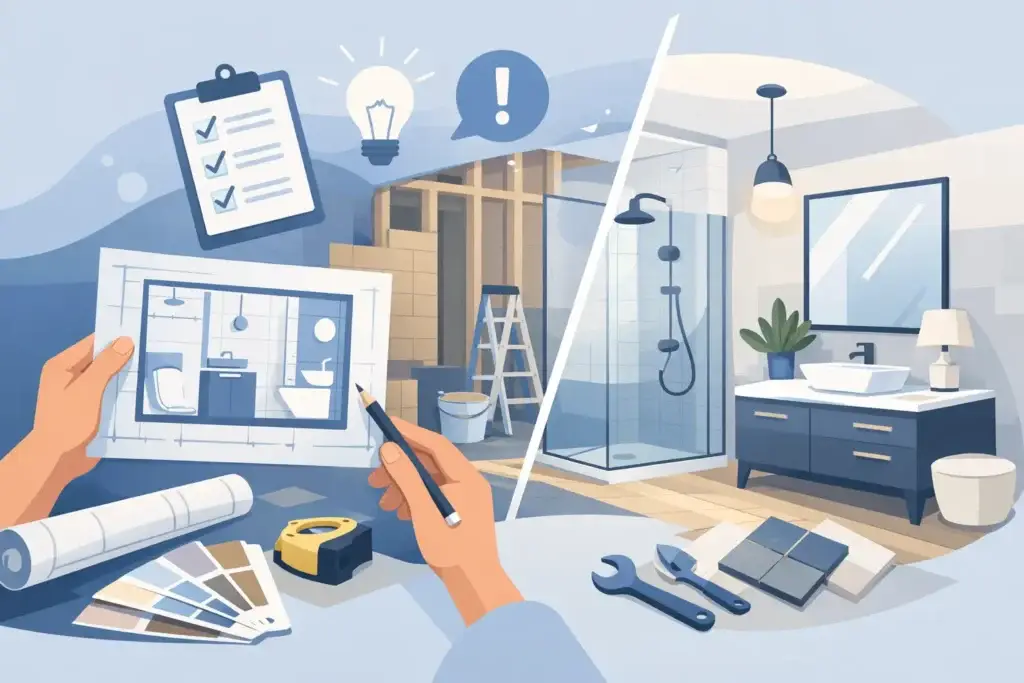
A bathroom remodel usually starts the same way – with one problem you are tired of working around. Maybe the shower feels cramped, the vanity has no storage, or the room just looks dated no matter how clean it is. If you are wondering how to plan bathroom remodel work without wasting time or money, the key is to make decisions in the right order before demolition starts.
Good planning protects your budget, your schedule, and the final result. It also helps you avoid one of the most common remodeling mistakes: choosing finishes first and dealing with layout, plumbing, and repair issues after the fact. A bathroom may be one of the smaller rooms in the house, but it packs in more moving parts than most people expect.
Start with the real reason for the remodel
Before you think about tile, paint color, or fixtures, get clear on what is not working. A bathroom remodel can solve very different problems. Some homeowners need better function for a busy family. Others want to update an older space before selling. In some homes, the deeper issue is hidden damage like soft subflooring, moisture behind walls, outdated drywall, or failing finishes.
That first decision shapes everything that follows. If your main goal is better storage and easier daily use, your layout and vanity choice matter more than premium finishes. If the bathroom has water damage or worn materials, the priority should be repairing the structure and creating a durable finish that will hold up long term.
Write down your top three goals and keep them practical. More storage, easier cleaning, improved lighting, better accessibility, and replacing damaged materials are all strong starting points. This keeps the project grounded when choices start piling up.
Set a budget with room for the unknown
One of the most important parts of how to plan bathroom remodel projects is building a budget that reflects real jobsite conditions. Bathrooms often reveal surprises after demolition. That can include framing repairs, plumbing updates, mold concerns, out-of-level floors, or drywall replacement around old moisture damage.
A smart budget has two parts: your target spend and your contingency. The target covers the expected work, materials, and labor. The contingency is money set aside for issues you cannot fully see yet. In many remodels, that cushion is what keeps the job moving instead of forcing rushed compromises halfway through.
It also helps to separate needs from upgrades. Waterproofing, ventilation, plumbing corrections, and proper wall preparation are not the places to cut corners. Decorative upgrades can be adjusted more easily if needed. A simpler mirror or more cost-effective tile choice is easier to live with than a bathroom built on poor prep work.
Decide whether to keep the layout or change it
Layout changes can improve a bathroom, but they also affect cost and complexity fast. Moving a toilet, shower drain, or major plumbing line adds labor and often extends the timeline. Sometimes it is worth it. Sometimes keeping the existing footprint and improving the use of the space is the better call.
If your current layout mostly works, staying close to it can free up budget for better materials, improved lighting, stronger ventilation, and cleaner finish work. On the other hand, if the room feels cramped, lacks storage, or has a poor traffic flow, changing the layout may be what makes the remodel worthwhile.
This is where practical planning matters more than wish lists. A larger walk-in shower sounds great, but not if it leaves no room for door clearance or storage. A double vanity may look appealing, but in a tight bathroom it can make the room feel crowded. The best plan balances comfort, function, and available square footage.
Build the plan from the walls in
Many bathroom decisions should be made before finish materials are selected. That includes plumbing locations, electrical needs, ventilation, lighting placement, drywall or backer board repairs, and any framing changes. These are the parts of the job that affect how the room performs over time.
For example, better lighting is not just about swapping fixtures. You may need lighting over the vanity, improved overhead light, or added task lighting depending on how the room is used. Ventilation matters too, especially in Oklahoma homes where humidity, heat, and daily use can wear on finishes faster when moisture is not managed properly.
Wall condition is another detail that gets overlooked. In older bathrooms, surfaces behind tile or around tubs and showers may need repair or replacement before the finished work can begin. Clean, properly prepared walls and ceilings are part of what makes a bathroom remodel last and look sharp when the job is done.
Choose materials that fit real life
A bathroom has to handle moisture, cleaning products, and daily wear. That is why material selection should be based on durability first, then appearance. The best-looking option is not always the best long-term choice if it is hard to maintain or does not hold up in a high-use space.
For flooring, slip resistance and water performance matter. For wall finishes, think about how easy they are to clean and how well they handle humidity. For vanities and storage, consider how the material holds up to splashing, steam, and constant opening and closing.
This is also where homeowners can overbuild or underbuild. A guest bathroom may not need the same level of finish as a primary bathroom used every day. At the same time, a heavily used family bathroom should be built with durability in mind. It depends on who uses the space, how often, and what level of upkeep you want afterward.
Understand the timeline before work begins
A bathroom remodel is easier to manage when you know what to expect. The timeline depends on the scope. A cosmetic refresh is very different from a full tear-out with plumbing, electrical, drywall, and tile work. Ordering materials in advance matters too, since delays often come from products that were selected late or arrived damaged.
A realistic schedule usually includes planning, quoting, design decisions, material ordering, demolition, repairs, rough-in work, finish installation, and final punch-out. The actual construction may move quickly, but the planning stage is what keeps the job on track.
If this is your only bathroom, the timeline becomes even more important. Temporary arrangements may be needed, and there is less room for indecision once work starts. Clear communication with your contractor helps prevent small delays from turning into bigger disruptions.
Know where professional help makes the difference
Part of learning how to plan bathroom remodel work is knowing which tasks look simple but affect the whole project. Surface prep, moisture protection, drywall finishing, trim details, and paint work all influence how polished the final room feels. The same is true for tile alignment, fixture placement, and overall fit and finish.
This is why experienced remodelers focus on more than appearances. A bathroom can look updated in photos and still have poor ventilation, weak wall prep, or uneven finish work that causes trouble later. Reliable craftsmanship shows up in the details you see every day and the ones hidden behind the walls.
For homeowners in the Oklahoma City area, working with a contractor who communicates clearly, keeps a clean jobsite, and handles the work with consistency can make the process far less stressful. That kind of professionalism matters just as much as material selection.
Make final selections before demolition day
One of the easiest ways to protect your remodel is to make your major selections early. That means choosing the vanity, fixtures, tile, flooring, lighting, paint, and hardware before the first part of the old bathroom comes out. Last-minute decisions can slow the project, create change orders, and push you into rushed choices.
It is also smart to check lead times and product dimensions in advance. A vanity that arrives late or a fixture that does not fit the planned rough-in can delay multiple steps. Good planning is not about overcomplicating the process. It is about removing preventable problems before the crew gets to work.
If you want the smoothest experience possible, keep your priorities simple, your selections realistic, and your expectations tied to the space you actually have. A well-planned bathroom remodel does not need to be flashy to feel like a major upgrade. It just needs to function well, hold up over time, and be finished with care.
When you approach the project with a clear budget, a practical layout, and the right team behind the work, the decisions get easier. The best bathroom remodels are not built around trends. They are built around how you live, what your home needs, and what will still make sense years from now.