
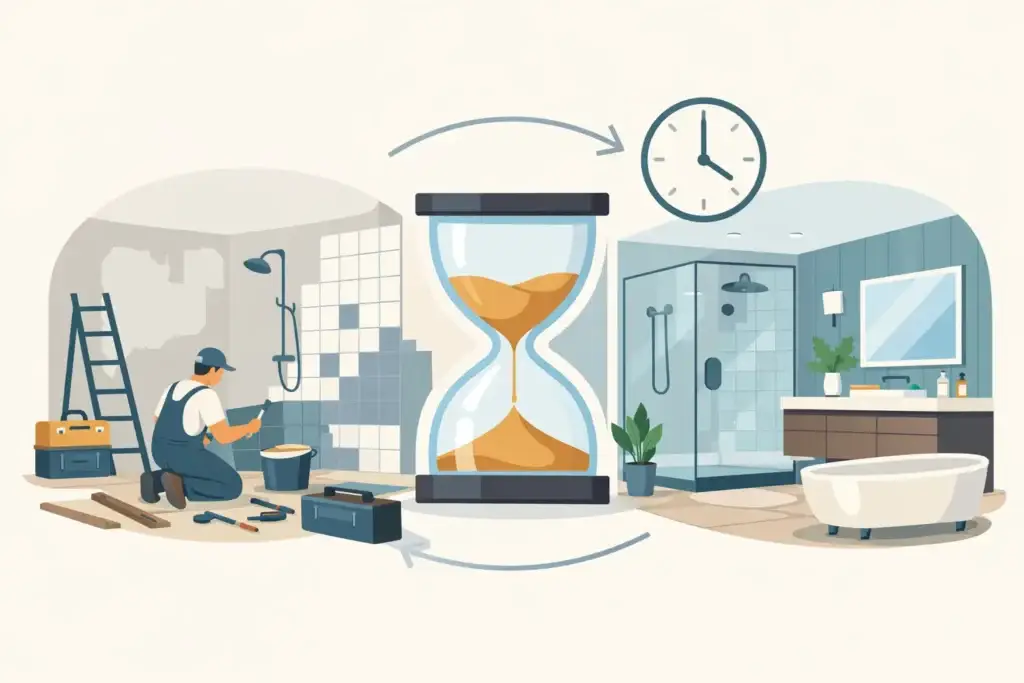
If you are planning a bathroom upgrade, one of the first questions you will ask is how long bathroom remodel takes. That is a smart place to start, because the timeline affects your budget, your daily routine, and how much disruption your home can handle.
For most homeowners, a standard bathroom remodel takes about 2 to 4 weeks of on-site work once construction begins. A smaller cosmetic update may move faster. A full remodel with layout changes, custom tile, plumbing relocation, or material delays can stretch to 5 to 8 weeks or longer. The honest answer is simple: it depends on the scope, the materials, and how well the project is planned before the first tool comes out.
How long bathroom remodel takes in real conditions
A basic refresh usually moves the fastest. If you are replacing a vanity, swapping out fixtures, repainting, updating flooring, and installing a new toilet without changing the layout, the work can often be completed in 1 to 2 weeks. These projects are more straightforward because the plumbing and electrical systems stay largely where they are.
A mid-range remodel often takes 2 to 4 weeks. This is the range many homeowners fall into. It may include demolition, new drywall or repair work, tile installation, a tub or shower replacement, vanity installation, lighting updates, paint, and finish carpentry. There are more moving parts, but the job remains manageable if selections are made in advance and no hidden issues appear behind the walls.
A full custom remodel takes longer. If you are expanding the shower, moving drains, changing the floor plan, adding storage, or choosing specialty finishes, expect a longer timeline. The work itself is more detailed, and inspections or specialty orders can add days that are outside the crew’s control.
What happens during each phase
The timeline makes more sense when you break the project into stages. Bathroom remodels do not move from start to finish in one straight line. Different trades come in at different times, and some steps need drying, curing, or inspection before the next one starts.
Planning and material selection
Before construction begins, there is usually a planning phase that lasts anywhere from a few days to several weeks. This includes measuring the space, building the estimate, choosing fixtures and finishes, and confirming the scope of work. If permits are required, that can add more time before the start date.
This phase is easy to underestimate, but it matters. A bathroom remodel usually goes faster when the tile, vanity, plumbing fixtures, mirrors, lighting, and paint colors are selected and ordered ahead of time. Waiting on materials is one of the most common reasons a project slows down.
Demolition
Demo is often quick. In many bathrooms, demolition takes 1 to 2 days. The crew removes old flooring, fixtures, cabinets, tile, and damaged wall materials. If the bathroom is small, the space can be stripped down fast.
The surprise factor starts here. Once walls and floors are opened, problems like water damage, mold, framing issues, or outdated plumbing can show up. If that happens, the schedule needs to adjust so the underlying problem is fixed the right way.
Framing, plumbing, and electrical
If the layout is changing, this phase can take several days. New framing may be needed for walls, niches, or support blocking. Plumbers may need to move supply lines or drains. Electricians may add outlets, relocate lighting, or bring older wiring up to current code.
If the bathroom footprint stays the same, this stage is usually shorter. If the layout changes significantly, this phase adds real time and cost. That trade-off can be worth it for a better-functioning space, but it should be expected up front.
Drywall, backer board, and surface prep
This stage is where clean workmanship starts to show. Drywall repairs or replacement, moisture-resistant backing in wet areas, taping, finishing, and prep all need to be done properly before finishes go in. Rushing this step often leads to visible flaws later.
In bathrooms, surface prep matters more than many people realize. Uneven walls can affect tile lines. Poor patching can show through paint. Weak moisture protection can lead to future damage. This phase may take a few days, especially when drying time is needed between coats of mud or texture.
Tile and flooring
Tile work can move quickly in a simple bathroom, but custom patterns and larger wet areas take more time. A basic floor may be installed in a day or two. A tiled shower with niches, accent bands, detailed cuts, and grout work can take several more days.
This is one reason there is no one-size-fits-all answer to how long bathroom remodel takes. A bathroom with a fiberglass tub surround installs much faster than a bathroom with full-height custom tile. One option saves time. The other may deliver a more premium look. The right choice depends on your priorities.
Fixture and finish installation
Once the walls, floors, and wet areas are complete, the project starts to come together quickly. The vanity, countertop, faucets, toilet, mirrors, lights, hardware, and trim go in during this stage. Painting and touch-ups are typically completed here as well.
This phase may take a few days, depending on the number of items being installed and whether custom pieces are involved. Even at the finish line, delays can happen if one backordered faucet or damaged vanity top holds up final completion.
The biggest factors that affect the timeline
The size of the bathroom matters, but it is not the only thing that matters. A small bathroom with complex tile and plumbing changes may take longer than a larger bathroom with simple updates.
Scope is the biggest factor. Cosmetic changes move faster than structural or layout changes. Material availability is another major factor. If every item is in stock and on site before work begins, scheduling is easier to control. If key products arrive late, the whole sequence can shift.
The condition of the existing bathroom also matters. Older homes sometimes reveal hidden water damage, rotten subfloors, code issues, or outdated plumbing connections. Those problems need to be corrected before new finishes go in. It may add time, but it protects the quality of the result.
Crew coordination makes a difference too. Remodeling moves better when scheduling is organized, communication is clear, and the jobsite stays clean and ready for the next step. That is one reason homeowners often prefer working with a contractor who can manage drywall, finishing, paint, and remodeling work under one roof, like KCS Drywall.
How to keep your bathroom remodel on schedule
The best way to save time is to make decisions early. Choose materials before demo starts. Confirm dimensions. Ask about lead times. Make sure the fixtures you picked actually fit the space and work with the plumbing layout.
It also helps to be realistic about custom work. Custom tile, built-ins, and specialty finishes can look great, but they often extend the schedule. That does not mean you should avoid them. It just means you should plan for the extra time instead of expecting a fast turnaround.
Good communication matters throughout the project. Ask for a clear schedule at the start, but understand that remodeling has variables. A dependable contractor should keep you informed if something changes and explain why. A short delay for proper prep or repair is usually better than a rushed result that causes problems later.
Should you plan for extra time?
Yes. Even when a remodel is well managed, it is smart to build a little flexibility into your expectations. If the contractor estimates 3 weeks, do not schedule around an absolute finish date with zero cushion. Materials, inspections, and hidden conditions can all affect the timeline.
This is especially important if the bathroom being remodeled is your only bathroom. In that case, the project timeline is not just about convenience. It affects your whole household. Temporary arrangements may be needed, and that should be part of the plan from the beginning.
A realistic expectation for most homeowners
For many homes in Oklahoma, a standard bathroom remodel lands in the 2 to 4 week range after work begins, with planning and product ordering happening before that. Smaller updates may be quicker, while full redesigns or older bathrooms with hidden issues can take longer.
The goal should not be the fastest remodel possible. It should be a remodel done correctly, with solid preparation, dependable scheduling, and quality workmanship at every stage. When that happens, the extra few days it may take are usually worth it.
If you are weighing your options, start by defining what you want to change and what can stay. That one decision often tells you more about the timeline than any generic estimate ever will.