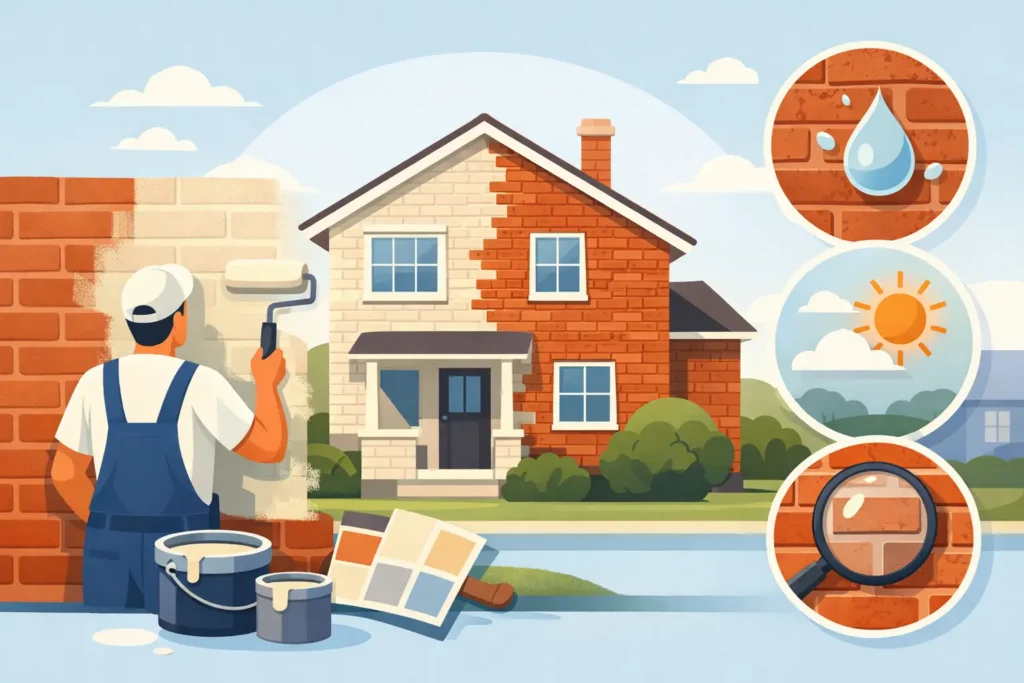
A painted brick exterior can make an older home look clean, current, and well cared for. But choosing the best exterior paint for brick is not just a color decision. Brick is a porous masonry material, and the wrong coating or rushed preparation can leave a home with peeling paint, trapped moisture, and expensive repairs.
For Oklahoma homeowners, the paint system has to handle heat, hard rain, wind, freeze-thaw cycles, and strong sun. A professional result starts with understanding the condition of the brick, correcting water issues, and using a coating designed to move with the surface rather than fight it.
What Is the Best Exterior Paint for Brick?
For most properly prepared brick homes, the best choice is a high-quality 100% acrylic exterior masonry paint or masonry coating. These coatings are made to adhere to masonry while allowing more vapor permeability than standard exterior wall paint. In plain terms, they help protect the brick from rain while giving moisture inside the wall a better chance to escape.
The specific product matters, but the label alone does not determine whether the job will last. A premium masonry paint applied over dusty, damp, cracked, or previously failing brick can still fail. The best exterior paint for brick is the one paired with the right primer, sound repairs, and careful application conditions.
Avoid treating brick like wood siding. Brick has pores, mortar joints, and small changes in texture across every wall. It needs a coating system built for masonry, not a bargain paint chosen only because it is labeled for exterior use.
Choose acrylic over oil-based paint
Oil-based coatings are generally a poor fit for exterior brick. They can become brittle, have less flexibility, and may make moisture problems worse. Acrylic masonry paint is more flexible, holds color well, and is easier to maintain when a touch-up or future repaint is needed.
A breathable mineral or silicate-based masonry coating can also be a strong option for certain older brick structures, especially when vapor permeability is the main concern. However, these products require very specific surface conditions and application methods. They are not automatically the right answer for every house, particularly one with prior paint layers. A contractor should evaluate compatibility before switching coating types.
Start With the Brick’s Condition, Not the Paint Color
Painting brick is a long-term commitment. Once the surface is painted, regular maintenance and future recoating become part of owning the exterior. Before selecting a sheen or color, look for signs that the brick is ready.
Sound brick and mortar should be dry, stable, and free of active water intrusion. Efflorescence, the white powdery residue sometimes seen on masonry, is a warning sign that moisture is moving through the wall. So are flaking paint, dark damp areas, soft mortar, cracking, and spalling brick faces. Spalling occurs when the outer face of the brick breaks apart, often after repeated moisture exposure and freezing temperatures.
Painting over those conditions may hide them for a season, but it will not solve them. Gutters, downspouts, roof flashing, grading, leaking hose connections, and unsealed penetrations around fixtures can all send water toward brick walls. Address those issues first. A quality paint job should be the final protective finish, not the first attempt to stop a leak.
The Preparation That Makes Exterior Brick Paint Last
The preparation phase takes time because it determines adhesion. A clean jobsite and careful surface work are as important outside as they are for interior painting.
Brick should be cleaned of dirt, mildew, chalking, loose paint, and surface contaminants. Gentle pressure washing can be appropriate, but aggressive pressure can damage mortar joints, force water deeper into the wall, and loosen aging brick. The right approach depends on the age and condition of the masonry.
After cleaning, the brick needs enough time to dry completely. Painting damp masonry is one of the fastest ways to create blistering and peeling. Oklahoma weather can change quickly, so crews should watch the forecast, surface temperature, humidity, and the paint manufacturer’s recommended application range.
Cracked mortar joints should be repaired before painting. This work is often called repointing, and it should use a compatible mortar rather than a random patch material. Caulk may be appropriate around windows, doors, trim, and certain exterior gaps, but it is not a substitute for repairing failed mortar joints.
If the brick has never been painted, a masonry primer may be recommended to even out absorption and improve adhesion. If it has old paint, loose or failing areas must be removed and edges feathered before priming. The right primer depends on whether the surface is bare, chalky, stained, or already coated.
Finish and Color Matter More Than Many Homeowners Expect
Most painted brick looks best in a flat, low-luster, or satin finish. Flat and low-luster finishes minimize the appearance of uneven brick texture and minor surface repairs. Satin offers a little more washability and a subtle sheen, though it can highlight flaws if the wall is rough or patchy.
High-gloss paint is rarely a good choice for brick. It reflects light unevenly across the textured surface and can make every imperfection more visible.
Color deserves practical consideration, especially on Oklahoma homes exposed to extended sunlight. Very dark colors can absorb more heat, which may place additional stress on the coating and surrounding materials. Dark charcoal, black, and deep navy can look sharp, but they need a quality paint system and a realistic maintenance plan. Lighter neutrals, warm whites, soft grays, and muted earth tones often hold up well visually and make dust, fading, and small imperfections less noticeable.
Before committing, apply large sample areas on different sides of the home. A color that looks balanced on a shaded north wall may look much brighter or warmer in direct afternoon sun.
When Painting Brick Is Not the Right Move
Not every brick exterior should be painted. If the brick is historically significant, severely deteriorated, constantly damp, or already failing due to structural movement, painting can create more work without addressing the underlying problem.
Older homes can require extra care because their brick and mortar may have been designed to dry differently than modern wall assemblies. Using an overly dense coating on soft historic brick can hold moisture where it does not belong. In those cases, repair and masonry-specific evaluation should come before any color selection.
Painting may also be the wrong choice if the real problem is cosmetic staining caused by irrigation, rust, or drainage. Cleaning, repairing the source, or selectively treating the stain may preserve the natural brick without committing the entire exterior to a coating cycle.
A Practical Plan for a Reliable Painted Brick Exterior
A dependable painted brick project follows a clear order: inspect the masonry and water management, make mortar and surface repairs, clean thoroughly, allow proper dry time, use compatible primer where needed, and apply the masonry coating at the correct coverage rate.
Do not judge an estimate on gallons of paint alone. A lower price can leave out repairs, masking, protection for landscaping and hardscapes, primer, or the time needed to clean and prepare the brick correctly. Clear scope, dependable scheduling, and clean execution protect both the appearance of the home and the value of the investment.
For homeowners who want a fresh exterior without shortcuts, KCS Drywall approaches painting with the same focus used on every finish project: prepare carefully, communicate clearly, and leave the property looking better than we found it.
The right brick paint can give a home a major curb-appeal upgrade, but the lasting result comes from the work beneath it. Let the condition of the masonry and the path of water guide the project, then choose a coating system built to protect the home through the seasons.
Pingback: Home Exterior Upgrade Trends That Pay Off - KCS Drywall Company | Oklahoma’s Trusted Drywall & Remodeling Experts