
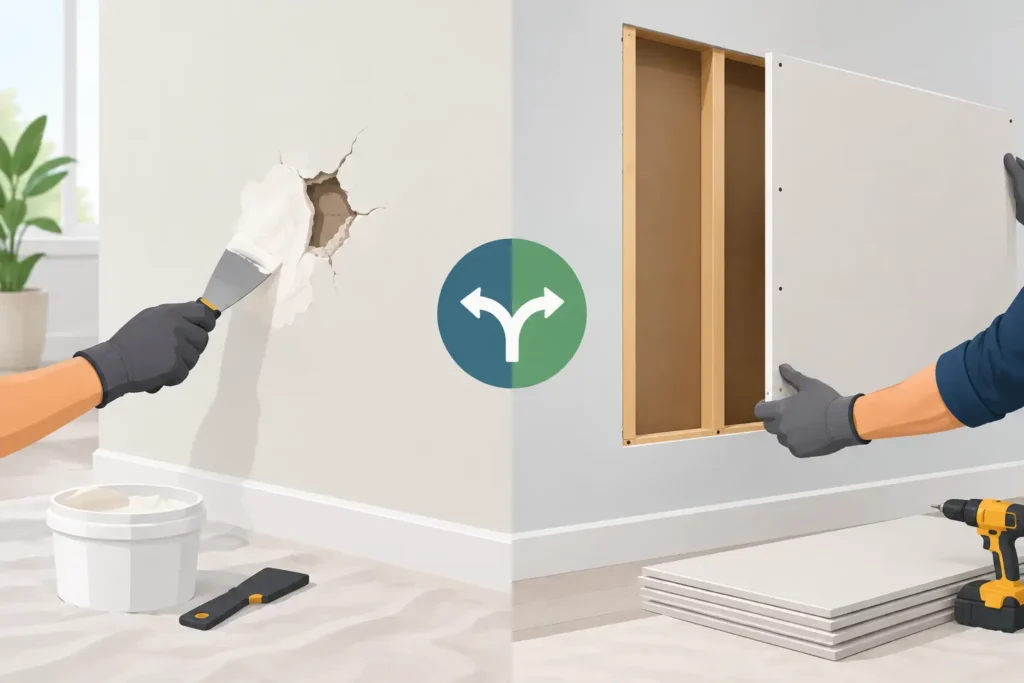
A dent from moving furniture and a ceiling stain from a leak may both damage drywall, but they do not call for the same solution. This drywall replacement comparison helps Oklahoma homeowners, property managers, and contractors determine when a focused repair makes sense and when replacing a larger section will produce a safer, cleaner, longer-lasting result.
The right choice is not always the least expensive option on day one. A small repair can restore an otherwise sound wall quickly. But patching material that has absorbed moisture, cracked repeatedly, or lost its structural integrity can lead to more work and more visible problems later. The condition behind the drywall matters as much as the damage you can see.
Drywall Replacement Comparison: What Is Being Fixed?
Drywall repair is designed for isolated damage. A professional cuts out the compromised area, checks the surrounding material, installs a properly supported patch, tapes the seams, applies joint compound, sands the surface, and matches the existing texture and paint. When the surrounding wall is dry, stable, and undamaged, this approach is efficient and cost-conscious.
Replacement is a broader solution. It may involve removing one full sheet, an entire wall section, a ceiling area, or drywall throughout a room. This is often necessary after significant water damage, extensive cracking, mold concerns, fire damage, widespread wear, or remodeling work that exposes framing and utilities.
The difference is not simply patch versus new drywall. It is the difference between restoring a localized surface issue and correcting a larger material or construction problem.
When Repair Is Usually the Better Choice
A repair is often the practical choice when damage is contained and the wall system remains sound. Small nail holes, minor dents, door-knob impacts, cracks caused by normal settling, and holes from removed fixtures can usually be repaired without replacing full panels.
Repairs also work well for accidental holes where the opening is limited to one area. A quality repair is not just a piece of drywall placed over a hole. The patch needs solid backing, properly feathered joint compound, careful sanding, and texture work that blends with the rest of the wall. Skipping any of those steps can leave a raised seam, visible edge, or patch that shows through after painting.
For rental properties and commercial spaces, targeted repairs can reduce disruption. Instead of closing off an entire room, crews can address the damaged section, protect nearby floors and furnishings, and return the space to service sooner. This is especially useful when damage is cosmetic and there is no indication of moisture or framing problems.
Repair is generally the better value when the damaged area is small, dry, structurally stable, and far enough from other defects that the surrounding drywall can support a clean finish.
When Drywall Replacement Is Worth the Investment
Replacement becomes the smarter decision when the damage extends beyond the visible spot. Water is one of the most common reasons. Drywall that has become soft, swollen, sagging, or stained may have lost its strength. Even after a leak is fixed, wet material can remain vulnerable to deterioration and may create conditions that require further inspection.
A ceiling stain deserves particular attention. The source of the leak must be corrected before drywall work begins. Repainting over a stain or patching only the lowest damaged area can hide a problem temporarily while moisture remains above the ceiling. A professional evaluation can identify whether the damage is limited or whether a larger section needs to come down so insulation, framing, and plumbing can be checked.
Replacement is also often appropriate when cracks keep returning. One small crack may be a normal settling issue. Multiple cracks, long seams opening across a ceiling, or cracks around doors and windows can point to movement, inadequate fastening, or framing concerns. Replacing and finishing drywall without addressing the reason for the crack may only restart the cycle.
Consider replacement if you are dealing with smoke damage, mold-related concerns, extensive holes, heavily textured surfaces that cannot be blended effectively, or several patches concentrated in the same wall. At a certain point, a wall covered in separate repairs takes more labor to make presentable than replacing the sheet and finishing it correctly from the start.
Cost: Look Beyond the Smallest Quote
Drywall repair typically costs less than replacement because it uses less material and involves less demolition. However, square footage is only one part of the price. Access, ceiling height, furniture protection, texture matching, paint blending, moisture investigation, debris removal, and the number of separate damaged areas all affect the scope of work.
A small patch can become more involved if it is located in a high-visibility room with smooth walls or a difficult texture. Smooth-wall finishes show imperfections easily, so the work must be feathered over a wider area to make the transition disappear. Orange peel, knockdown, and other textures require a matching process before painting.
Replacement has a higher initial cost, but it can offer better value when multiple repairs are needed. One clean replacement area may produce a more uniform finish than several patches, especially in a main living area, office, hallway, or recently remodeled space. It can also prevent repeat service calls when the underlying drywall is already compromised.
The most useful estimate explains what is included rather than offering a vague number. Ask whether the quote covers removal, drywall installation, tape and texture, sanding, cleanup, priming, painting, and any investigation needed before work begins. Clear scope prevents surprises and makes it easier to compare bids fairly.
Appearance Matters More Than Many Homeowners Expect
A repaired wall should not look repaired. That standard is achievable, but it depends on workmanship and the condition of the existing surface. Poorly blended patches often become obvious in afternoon sunlight, under recessed lighting, or after a fresh coat of paint. Common signs include flashing, uneven sheen, a texture mismatch, or a circular patch outline.
Replacement can make finish matching easier when a wall has broad damage. Still, new drywall does not automatically guarantee an invisible result. The seams must be taped correctly, the compound must be applied in thin, even coats, and the final texture must match adjacent surfaces. Proper priming and painting are equally important.
If a room has older paint, matching one repaired area may be difficult because color fades over time. In that case, painting the full wall is often the cleanest solution. For a ceiling repair, painting the entire ceiling may be the best way to avoid a noticeable difference in color or sheen.
Questions to Answer Before Choosing Repair or Replacement
Before approving drywall work, start with the cause of the damage. If the source was a plumbing leak, roof issue, foundation movement, pest activity, or impact, that problem needs to be addressed first. New drywall installed over an active issue will not hold up.
Next, consider the extent of the damage. Is the drywall firm when pressed? Are stains spreading? Is there a musty odor, crumbling paper face, sagging, or damage on both sides of the wall? These signs point toward a more thorough evaluation rather than a cosmetic patch.
Finally, think about your plans for the property. A quick repair may be appropriate for a minor issue in a low-traffic area. If you are preparing to sell, renovating a key room, turning over a rental, or maintaining a commercial property where appearance reflects on the business, replacement may deliver a more consistent finish and stronger long-term value.
Professional Work Protects the Rest of the Property
Drywall work creates dust, even on modest projects. Careful preparation protects floors, furniture, vents, and adjacent rooms. Professional crews should contain the work area, remove damaged material responsibly, keep the jobsite orderly, and clean up when the project is complete.
This is also where experience matters. A dependable drywall contractor can identify whether a repair will truly last, explain why replacement is recommended when necessary, and avoid selling more work than the situation requires. KCS Drywall approaches each project with that practical goal: provide a clear scope, clean workmanship, and a finished surface that belongs in the room.
The best choice is the one that solves the actual problem, not merely the one that covers it fastest. If the drywall is dry, stable, and damaged in one small area, a professional repair can restore it beautifully. If moisture, movement, or widespread deterioration is involved, replacing the affected material gives your property a cleaner foundation for what comes next.