
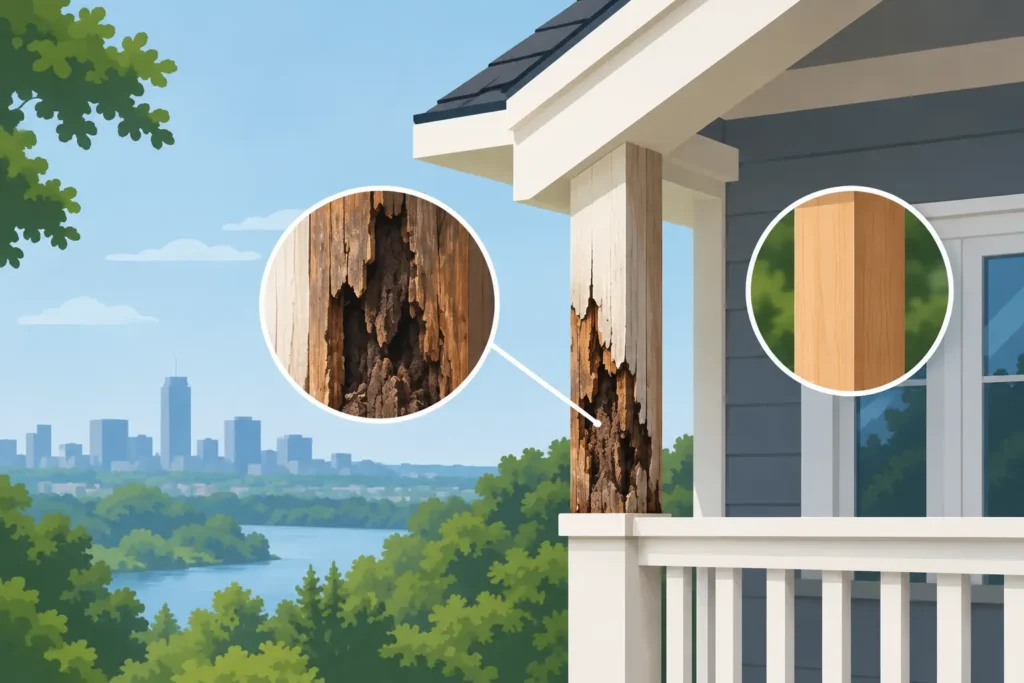
A soft porch post, peeling paint around a window, or a board that gives way under light pressure can turn into a much larger repair if moisture keeps reaching the wood behind it. This exterior wood rot guide explains what homeowners should look for, why rot develops, and when a professional repair is the safer investment.
Oklahoma homes face a demanding mix of heat, heavy rain, humidity, hail, and fast weather changes. Exterior wood can perform well for decades, but only when water is directed away from the home and protective finishes are maintained. Rot is rarely just a cosmetic problem. It is usually evidence that water has found a path through paint, caulk, flashing, or a failed joint.
What Exterior Wood Rot Really Means
Wood rot occurs when fungi feed on damp wood fibers. The fungus needs moisture, oxygen, a suitable temperature, and wood to grow. Since exterior structures naturally have oxygen and wood, moisture control is the part homeowners can influence most.
Not every weathered board is rotten. Sun exposure can fade paint, create surface checking, and dry out wood without weakening it. Rot changes the wood itself. It may feel soft or spongy, crumble when pressed, split unusually easily, or show deep cracks around fasteners and seams.
There are different forms of decay, but the practical concern is the same: affected wood has lost strength. A small section of damaged window trim may be a contained repair. Rot in fascia, siding, deck framing, porch columns, or wall framing can allow water to reach other building materials and may require a more thorough repair.
Exterior Wood Rot Guide: Where to Look First
A careful exterior walk-around a few times a year can catch problems while repairs are still straightforward. Pay special attention after extended rain, wind-driven storms, or a roof leak.
Start at areas where water naturally collects or changes direction. Window and door trim are common trouble spots because they have multiple joints and horizontal ledges. Press gently along the lower corners, sill areas, and caulk lines with a screwdriver or awl. Sound wood should resist pressure. If the tool sinks in easily, the wood needs closer evaluation.
Fascia boards and soffits also deserve attention. These components sit at the roof edge, where clogged gutters, overflowing downspouts, damaged drip edges, and roof leaks can keep wood wet. Staining, sagging, peeling paint, or dark streaks below the gutter line often point to a drainage issue that should be corrected before replacement boards are installed.
Check siding near the ground, around hose bibs, beneath decks, and where landscaping touches the house. Soil, mulch, leaves, and shrubs can trap moisture against the siding. Wood siding should have proper clearance from grade and should not stay covered by wet debris.
On decks and porches, inspect railing connections, stair stringers, ledger boards, posts, and the ends of exposed boards. Surface cracks alone do not always mean structural decay, but soft spots, loose connections, or deteriorated post bases should not be ignored. A deck may look acceptable from above while moisture is damaging the framing underneath.
Signs That Point to More Than Surface Damage
Paint failure is often the first visible clue, but paint does not cause rot by itself. It fails because moisture is pushing from behind, entering through an opening, or remaining trapped in the wood. Repainting over soft material may improve the appearance briefly, but it will not stop decay.
Look for peeling or blistering paint, open caulk joints, warped boards, dark discoloration, mushroom-like growth, insect activity, and recurring stains on interior walls or ceilings near exterior openings. Doors or windows that suddenly stick can also signal swelling wood or shifting caused by ongoing moisture exposure.
A musty smell near a porch, exterior wall, or window is another reason to investigate. The source may be limited to trim, but it can also indicate hidden moisture inside a wall cavity. When rot is near electrical fixtures, structural supports, roof edges, or exterior doors, it is wise to have the area professionally assessed rather than relying on a surface patch.
Repair or Replace? The Right Decision Depends on the Damage
The right repair is determined by the location, depth, and cause of the rot. Small, shallow damage in a nonstructural trim board may sometimes be removed, treated, filled with a quality exterior-grade wood repair product, sanded, primed, and painted. This approach only works when the surrounding wood is solid and the moisture source has been corrected.
Replacement is usually the better choice when rot extends through a board, affects joints, returns after previous repairs, or involves components that support weight or protect the home from water intrusion. Replacing a complete piece of trim or fascia can be more durable and often looks cleaner than trying to rebuild extensively damaged wood in place.
For siding, window trim, and door trim, the repair should include inspecting the layers behind the visible wood. A contractor may need to check house wrap, flashing, sheathing, insulation, and framing before installing new finish materials. Replacing only the visible board without addressing failed flashing or a leaking window can lead to the same problem within a season or two.
Structural wood requires a higher level of caution. Porch posts, deck framing, roof framing, and wall framing should be evaluated for load-bearing concerns. A quick patch is not an appropriate answer when the wood is carrying weight or the damage could affect safety.
Fix the Water Problem Before Installing New Wood
Long-lasting repairs begin with the reason the wood stayed wet. Sometimes the answer is simple, such as cleaning gutters and extending a downspout. Other times, the cause is hidden behind siding or trim and involves missing flashing, a failed roof detail, cracked masonry sealant, or improper grading.
Before new wood goes in, confirm that gutters drain freely and discharge away from the foundation. Trim back plants that hold moisture against walls. Keep mulch and soil below siding and trim. Repair roof leaks promptly, and make sure exterior caulk is used only where it belongs. Caulk can seal small gaps, but it should not block designed drainage paths or substitute for proper flashing.
Material selection also matters. Exterior-rated wood, properly primed cut ends, corrosion-resistant fasteners, and high-quality paint or stain all help extend service life. In some locations, composite or cellular PVC trim can be a practical alternative because it does not rot. The trade-off is cost and appearance. Wood may be the better match for a historic home or a specific architectural detail, while low-maintenance trim can make sense in repeatedly wet areas.
How to Prevent Exterior Wood Rot
Prevention is usually less expensive than a major exterior repair. Keep painted surfaces maintained, but do not wait for paint to completely fail before addressing small cracks or open joints. A simple seasonal inspection can reveal a loose gutter, damaged shingle, separated caulk line, or soft trim board before water travels farther into the home.
Focus on keeping water moving away from the structure. That means clean gutters, working downspouts, sound roof edges, proper drainage, and clear space between landscaping and exterior walls. After a severe storm, check for lifted shingles, hail damage, loose siding, and branches that may have damaged trim or gutters.
If you find a soft spot, do not assume a coat of paint will solve it. Probe the area carefully, look above it for the entry point, and inspect the inside of the home for staining or moisture. Early action protects more than curb appeal. It helps preserve the wall, roof, or deck system behind the finish material.
When exterior damage involves hidden moisture, multiple trades, or structural concerns, a clean, well-planned repair can prevent repeated patchwork. KCS Drywall helps Oklahoma property owners address exterior damage with the same straightforward communication and careful workmanship expected on every repair. The best time to deal with wood rot is when it is still a small, clearly defined problem.
22atmgame here! This is where a great selection of online games and money making meet! Good for a quick buck with great payouts. Try it yourself: 22atmgame