
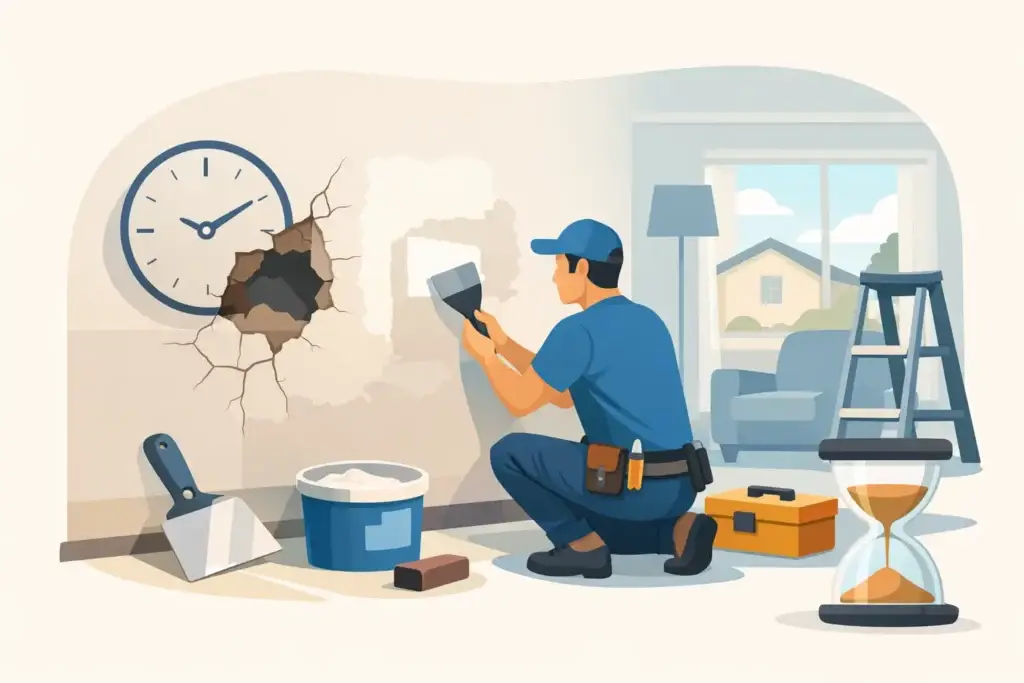
A doorknob hole can look like a one-hour fix. A ceiling stain may look like the same kind of problem until the drywall is opened and moisture damage is found behind it. Homeowners often ask, “how long does drywall repair take?” The honest answer depends on the size of the damage, the condition behind the wall, and how much finishing is needed to make the repair disappear.
For many common repairs, the hands-on work can be completed in a single visit. However, a clean, paint-ready result may take one to several days because joint compound, texture, primer, and paint all need proper drying time. Rushing those steps is one of the fastest ways to end up with visible seams, uneven texture, or a patch that flashes through the paint.
How Long Does Drywall Repair Take for Common Damage?
Small drywall repairs are usually straightforward. A nail pop, minor dent, or small hole from a wall anchor may only require a few hours of labor. The repair still needs time between coats of compound, though. Depending on the product used and conditions inside the home, that can stretch the calendar time into the next day.
A medium-sized hole, such as damage from a doorknob, furniture impact, or an electrical repair, often takes one to two days from patching through sanding. If the wall needs texture matching and paint, allow additional time for those finish steps.
Large holes and cutouts take longer because the damaged drywall must be removed, new backing installed, a replacement piece fitted, and seams properly taped. A professional crew may complete the structural patch in one day, but the finishing process generally requires multiple coats over two to three days. Larger repairs may also involve insulation, framing, or electrical work before drywall can be closed back up.
Water-damaged drywall is less predictable. The visible stain is not always the full problem. Before repair begins, the source of the leak must be corrected and the affected area must be completely dry. If drywall has softened, sagged, molded, or lost its structural strength, replacement is typically the right solution. The drying and investigation phase can add several days, especially after roof leaks, plumbing failures, or flooding.
The Steps That Set the Repair Schedule
Drywall repair is a finish trade. The patch itself matters, but the final appearance depends on the preparation and drying time that follows.
Inspection and preparation
The first step is identifying what caused the damage. A crack near a doorway may be a simple settlement crack, while a recurring crack can point to movement, framing issues, or moisture. Repairing the surface without addressing the cause can mean the problem returns.
Once the repair plan is clear, the work area is protected and loose, damaged material is removed. For a small patch, this preparation is quick. For a ceiling repair or water-damaged section, it may take longer to safely remove compromised drywall and inspect the area behind it.
Patching, taping, and joint compound
A durable repair needs more than a piece of drywall placed in the opening. The new material must be supported, secured, taped at the seams, and blended into the surrounding wall with joint compound.
Most patches need two or three coats of compound. Each coat fills, smooths, and widens the transition between the patch and the existing surface. Drying time varies, but it is common to allow several hours between coats. Deep fills, high humidity, and cool indoor temperatures can make that process longer.
Fast-setting compounds can reduce wait time for certain repairs, but they are not a shortcut for every situation. They must be applied and sanded correctly, and the finish still needs to be smooth enough to blend with the wall. A dependable drywall contractor chooses materials based on the repair, not simply the fastest possible clock.
Sanding and texture matching
After the final coat dries, the area is sanded smooth. This is where clean jobsite practices make a real difference. Drywall dust travels easily, so careful containment and cleanup help protect nearby floors, furniture, and living spaces.
Texture matching can add time, especially when the home has orange peel, knockdown, hand texture, or a pattern that has aged over time. A texture must be applied, allowed to dry, and checked under normal lighting. On a smooth wall, even a slight ridge or low spot can be noticeable after paint, so careful finishing is worth the extra attention.
Priming and painting
A repaired area should be primed before painting. Primer helps the patch absorb paint evenly and prevents a dull or shiny spot from showing through the finished color. Once primer dries, the area can be painted.
Touch-up painting is sometimes enough, but it is not always a perfect match. Existing paint may have faded from sunlight, cleaning, and daily wear. On larger patches or highly visible walls, painting the full wall from corner to corner often provides the most consistent result. That decision can affect both the project timeline and cost, but it can prevent a repair from standing out after the work is complete.
What Can Make a Drywall Repair Take Longer?
The wall condition is usually the biggest factor. Hidden water damage, mold concerns, loose framing, damaged insulation, or an unresolved leak all need attention before a new patch is installed. Covering those issues may look better temporarily, but it does not protect the property.
Ceiling repairs can also take longer than wall repairs. Working overhead requires extra care, and ceiling texture can be difficult to blend. If the ceiling has water damage, the area above it must be checked before repair begins.
Weather and indoor conditions matter as well. Oklahoma humidity can slow compound, texture, and paint drying, particularly during wet periods. Homes with limited ventilation or cooler indoor temperatures may need more drying time between finish coats. A good schedule accounts for those conditions instead of promising an unrealistic same-day finish.
Occupied homes and commercial spaces may require work to be staged around residents, customers, tenants, or business hours. That can extend the calendar timeline, but it allows the work to move forward with less disruption.
Can Drywall Repair Be Done in One Day?
Yes, some repairs can be completed in one day. Small dents, nail pops, minor cracks, and simple holes may be patched, sanded, primed, and painted during a single service appointment when conditions are right and fast-drying materials are appropriate.
The trade-off is that same-day repairs are best for limited damage and simple finishes. A larger patch, a smooth wall in direct light, or a texture that needs careful matching usually benefits from additional drying and finishing time. The goal should not be to leave quickly. It should be to leave a repair that looks natural and holds up.
For property managers and commercial clients, quick turnaround is often necessary, particularly between tenants or before inspections. Even then, the best approach is a clear scope of work, a realistic schedule, and a crew that keeps the area organized while maintaining finish quality.
Planning for a Smooth Repair
Before scheduling drywall work, move fragile items and furniture away from the damaged area when possible. Let the contractor know if the damage followed a leak, if the crack has returned before, or if there are plumbing or electrical lines nearby. Those details help prevent surprises once work begins.
It also helps to discuss the finish expectation upfront. Do you need the wall patched and ready for paint, or do you need a complete repair with texture, primer, and painting? A clear answer makes the quote and timeline more accurate.
KCS Drywall approaches repairs with the same standard used for larger drywall and remodeling projects: protect the space, identify the cause, complete the repair correctly, and leave a clean result. For most homeowners, a short wait for proper drying and finish work is a worthwhile investment in a wall or ceiling that no longer calls attention to itself.
A reliable repair schedule is one that accounts for the damage you can see and the conditions behind it. When the work is planned carefully, the finished surface looks better, lasts longer, and lets you get back to enjoying the space instead of noticing the patch.