
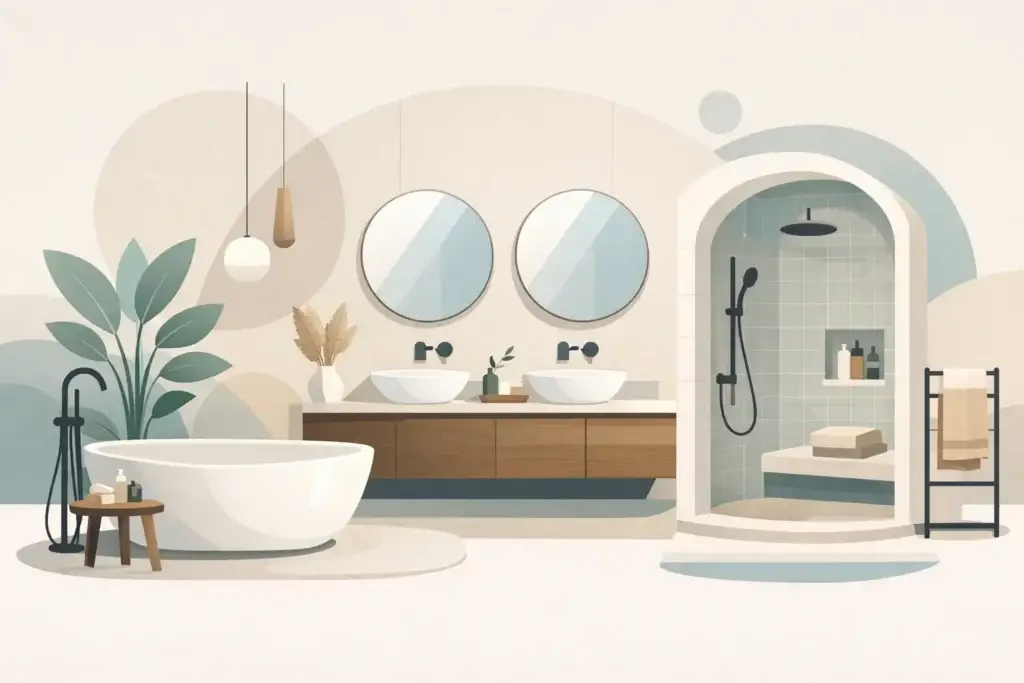
A bathroom can look dated long before it stops working. Honey-oak cabinets, a single overhead light, cramped vanities, and worn drywall around a shower all make the room feel harder to use than it should. The bathroom design trends 2026 homeowners are watching focus less on flashy features and more on comfort, durable materials, useful storage, and finishes that hold up to real daily life.
For Oklahoma homeowners, the best remodel is not about copying a showroom. It is about choosing a layout, materials, and workmanship that fit the home, the budget, and the people using the space. Here are the design directions worth considering before your next bathroom update.
Bathroom Design Trends 2026: Warm, Useful, and Built to Last
Warmer neutrals replace all-white rooms
Bright white bathrooms are not disappearing, but they are becoming softer and more balanced. In 2026, expect to see warmer whites, light taupe, mushroom, clay, sand, and muted green used across wall color, tile, cabinets, and accessories. These colors make a bathroom feel settled without making it dark.
Natural wood tones are also returning in a more refined way. A white oak vanity, medium-toned shelving, or wood-look porcelain tile can bring warmth to a room that otherwise has hard surfaces everywhere. For smaller bathrooms, the key is restraint. A wood vanity paired with light walls and a simple countertop often feels more open than using several competing tile patterns.
Color should work with the fixed elements in the room. If replacing the tile, vanity, and lighting at once is not in the plan, choose a paint color that supports what stays. A professional finish on walls and ceilings matters here, especially in rooms where imperfect drywall patches or texture stand out under direct lighting.
Spa features become more practical
Homeowners still want a bathroom that feels like a place to reset, but the 2026 version of spa style is more useful than decorative. Think larger showers with a built-in bench, handheld showerheads, recessed niches for products, quiet exhaust fans, and lighting that can shift from bright morning use to a calmer evening setting.
A curbless shower is another popular option, particularly for homeowners planning to stay in their homes long term. It creates a clean, open look and can improve accessibility. It does require careful slope, waterproofing, drainage, and framing work, so it is not a detail to treat as a simple cosmetic upgrade.
Freestanding tubs remain appealing in larger primary bathrooms, but they are not the right answer for every floor plan. They need room around them for cleaning, and they may take space away from a larger shower or better storage. In a tight bathroom, improving the shower experience usually provides more value than forcing in a tub that looks good but makes the room less functional.
Statement stone, used with purpose
Stone-look surfaces are moving beyond plain gray marble. Homeowners are choosing quartz, porcelain slabs, and tile with warmer veining, subtle movement, and earthy character. A single stone-look feature wall behind a vanity or in a shower can add interest without covering the entire room in busy pattern.
Porcelain is often a practical choice for floors and shower walls because it is durable and easier to maintain than many natural stone options. Natural stone has a distinctive look, but it can require more care and sealing. The right choice depends on the household. A busy family bathroom needs surfaces that tolerate water, dropped products, and regular cleaning. A lightly used guest bath may allow more room for specialty finishes.
Large-format tile can make a bathroom feel less cluttered because there are fewer grout lines. On the other hand, smaller tile can offer better traction on shower floors and give installers more flexibility around drains and slopes. Good design considers both appearance and performance.
Storage Takes Center Stage in Bathroom Design
A beautiful vanity does not solve much if it leaves toothbrushes, towels, hair tools, and cleaning supplies spread across the counter. One of the most useful bathroom design trends 2026 brings forward is storage that is planned into the room instead of added after the fact.
Drawer-based vanities are replacing deep, hard-to-reach cabinet boxes in many remodels. Divided drawers keep smaller items organized, while deeper drawers can hold folded towels and larger bottles. A tall linen cabinet can be a better use of vertical space than an oversized double vanity, especially in a shared bathroom.
Recessed medicine cabinets are another smart choice. They preserve counter space while keeping everyday items within reach. Shower niches should be sized for the products people actually use, not treated as a tiny decorative rectangle that leaves shampoo bottles on the floor.
Storage planning should happen before walls are closed. Framing can be adjusted for a recessed cabinet, niche, or built-in shelving, and electrical locations can be planned around the vanity and mirrors. This is where a full remodeling approach prevents expensive changes later.
Layered lighting improves the room every day
One ceiling fixture is rarely enough for a bathroom. Better lighting starts with a bright general fixture, then adds task lighting around the mirror and softer accent light where appropriate. Sconces mounted on both sides of a mirror generally provide more even facial lighting than a fixture directly overhead.
Backlit mirrors remain popular because they add a clean, modern look, but they should not be the only source of light for shaving, makeup, or detailed grooming. For many bathrooms, a combination of vanity lighting and a dimmable ceiling fixture offers the best result.
Lighting also affects how paint, tile, and countertops appear. Before selecting finishes, consider the room’s natural light and the bulb temperature you plan to use. Warm-white lighting often works well with the warmer neutral palettes gaining attention in 2026. Cool lighting can make beige or cream surfaces look dull or gray.
Durable Walls and Ventilation Are Part of the Design
The most attractive bathroom finishes will not perform well if moisture management is ignored. Bathrooms need proper ventilation, correctly installed backer materials in wet areas, and wall repairs that are finished cleanly before paint or tile goes on. Peeling paint, soft drywall, mildew stains, and cracked caulk are usually signs that the issue is more than surface deep.
An exhaust fan should be sized for the room and vented outside, not into an attic or enclosed space. It should also be used long enough after showers to remove moisture. In bathrooms with limited natural ventilation, this becomes even more important.
Drywall outside wet zones should be repaired and finished with care. Smooth walls are popular, but they reveal every seam, patch, and uneven texture when daylight hits. Whether the room has a smooth finish or matching texture, careful prep is what makes new paint and fixtures look finished rather than rushed.
Mixed metals stay, but coordination matters
Mixing metal finishes can give a bathroom more character than matching every fixture exactly. Brushed nickel, matte black, warm brass, and bronze all have a place in current designs. The goal is not to use every finish available. It is to create a clear, intentional combination.
For example, a homeowner might use brushed nickel plumbing fixtures with matte black lighting and mirror frames. Keep the mix to two primary finishes and repeat each one at least twice. This creates contrast without making the room feel pieced together.
Matte black still works well in modern bathrooms, but it can show water spots and fingerprints more easily than brushed finishes. Warm brass brings depth to neutral bathrooms but should be selected carefully, since the tone can vary widely between brands. Seeing samples together before ordering helps avoid a mismatch.
Plan the Remodel Around How You Live
The strongest trend is a bathroom that fits the household. A family with young children may need a durable tub, extra closed storage, and easy-clean flooring. A primary suite may benefit most from a larger shower, improved lighting, and a vanity layout that gives two people room to get ready. For a rental or commercial property, durable finishes and straightforward maintenance may matter more than high-end specialty materials.
Before choosing tile or fixtures, decide what is not working now. Is the room too dark? Is there not enough storage? Does the shower feel cramped? Are walls damaged or finishes worn? Clear answers help set priorities and keep the budget focused on changes that improve the room every day.
A dependable remodeling crew can help identify what the existing walls, plumbing locations, framing, and ventilation will allow before finishes are ordered. KCS Drywall approaches bathroom work with the same attention to clean preparation, reliable scheduling, and quality finishing that every lasting remodel requires.
The best bathroom for 2026 will not be the one with the most trends packed into it. It will be the one that feels comfortable on a rushed weekday morning, holds up to moisture and regular use, and still looks like it belongs in your home years from now.