A bathroom can look perfectly finished on move-in day and still develop soft drywall, peeling paint, or staining a few years later. The difference often comes down to what is behind the paint. This moisture resistant drywall review explains where this material earns its higher price, where it is the wrong choice, and why quality installation matters just as much as the board itself.
What Moisture Resistant Drywall Is Designed to Do
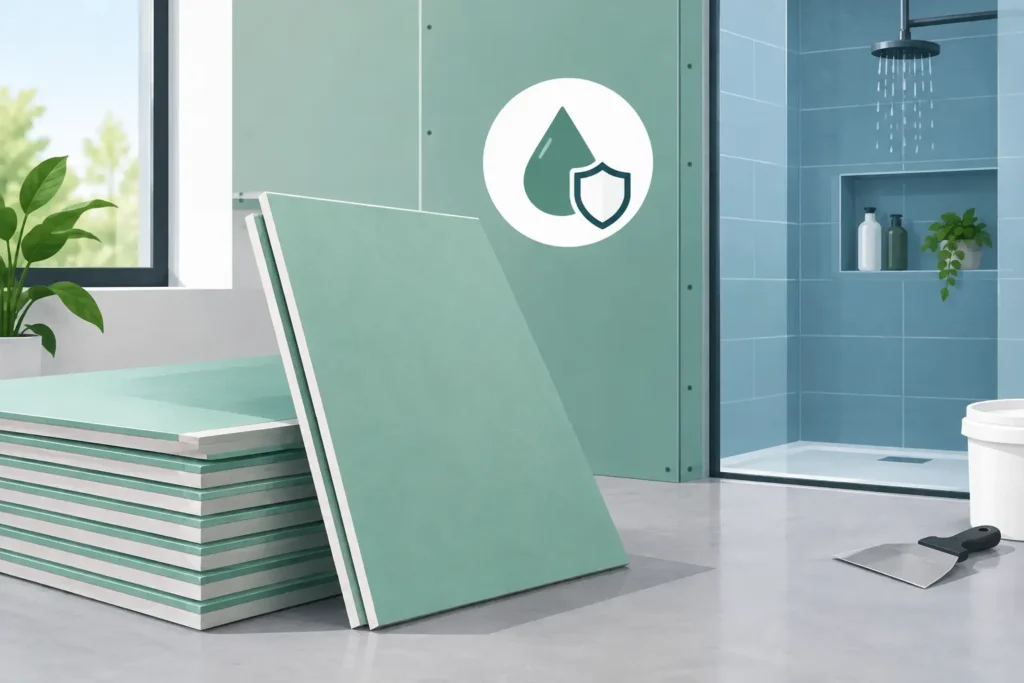
Moisture resistant drywall is gypsum board made with a treated core and moisture-resistant facing. Many homeowners know it as green board, although modern products also come in purple, blue, or other colors depending on the manufacturer. The facing is designed to slow moisture absorption compared with standard white drywall.
That added resistance makes it a practical choice for rooms that experience humidity, occasional splashes, and changing temperatures. In Oklahoma homes, that often includes bathrooms, laundry rooms, kitchens, basements, utility rooms, and areas near entry doors where wet shoes and umbrellas are common.
The key word is resistant, not waterproof. Moisture resistant drywall can handle damp conditions better than standard drywall, but it is not made to sit behind a showerhead or withstand a plumbing leak. If water gets through the wall assembly repeatedly, even the best drywall product can fail.
Moisture Resistant Drywall Review: The Real Benefits
For the right location, moisture resistant drywall provides meaningful protection without changing the finished appearance of the room. Once it is properly taped, textured, primed, and painted, it looks much like any other finished drywall surface.
Its main advantage is durability in humid spaces. Standard drywall can absorb moisture more quickly, which may lead to sagging, weakened paper facing, staining, and conditions that support mold growth. Moisture resistant board helps reduce that risk when a room has normal ventilation and no active water intrusion.
It is also an efficient material for remodeling work. A homeowner updating a bathroom or laundry room does not necessarily need tile on every wall. Using moisture resistant drywall outside wet zones can provide a clean, paint-ready surface while keeping the project budget more reasonable than covering the entire room with cement board and tile.
For property managers and commercial clients, the benefit is often consistency. Restrooms, break rooms, janitorial closets, and other high-humidity areas receive more daily use than a typical home bathroom. Selecting the right board from the start can help reduce avoidable repair work later.
Where It Works Best
Moisture resistant drywall performs well on bathroom walls outside the shower or tub enclosure, especially near a vanity, toilet, or exterior wall that sees humidity changes. It is also a sound choice for laundry rooms, where washers, dryers, and utility sinks can raise moisture levels.
In kitchens, it can be useful behind refrigerators, near sinks, and on walls that are regularly exposed to steam from cooking. It is not a replacement for a proper backsplash around a sink or range, but it adds a layer of protection behind finished surfaces.
Basements and below-grade rooms require more judgment. If the space is dry, conditioned, and protected from foundation moisture, moisture resistant drywall may be appropriate. If the walls have a history of seepage, condensation, or flooding, the problem needs to be corrected before drywall is installed. Covering a moisture issue with better board only delays the repair.
Where It Should Not Be Used Alone
The most common mistake is treating moisture resistant drywall as a tile backer in a shower or tub surround. It is not the right material for that job. Direct water exposure calls for a waterproof shower system, typically using cement board or an approved foam backer with proper waterproofing at seams, fasteners, corners, and penetrations.
The same caution applies to walls with an active roof leak, plumbing leak, or foundation leak. No drywall product can compensate for water entering the wall cavity. The source of moisture must be found and repaired first, then damaged insulation, framing, and drywall should be evaluated before the wall is closed.
High-moisture rooms also need ventilation. A bathroom exhaust fan that vents outdoors, is correctly sized, and is used during and after showers is one of the best defenses against humidity damage. Good materials work best when the room is designed to stay dry.
Cost and Trade-Offs to Consider
Moisture resistant drywall generally costs more than standard drywall, and installation can take a little more planning because the board may be heavier or require specific fastener spacing. For a small bathroom or laundry room, the material upgrade is usually modest compared with the cost of repairing damaged walls later.
Still, it is not automatically the best choice for every room. Standard drywall remains a reliable, cost-effective material for dry bedrooms, living rooms, hallways, and offices. Spending more on moisture resistant board throughout an entire house rarely delivers enough value to justify the added expense.
There is also a difference between moisture resistance and mold resistance. Some premium panels are manufactured to better resist mold growth, often with fiberglass facings instead of paper. These products can be helpful in higher-risk areas, but they do not remove the need for ventilation, leak repairs, and proper finishing.
Paint matters, too. A quality moisture-resistant primer and durable bathroom or kitchen paint improve the wall’s ability to handle humidity and routine cleaning. They should support the drywall system, not serve as the only protection.
Installation Details That Affect Performance
A moisture resistant board installed poorly can fail just as quickly as standard drywall. The wall framing must be straight, dry, and free of mold or rot. Panels should be fitted correctly, fastened without breaking the facing, and finished with compatible tape and joint compound.
In bathrooms, crews should pay close attention to corners, plumbing cutouts, and transitions between drywall and tile. These are common locations for cracking and moisture entry. Caulk and waterproofing should be used where the assembly calls for them, while drywall seams should be taped and finished to create a smooth, paint-ready surface.
Drywall also needs clearance from floors where water exposure is possible. Allowing the board to sit directly on a concrete slab or against a damp floor can pull moisture into the panel from below. Proper spacing and baseboard installation help protect the lower edge.
At KCS Drywall, the focus is not simply hanging a different type of board. It is evaluating the room, selecting the appropriate material for each zone, and finishing the work cleanly so the surface is built to last.
How to Decide for Your Project
Start by asking what kind of moisture the room actually sees. Normal humidity from showers and laundry use points toward moisture resistant drywall. Direct spray from a shower or frequent standing water calls for a waterproof backer system. Recurring leaks or damp foundations require repair work before any new wall material goes in.
Also consider how long you plan to keep the property and how the room is used. A primary bathroom used by a busy family deserves more protection than a rarely used powder room. Rental properties and commercial spaces may benefit from durable materials in areas that receive heavy use, but the best choice still depends on the building’s ventilation and maintenance plan.
A professional assessment can prevent a simple finish upgrade from becoming a repeat repair. When walls show bubbling paint, soft spots, musty odors, or visible staining, the right next step is to identify the moisture source before choosing replacement drywall. A dry wall cavity, sound framing, and the right board in the right place will do more for a finished room than any paint color ever can.