
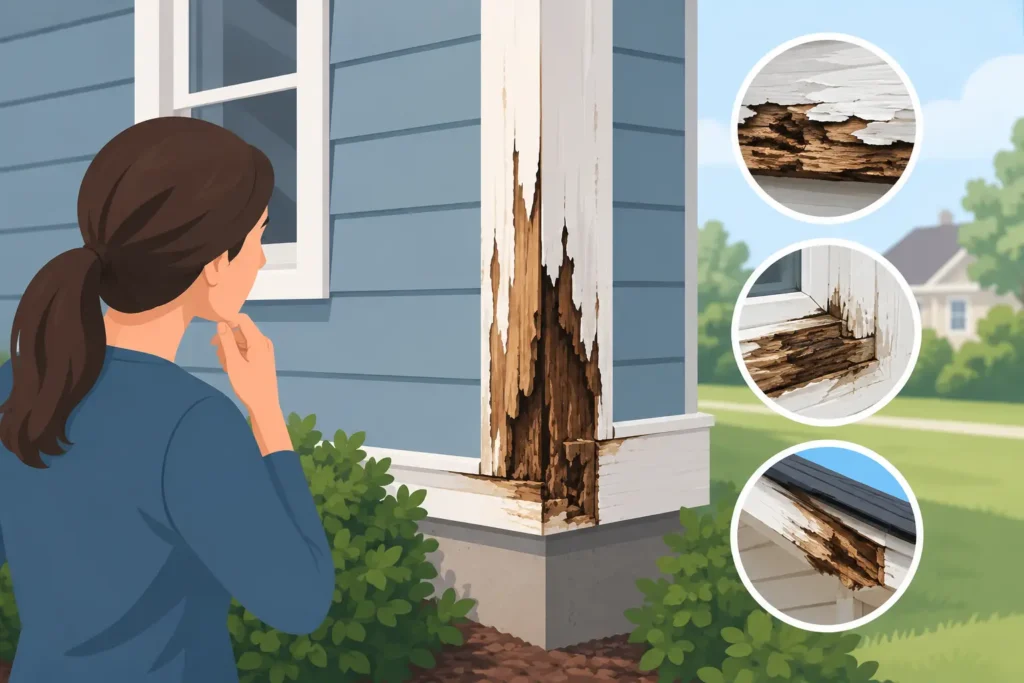
A soft window trim board can turn a small maintenance issue into a wall repair faster than most homeowners expect. Exterior rot signs are often easy to miss at first because paint can hide damaged wood, and water does not always leave an obvious trail. Catching the problem early protects your siding, trim, framing, insulation, and interior finishes from more extensive damage.
For Oklahoma homeowners, exterior maintenance matters. Heavy rain, high humidity, wind-driven storms, and sharp temperature changes can all wear down caulk, paint, flashing, and exposed wood. A careful inspection a few times each year gives you a better chance of repairing the source of moisture before rot spreads.
What Causes Exterior Wood Rot?
Wood rot begins when moisture stays in or against wood long enough for fungi to grow. Wood can get wet during normal weather, but it should also have a way to dry. Problems begin when water repeatedly enters through failed caulk, gaps around windows, damaged flashing, roof leaks, clogged gutters, or cracked paint.
Rot is not always caused by a major storm or obvious leak. Water can slowly work behind siding or trim for months through a small opening. Poor drainage around the foundation, sprinklers aimed at the house, and vegetation pressed against exterior walls can also keep building materials damp.
The visible damage may be limited to one board, but the moisture path can extend beyond it. That is why a quality repair addresses both the rotted material and the reason it stayed wet in the first place.
Exterior Rot Signs to Look for Around Your Home
The most common exterior rot signs appear around areas where water naturally collects or where multiple materials meet. Walk around the property in daylight and take your time looking at the lower portions of walls, doors, windows, roof edges, and deck connections.
Soft, Crumbling, or Spongy Wood
Healthy painted wood feels firm when gently pressed. If a trim board dents easily, crumbles at the corner, or feels soft beneath the paint, it may have rot beneath the surface. Use gentle pressure with a screwdriver handle or your fingertip. Do not force a sharp tool into the wood, as this can create additional damage.
Softness near the bottom of door trim, window trim, porch posts, and fascia boards deserves prompt attention. Those areas regularly encounter rainwater, splashback, and runoff.
Peeling Paint That Keeps Returning
Peeling paint alone does not always mean rot. Paint can fail because of age, sun exposure, or poor surface preparation. But paint that bubbles, cracks, or peels in the same spot soon after repainting often points to moisture trapped behind it.
Look for dark staining, raised grain, or swollen edges under the failing paint. Repainting over damp or decayed wood may improve appearance briefly, but it will not stop the underlying damage.
Cracks, Open Joints, and Missing Caulk
Caulk around windows, doors, siding transitions, and trim is a first line of defense against water entry. When it shrinks, separates, or falls out, rain can reach the wood behind it. Small gaps matter most on horizontal surfaces and at the upper edges of trim, where water can work its way downward.
Check mitered trim corners as well. When joints open, exposed end grain can absorb water quickly. If the board is still solid, recaulk and repainting may be enough. If the wood is swollen or soft, replacement is usually the more reliable option.
Warped Boards and Uneven Siding
Wood that repeatedly absorbs moisture may cup, bow, split, or pull away from the wall. You may notice a trim board that no longer sits flat or siding that has developed irregular gaps. These changes create more paths for water to enter, which can speed up the damage.
Warping can also occur from normal expansion and contraction, so the surrounding conditions matter. A single slightly uneven board may be minor. Warping paired with soft wood, staining, or cracked paint calls for a closer inspection.
Dark Stains, Mold, and Musty Odors
Dark streaks beneath windows, around rooflines, or near exterior fixtures can show where water is repeatedly running or leaking. Green or black surface growth may be mildew caused by shade and humidity, but it can also signal a moisture issue that needs correction.
If you notice a musty smell near an exterior wall from inside the home, do not assume it is only an indoor problem. Water intrusion can affect insulation, sheathing, and drywall before it becomes visible indoors.
Where Rot Often Hides
Rot tends to develop in predictable places. Window sills and trim are common trouble spots because they rely on caulk, flashing, and proper drainage to keep water out. Door thresholds and lower door trim are also vulnerable, especially if rainwater pools on a porch or patio.
Roof edges deserve attention as well. Damaged fascia, soffits, and eaves can allow water into the roof structure or wall cavities. If gutters overflow, pull away from the house, or discharge too close to the foundation, they can create repeated wetting along the exterior.
Decks, porch columns, railings, and steps should be checked at their connection points. Wood close to the ground is more likely to stay damp, while posts and columns can conceal damage near their bases. Never rely on appearance alone when a support component feels loose or soft.
How to Inspect Safely Without Making Damage Worse
A homeowner inspection should focus on visible conditions, not risky exploration. Start from the ground and use binoculars for high areas rather than climbing a ladder without proper equipment. Check after a heavy rain if possible, since active leaks and drainage issues are easier to spot when surfaces are wet.
Pay attention to patterns. A stain directly below a gutter joint may point to overflow. Damage concentrated at the bottom of one window may indicate failed caulk, a missing drip cap, or water entering from above. Taking photos over time can help determine whether a crack or stain is getting worse.
Avoid removing large sections of siding or trim unless you have the right tools and experience. Exterior components often overlap in ways that manage water, and an incorrect repair can introduce a new leak. If you find soft wood near a load-bearing porch post, roofline, or exterior wall, schedule a professional evaluation instead of waiting for the next season.
When a Simple Repair Is Enough and When It Is Not
Not every damaged exterior surface requires a major project. A small area of failed caulk on otherwise sound trim may only need cleaning, resealing, priming, and painting. Minor paint failure caused by sun exposure can often be corrected with proper preparation and a quality exterior coating.
Replacement becomes the better choice when wood is soft, deeply cracked, swollen, or deteriorating from the back side. The repair should include removal of damaged material, inspection of the area behind it, correction of flashing or drainage issues, and careful sealing of the replacement. Skipping the moisture correction may lead to the same repair again within a few years.
If rot has reached wall sheathing or led to interior staining, drywall damage, or insulation concerns, the project may involve both exterior and interior work. Coordinating those repairs helps ensure the wall is dry and sound before new finishes are installed. KCS Drywall can help property owners address exterior repair needs while protecting the clean, finished appearance of the spaces inside.
Preventing Rot After Repairs
The best protection is regular maintenance that keeps water moving away from the home. Keep gutters clear, confirm downspouts discharge away from the foundation, and repair loose flashing before storm season. Trim shrubs and tree branches away from the siding so exterior surfaces can dry after rain.
Inspect caulk and paint at least once a year, especially around windows, doors, and roofline trim. Exterior paint is more than a color choice – it is a protective layer. When it begins to fail, timely prep and repainting can extend the life of wood components.
If one area keeps showing damage, look beyond the board itself. The long-term fix is usually found in the water path: a gutter above, a flashing detail, a cracked joint, or drainage that needs adjustment. Addressing that cause early keeps a manageable repair from becoming a larger restoration project.