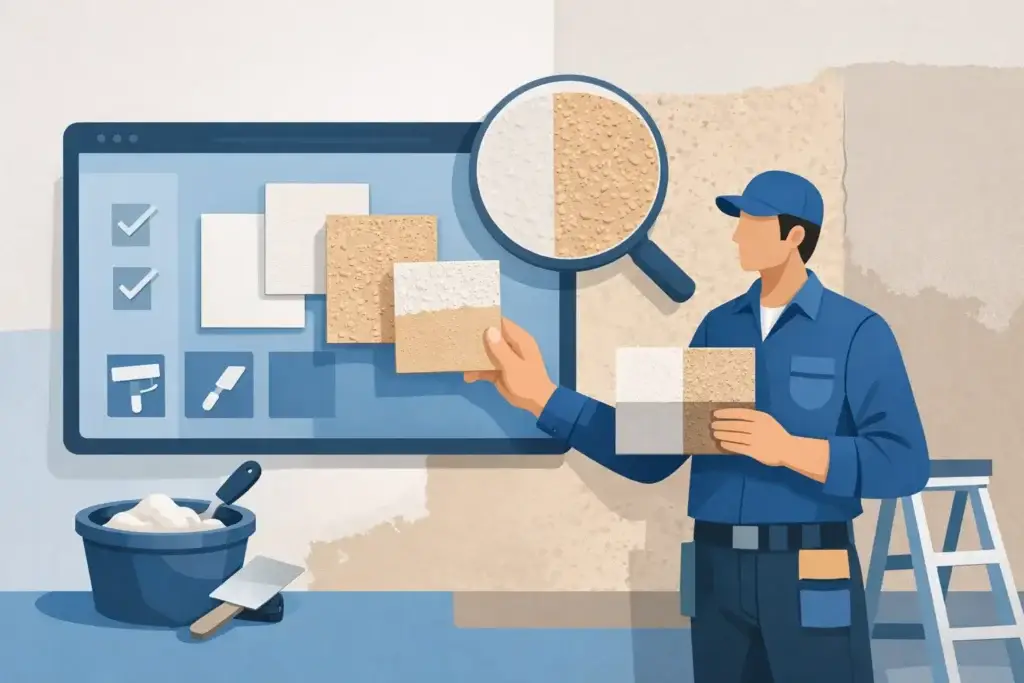
A drywall patch can be solid, smooth, and properly finished – and still stand out the moment the paint dries. That usually comes down to texture. A professional wall texture matching service is what turns a visible repair into a finish that looks consistent with the rest of the room, not like a square patch someone tried to hide.
For homeowners, that means fewer eyesores after plumbing repairs, electrical work, settling cracks, or accidental damage. For property managers and commercial clients, it means a cleaner final result and fewer callbacks. Texture is one of those details people may not notice when it is done right, but they notice it immediately when it is off.
Why wall texture matching matters
Most walls are not truly flat, even when they look simple at first glance. Orange peel, knockdown, skip trowel, hand-applied patterns, and older custom finishes all catch light differently. Even a small difference in spray pattern, mud thickness, or timing can make a repair show through.
That is why texture matching is not just about applying mud over a patch. It takes the right material mix, tool choice, application method, and dry time. A repair might need to match not only the pattern itself, but also the density of the texture and how it transitions into the surrounding wall or ceiling.
In Oklahoma homes, this comes up often after water damage, foundation movement, remodeling work, or everyday wear. In offices, retail spaces, and rental properties, it often shows up after maintenance cuts into drywall for access or updates. The repair is only part of the job. The finish is what people live with.
What a wall texture matching service actually includes
A quality wall texture matching service starts with identifying what is already on the wall. That sounds basic, but it is where many mismatched repairs begin. Texture styles can look similar from a distance and still require different techniques to recreate.
A trained crew looks at the pattern, the scale, the thickness, and the age of the finish. They also check the condition of the surrounding drywall. If the patch is not properly taped, floated, and sanded first, the texture will not hide the issue. Texture is not a shortcut for poor drywall work.
Once the surface is ready, the matching process may involve hand application, hopper spraying, specialty knives, or layered finishing. In some cases, the repair area can be blended into the surrounding field. In others, especially with older or highly irregular textures, the best-looking result may require texturing a larger section from corner to corner.
That is the part many property owners do not expect. A small repair does not always mean a small finish area. If the surrounding texture has aged, been painted several times, or was originally applied inconsistently, widening the blend zone often creates the cleaner result.
Why texture matching is harder than it looks
Texture matching tends to get underestimated because the materials themselves are not complicated. Joint compound, water, a sprayer, a knife – none of that sounds specialized on paper. The skill is in knowing how those variables affect the final look.
For example, orange peel can shift based on air pressure, nozzle size, mud consistency, and spray distance. Knockdown depends on timing. If the mud sets too long before flattening, the pattern changes. If it is knocked down too early, it smears. Hand textures bring another layer of variation because they depend on rhythm, pressure, and the installer’s technique.
Lighting also changes everything. A texture that looks close in shadow can look completely different in direct afternoon light or under recessed fixtures. That is especially true on ceilings and long hallway walls where there is little visual distraction.
Paint can make a near match look better or worse. Fresh paint on a repaired area often reflects light differently than older paint around it, even when the texture is close. Sometimes the texture is the issue. Sometimes the texture is fine, but the repaint needs to extend farther for the finish to look uniform.
When to hire a pro instead of trying it yourself
Some small wall repairs are reasonable DIY projects. If the texture is light, the patch is hidden behind furniture, and you are comfortable with trial and error, doing it yourself may be worth a shot. That is the honest answer.
But if the repair is in a main living area, entryway, ceiling, stairwell, office, or rental turn, professional work usually saves time and frustration. The same goes for larger patches, water-damaged drywall, repeated cracking, or any finish that needs to look consistent under close inspection.
A pro is also the better choice when the repair involves more than texture. If there is damaged framing, insulation issues, loose tape, sagging drywall, or signs of moisture, the finish should not be treated as a cosmetic-only problem. Good texture work starts after the substrate is fixed correctly.
What affects the final result
No responsible contractor should promise that every repair will be invisible in every condition. A good result depends on several factors, and being honest about that is part of doing the job right.
The age of the existing texture matters. Older walls may have absorbed years of paint, dust, and touch-ups that slightly soften or fill in the original pattern. The size of the damaged area matters too. A six-inch repair is different from rebuilding a large section after a leak.
Paint condition matters just as much as texture. Even if the pattern is matched closely, different sheen levels or faded paint can make the repaired area read differently. In many cases, the best finish comes from matching the texture first, then repainting the full wall or ceiling plane.
There is also a difference between matching machine-applied production texture and custom hand texture. Production textures are often easier to reproduce consistently. Hand-applied finishes can be matched well, but they may require more time and a wider blend area.
How a reliable contractor approaches the job
The best texture matching work follows a straightforward process. First, the damage is inspected and the cause is addressed. Then the drywall is repaired correctly, not just covered. After that, the texture is tested, adjusted, and blended to fit the surrounding surface.
Just as important, the crew protects floors, furniture, and nearby finishes before work begins. Texture can travel, especially with spray application. Clean setup and cleanup matter in occupied homes and working commercial spaces.
Communication matters too. A dependable contractor explains what can be matched, where a wider blend may help, and whether full repainting is recommended. That kind of clarity helps avoid unrealistic expectations and gives the customer a finish plan that makes sense.
At KCS Drywall, that practical approach is part of the job. Customers want more than a patch. They want the repaired area to look right, the work area to stay clean, and the schedule to stay on track.
Wall texture matching service for homes and commercial spaces
Residential and commercial jobs often have different priorities. In a home, the focus is usually appearance, cleanliness, and minimizing disruption. In a commercial setting, speed, consistency, and professional coordination often matter just as much.
For homeowners, a matched wall or ceiling texture helps preserve the look of the space after repair work. For builders, contractors, and property managers, it helps keep punch lists tight and tenant spaces presentable. In both cases, the goal is the same – the repair should not call attention to itself.
That is why experience matters. A crew that handles drywall repair and finishing every day is more likely to recognize texture types quickly, anticipate problem areas, and recommend the right scope before work starts.
If you are dealing with a patch that still shows, a ceiling repair after a leak, or a room where the finish no longer looks consistent, the right fix is not always bigger drywall work. Sometimes it is simply better finishing. A well-executed texture match can make the whole repair feel complete, which is exactly how it should feel when the job is done.