
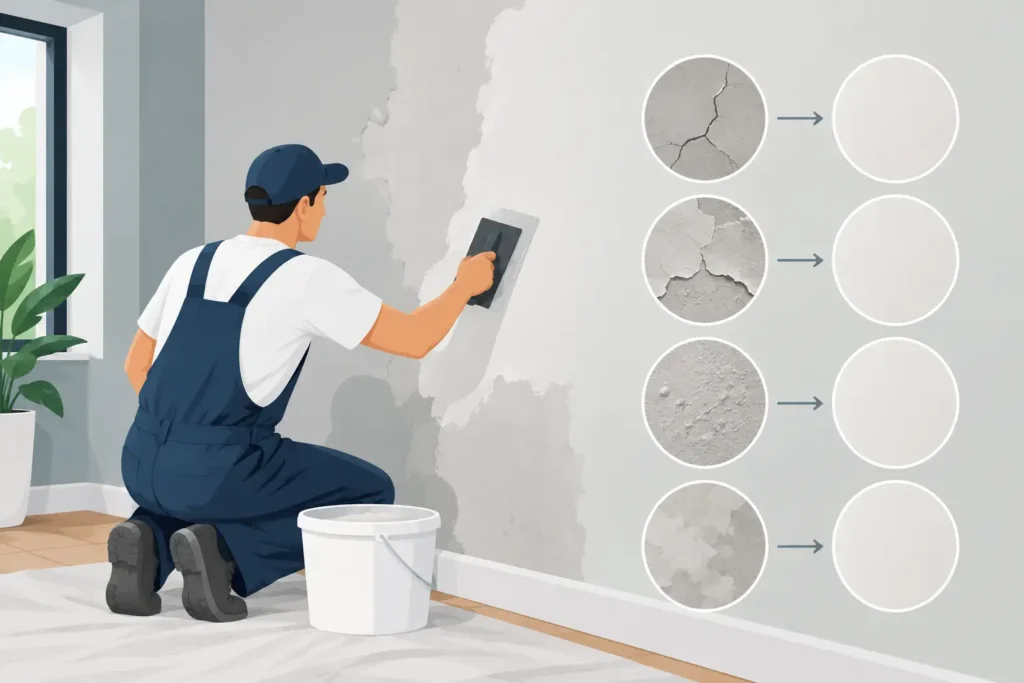
A fresh coat of paint cannot hide a wall that is uneven, patched, cracked, or covered in old texture. In fact, new paint often makes those flaws more noticeable once sunlight hits the surface. So, when should walls be skim coated? Skim coating is the right solution when the drywall itself is sound but the finish needs to be brought back to a smooth, paint-ready condition.
A skim coat is a thin layer of joint compound applied across all or part of a wall. It fills shallow imperfections, softens uneven transitions, and creates a uniform surface for paint, wallpaper, or a new texture. It is not necessary for every wall repair, but it can make the difference between a patch that blends in and a finished room that looks professionally completed.
When Should Walls Be Skim Coated Instead of Patched?
Small nail holes, minor dents, and a single shallow scratch typically need only spot repairs. Once the damage spreads across a larger area, however, repeated patching can leave visible edges and inconsistent wall texture. Skim coating creates one continuous finish rather than a collection of separate repairs.
It is often the best choice after water damage has been repaired, old wallpaper has been removed, or several holes have been patched. It also works well on walls with heavy roller marks, poor previous repairs, or joint lines that show through under certain lighting.
The deciding factor is usually visibility. If the wall looks uneven from across the room, catches shadows along seams, or feels bumpy when you run a hand across it, a skim coat may be more effective than adding another small patch.
Signs Your Walls Need a Skim Coat
Old Texture Has Been Removed
Removing wallpaper, popcorn texture, adhesive, or a dated wall finish can leave behind torn drywall paper, gouges, and uneven areas. Even careful removal can expose imperfections that were hidden for years. Painting directly over that surface may seal it, but it will not make it smooth.
A skim coat levels the wall after the loose material has been removed and the drywall paper has been properly sealed. This step is especially valuable when a homeowner wants a cleaner, more modern painted finish after taking down wallpaper.
Drywall Repairs Cover a Large Area
A single repair can usually be feathered into the surrounding wall. Multiple repairs are different. Patches around plumbing work, electrical updates, moved fixtures, or past tenant damage can create a wall with different textures in several places.
Skim coating the full wall allows the repaired sections to blend into the original drywall. It also helps prevent flashing, which is when repaired areas absorb paint differently or appear more visible under light than the rest of the wall.
Seams, Tape, or Joint Lines Are Showing
Visible drywall seams are often caused by poor finishing, settling, moisture exposure, or tape that was not properly embedded. If tape is loose, bubbling, or cracked, it must be repaired before any skim coat is applied. Covering active damage without correcting it first only delays the problem.
Once repairs are stable, skim coating can help restore a flat, consistent surface. This is common in older homes where years of repainting have made seams and previous touch-ups more noticeable.
The Wall Has Heavy Orange Peel or Uneven Texture
Texture can hide minor flaws, but it can also make a room feel dated or difficult to repaint evenly. A light orange peel texture may be workable with the right prep. Heavier texture, overspray, or inconsistent texture from prior repairs may need to be knocked down and skim coated before a smooth finish is possible.
There is a trade-off here. Skim coating textured walls takes more labor than simply repainting, especially if the texture is deep. But for homeowners planning a remodel, updating a kitchen or bathroom, or preparing a home for sale, the cleaner result can be well worth the investment.
Light Reveals Every Imperfection
Walls near large windows, patio doors, and bright overhead fixtures are less forgiving. Raking light, meaning light that hits the wall from an angle, makes ridges, patches, and sanding marks stand out. A wall that looks acceptable at night can look rough during the day.
Skim coating is often recommended in these high-visibility areas. It gives the painter a consistent base and helps the finished wall look better in the lighting conditions that matter most.
When a Skim Coat Is Not the Right Repair
Skim coating improves the surface. It does not fix structural movement, ongoing moisture problems, mold, or severely damaged drywall. If a crack continues to reopen, a door frame is shifting, or a wall feels soft from water damage, the underlying issue needs attention first.
Walls with extensive moisture damage may require drywall replacement rather than a finish coat. The same is true when drywall paper is badly deteriorated, the board is warped, or there are large holes and broken sections. A dependable repair starts with a solid substrate, not with compound applied over failing material.
For small dings and isolated nail holes, a full skim coat is usually more work than necessary. A skilled drywall professional can assess whether localized patching, a partial skim coat, or replacement will provide the best value.
The Best Time to Skim Coat Before Painting
The best time to skim coat is before primer and paint, after drywall repairs are complete and dry. Joint compound needs adequate drying time between coats, and the finished surface must be sanded smooth before it is primed. Rushing this sequence can lead to cracking, visible sanding scratches, or an uneven paint sheen.
In Oklahoma, indoor humidity and seasonal weather can affect drying time. Climate-controlled conditions help the compound dry more predictably, particularly during humid stretches or when a home has limited airflow. A professional crew will plan the work around proper drying and sanding rather than promising a finish before the surface is ready.
If painting is part of a larger remodel, schedule skim coating after messy trades are finished. Electrical, plumbing, cabinet work, and demolition can all create new wall damage. Completing the wall finish too early may mean repairing it again before the final paint goes on.
What Professional Skim Coating Involves
Good skim coating is more than spreading mud across a wall. The surface must be inspected, loose material removed, and damaged tape or drywall repaired. Depending on the wall condition, a sealer may be needed before compound is applied, particularly over torn drywall paper or old adhesive residue.
The compound is then applied in thin, controlled coats. Each coat is allowed to dry, sanded as needed, and checked under appropriate lighting. The final surface is primed before painting so the finish absorbs evenly and the color looks consistent.
This process can create dust, which is why clean jobsite practices matter. Proper floor protection, containment, and cleanup protect the rest of the home while the work is underway. For occupied homes and commercial spaces, that attention to detail helps keep a necessary repair from becoming a larger disruption.
Why the Finish Matters
A smooth wall is not just about appearance. It gives paint a more consistent sheen, makes future touch-ups easier, and creates a cleaner backdrop for trim, cabinets, artwork, and lighting. It can also help a remodeled space feel more polished without changing the room’s layout.
For property owners, the quality of the finish reflects the quality of the entire project. KCS Drywall approaches skim coating with the same care used for drywall repair, tape, texture, and painting preparation: fix the cause, prepare the surface correctly, and leave the wall ready for a durable finish.
If you are unsure whether your walls need a skim coat, look at them in daylight and from several angles. The right repair is the one that leaves you confident you will notice the new color or updated room, not the flaws underneath it.