
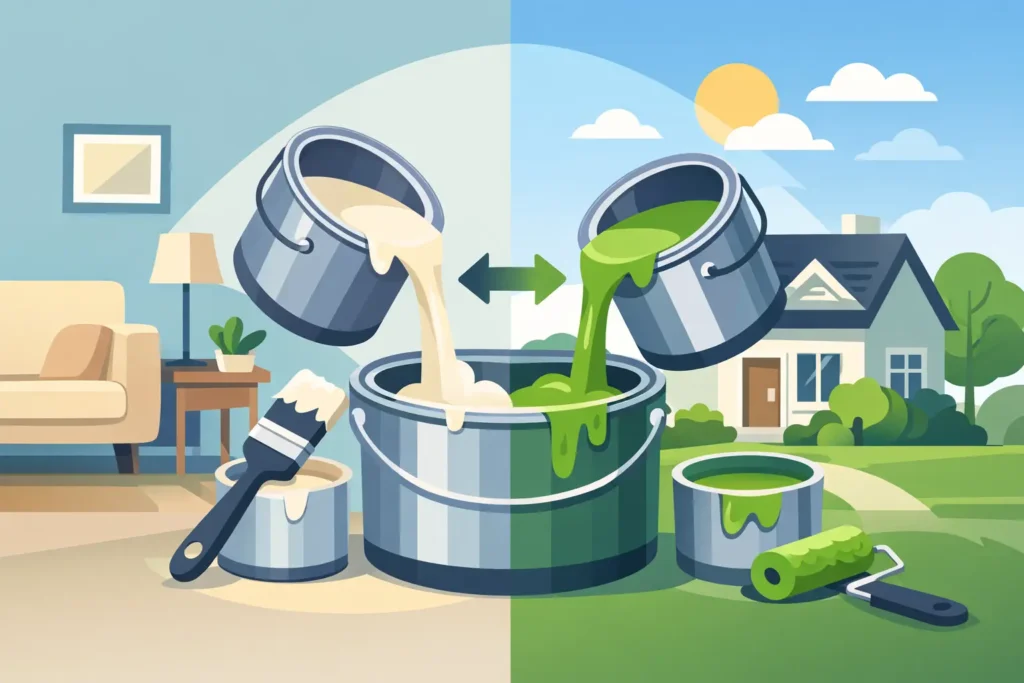
If you have half a bucket of exterior paint in the garage and an interior project waiting inside, the question comes up fast: can you mix interior and exterior paint and still get a good result? The short answer is maybe, but in most cases, it is not the right move if you want a finish that lasts, looks clean, and performs the way it should.
Paint is not just about color. Interior and exterior products are built for different conditions, different surfaces, and different kinds of wear. Mixing them can seem like a practical way to save money or avoid waste, but it often creates new problems that cost more to fix later.
Can You Mix Interior and Exterior Paint at All?
Technically, yes, you can mix them. If both paints are water-based latex products, they will usually blend together without immediately turning into a mess in the bucket. If both are oil-based, they may also combine. But being physically able to mix paint is not the same as getting a finish you can trust.
Interior paint is made for controlled environments. It is designed to look smooth, resist scuffs, and clean up well under normal indoor use. Exterior paint is built to handle sunlight, rain, temperature swings, and moisture. It expands and contracts differently, and it often includes additives meant for outdoor durability.
Once you mix the two, you create a product with unpredictable performance. You may get acceptable color coverage for a low-stakes utility area, or you may end up with poor adhesion, uneven sheen, long cure times, or a finish that breaks down sooner than expected.
Why Interior and Exterior Paint Are Different
The biggest difference is not just where the paint goes. It is how the coating is formulated to survive in that environment.
Interior paint is made for appearance and cleanability
Inside the home, paint needs to hold up to touch, cleaning, and everyday wear. Manufacturers focus on smooth finish quality, stain resistance, and low odor. Many interior paints are also designed with indoor air quality in mind.
Exterior paint is made for weather exposure
Outside, paint has to deal with sun, humidity, rain, wind, and freeze-thaw cycles. That means stronger resistance to fading, mildew, peeling, and cracking. Exterior paint stays more flexible so it can move with the surface as temperatures change.
The additives are not interchangeable
Exterior coatings may contain mildewcides and other additives that are useful outdoors but not ideal for enclosed indoor spaces. Interior paint, on the other hand, usually does not have the same level of weather defense. That is why mixing them can weaken the strengths of both.
What Happens If You Mix Interior and Exterior Paint?
The result depends on the type of paint, the ratio, and where you plan to use it. That said, there are a few common outcomes contractors see.
If you use the mixed paint indoors, the finish may smell stronger, cure more slowly, or have a texture and sheen that feel off compared to standard interior paint. In some cases, the additives in exterior paint can make it a poor choice for enclosed living areas, especially bedrooms, nurseries, and offices.
If you use the mixed paint outdoors, the bigger problem is durability. Interior paint is not built for UV exposure or moisture. Adding it to exterior paint can reduce the weather resistance of the final product. You may not notice an issue on day one, but after one Oklahoma summer or a wet season, fading, chalking, and peeling can show up sooner.
Color consistency can also become a problem. Even if the paints look close in the can, mixing products with different binders, sheens, or brands can create a finish that dries unevenly. That matters if you care about a clean, professional look.
When Mixing Paint Might Be Acceptable
There are a few limited cases where mixing interior and exterior paint may be workable. The key is keeping expectations realistic.
If you are painting a low-priority area like a shed interior, a workshop wall, or a temporary surface, a mixed batch might be fine if the paints are compatible. It can also work for a small test board where final appearance and long-term durability are not critical.
Even then, both paints should be the same base type. Water-based should only be mixed with water-based, and oil-based only with oil-based. They should also be in usable condition, not old, separated beyond recovery, or contaminated.
For finish work inside a home, high-visibility exterior surfaces, trim, cabinets, bathrooms, kitchens, or commercial spaces, it is usually not worth the gamble. Those areas need a coating system you can count on.
When You Should Not Mix Interior and Exterior Paint
There are some situations where the answer is simple: do not do it.
Do not mix paint for occupied interior rooms where air quality matters. Do not mix for exterior siding, trim, doors, or masonry where weather resistance is important. Do not mix if you are matching an existing finish and need consistency. And do not mix paints if you are already dealing with problem surfaces like peeling drywall, patched areas, or moisture damage.
On repair and remodel jobs, the coating is only as good as the surface underneath and the product applied on top. Using a questionable paint blend on a properly prepped wall can still ruin the final result.
Better Alternatives to Mixing Leftover Paint
If your main goal is to avoid waste, there are smarter options than blending interior and exterior products together.
The first option is to save each paint for the right kind of touch-up work. A small amount of interior paint can still be useful for patch repairs, scuffs, or repainting a closet. Exterior leftovers are helpful for trim touch-ups, fence repairs, or outbuilding maintenance.
Another option is to have a paint store color-match what you need in the proper formula. That way, you keep the color you want without compromising performance.
If you are trying to stretch material on a larger project, it is better to buy the right paint and apply it correctly than to save a little upfront and repaint the whole area early. In painting, product selection matters just as much as color choice.
A Practical Rule for Homeowners
A good rule is simple: use interior paint inside and exterior paint outside. That may sound obvious, but it saves a lot of trouble.
Homeowners sometimes assume paint is paint, especially when the colors are similar and the leftover cans look usable. But coatings are a finish system, not just a liquid color. They are engineered for where they go, what they stick to, and what they have to withstand over time.
If you are repainting after drywall repair, remodeling a room, or updating exterior surfaces around your property, using the correct paint gives you a cleaner finish and a more dependable result. That is especially true in Oklahoma, where heat, wind, and seasonal changes can be hard on exterior coatings.
How Pros Handle Paint Compatibility
Professional painters do not just ask whether paint can mix. They ask whether it should, and what the surface needs.
That starts with identifying the substrate, checking existing coatings, looking for moisture issues, and choosing the right primer and finish product for the job. On interior walls, for example, patched drywall often needs specific prep to avoid flashing or dull spots. On exterior surfaces, the wrong paint can fail because the surface moves, gets hot, or holds moisture longer than expected.
At KCS Drywall, that kind of decision-making is part of doing the job right the first time. A clean, durable finish comes from proper prep, the right materials, and careful application, not from trying to force one leftover product to do another product’s job.
The Bottom Line on Mixing Interior and Exterior Paint
So, can you mix interior and exterior paint? Yes, in a technical sense. But for most real projects, it is a shortcut that creates too much uncertainty.
If the area matters, the appearance matters, or the finish needs to last, use the paint made for that environment. It gives you better adhesion, better durability, and fewer surprises after the job is done. When you are investing time and money into your home or property, the right paint is a small decision that makes a big difference.