
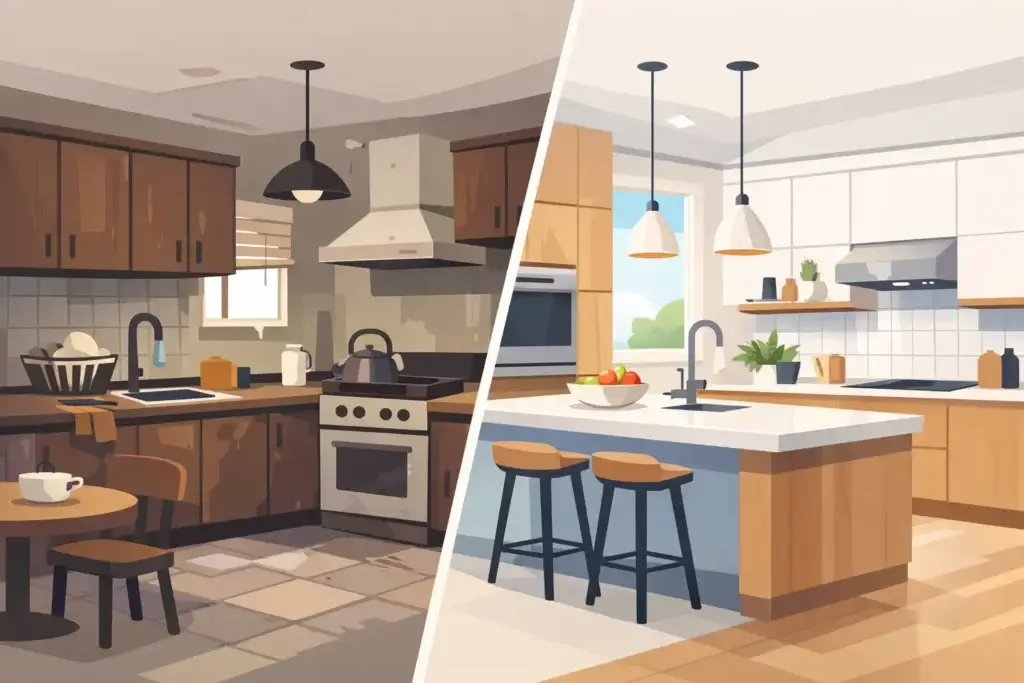
A good kitchen remodel before and after does not start with cabinets or countertops. It starts with the problems you live with every day – poor storage, bad lighting, damaged walls, wasted floor space, and finishes that have simply worn out. When homeowners in Oklahoma talk about wanting a kitchen that feels new, what they usually mean is they want a space that works better, looks cleaner, and holds up to real life.
That is why the most successful remodels are not built around trends alone. They are built around daily use. A kitchen can look dramatically different after a remodel, but the real value comes from how it functions once the work is done.
What makes a kitchen remodel before and after feel dramatic
The biggest transformations usually come from fixing a few core issues at the same time. In older kitchens, the layout may force too much movement between the sink, stove, and refrigerator. Cabinets may not reach the ceiling, leaving dead space and a dusty ledge. Lighting may be centered in the room instead of aimed where people actually prep food. Walls may show years of wear, patchwork repairs, or outdated texture.
When those problems are addressed together, the before and after difference is obvious. The room feels brighter, cleaner, and more open, even if the footprint stays the same. That matters for homeowners who want a major visual improvement without taking on a full addition or structural overhaul.
There is also a practical side to this. A remodel that improves flow, storage, and finish quality can make the kitchen easier to maintain for years. That is especially important in busy family homes where the kitchen handles everything from weeknight dinners to school projects and holiday gatherings.
Before the remodel: know what is actually not working
Many homeowners begin with inspiration photos, but a better starting point is a hard look at the current space. If cabinet doors stick, corners are hard to reach, the backsplash is impossible to clean, or the drywall has cracks from settling or moisture, those issues should shape the remodel plan.
This is also where trade-offs come in. Not every kitchen needs a full gut job. Sometimes keeping the basic layout and upgrading surfaces, lighting, and finishes gives you the best return. In other homes, holding onto the old layout just means carrying the same frustration into a more expensive version of the same room.
A dependable contractor will help separate cosmetic wants from functional needs. That keeps the project focused and helps avoid spending money in the wrong places.
Look beyond cabinets and counters
Homeowners often focus first on visible features, which makes sense. Cabinets, tile, and counters carry most of the visual weight. But the quality of the finished kitchen depends just as much on what is behind and around those materials.
Drywall, framing, texture, paint prep, and finish work all affect the final result. If the walls are not straight, corners are rough, or patching is rushed, even expensive materials can look off. Clean lines and smooth surfaces make the entire kitchen feel more polished.
That is one reason before and after photos can sometimes be misleading. Two kitchens may use similar finishes, but the one with better prep and cleaner execution will always look stronger in person.
The features that usually make the biggest difference
A kitchen remodel does not have to change everything to feel substantial. In many projects, a few upgrades create most of the impact.
Lighting is one of the first. Recessed lighting, under-cabinet lighting, and better fixture placement can make a dark kitchen feel larger and more usable. It is not just about brightness. It is about getting light onto work surfaces where it matters.
Storage is another major change. Taller cabinets, deeper drawers, pantry improvements, and smarter corner solutions can reduce clutter fast. A kitchen that looks clean in the after photo usually stays cleaner because it finally has a place for everything.
Wall and ceiling repairs matter more than people expect. Once old soffits are removed, damaged drywall is repaired, and surfaces are finished properly, the room takes on a cleaner, more updated look before the new decor is even added.
Paint and texture updates can also shift the whole feel of the space. In some kitchens, replacing heavy texture or patching years of wear gives the room a fresher, more modern base. That is especially true when older homes have had multiple small repairs over time.
Kitchen remodel before and after on a realistic budget
Not every homeowner is aiming for a luxury showpiece. Most want a kitchen that looks better, works better, and makes sense for the value of the home. That is where planning matters.
A realistic budget remodel often focuses on keeping plumbing and appliance locations close to where they are. Moving a sink or range can be worth it, but it raises labor costs quickly. If the current layout is mostly functional, you may get better results by investing in stronger cabinets, better wall repair, improved lighting, and durable paint and finishes.
There is also a big difference between what photographs well and what performs well. Open shelving can look clean in a photo, but many homeowners find it harder to maintain. Trendy finishes may look current today but feel dated faster than classic choices. Durable, easy-to-clean materials tend to win over time, especially in high-use kitchens.
This is where local experience helps. In Oklahoma homes, remodel choices need to make sense for the way families actually live, not just for what is popular online.
When a full remodel makes more sense
Sometimes small updates are not enough. If cabinets are failing, drywall has water damage, the layout creates bottlenecks, or the kitchen feels shut off from the rest of the home, a larger remodel may be the better long-term move.
That does not always mean tearing down walls. It may mean replacing old finishes down to the studs in certain areas, correcting framing issues, updating insulation, or rebuilding surfaces so the new kitchen has a solid foundation. These behind-the-scenes improvements do not always show up first in the after photo, but they are often what make the transformation last.
For homeowners planning to stay in the home, that matters. A kitchen should not just look finished on day one. It should still look solid after years of cooking, cleaning, and daily use.
Why workmanship shows in the after photo
A true before and after transformation is not only about design. It is about execution. Tight drywall finishing, clean paint lines, even texture, square openings, smooth transitions, and careful installation all add up to a kitchen that feels professionally done.
This is often where rushed remodels fall short. On the surface, the kitchen may seem updated, but small flaws start to stand out. Uneven seams, poor patching, visible joints, sloppy caulk lines, and rough touch-up work can take away from the investment.
That is why homeowners should pay attention to the trades behind the finished look. Good remodeling work is not loud. It shows up in the details being right.
For a company like KCS Drywall, that standard starts with the surfaces themselves. Straight walls, clean finishes, and dependable workmanship make every other part of the remodel look better.
How to judge your own before and after goals
If you are planning a kitchen remodel, ask a simple question: what do you want the after to feel like?
For some homeowners, the answer is brighter and more open. For others, it is cleaner, easier to maintain, and better organized. If you cook often, workflow may matter more than visual drama. If you entertain, seating and sightlines may be the priority. If the kitchen has visible wear, then repairing the bones of the room may come first.
The best projects balance appearance with daily function. They make the kitchen look updated, but they also remove the annoyances that made the remodel necessary in the first place.
A strong kitchen remodel before and after should do more than create a nice photo. It should make you walk into the room a month later and still notice that it works better, feels better, and finally fits the way you live. That is the kind of change worth building for.