
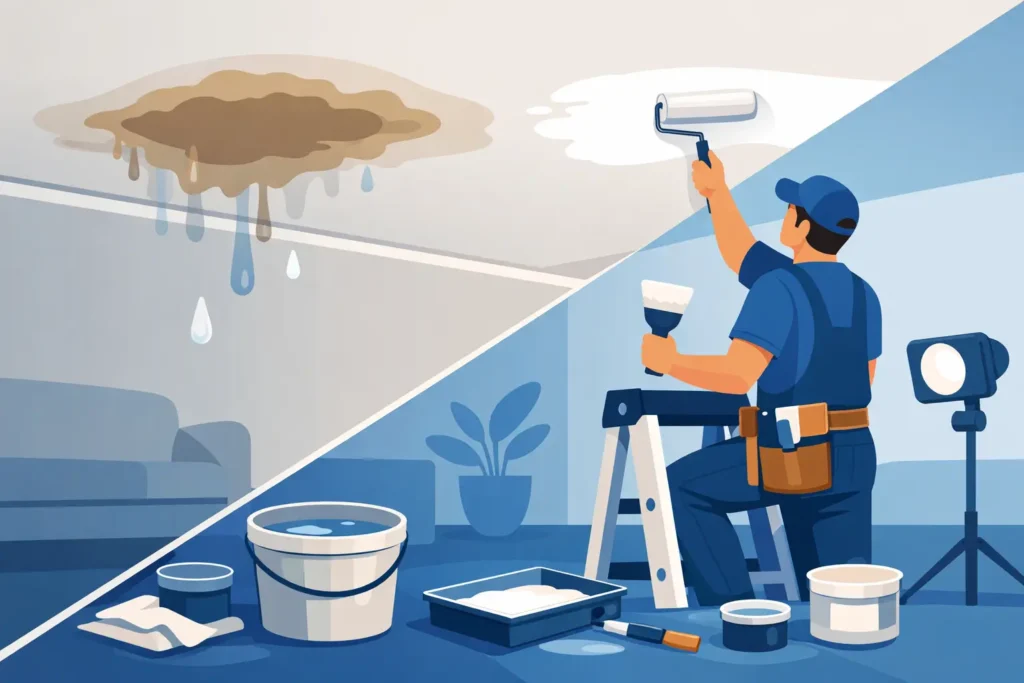
A brown ring above the living room, a yellow spot near a bathroom fan, or a soft patch around a ceiling light can make a well-kept home look neglected fast. Ceiling water stain repair is not just a paint project. The visible stain is often the last sign of a plumbing leak, roof issue, condensation problem, or water damage that needs to be addressed before the finish can be restored.
The good news is that many stained ceilings can be repaired cleanly. The key is taking the right order of operations: find the moisture source, confirm the area is dry and sound, repair damaged drywall if needed, then seal and repaint for an even finish. Skipping the first steps can leave you with a stain that returns through fresh paint or a ceiling that continues to deteriorate behind the surface.
Start Ceiling Water Stain Repair by Stopping the Cause
A ceiling stain is evidence, not the problem itself. Before anyone reaches for primer or paint, identify where the water came from. In Oklahoma homes, common causes include roof leaks after heavy rain or hail, leaking supply lines or drain pipes, overflowing tubs, failed shower waterproofing, HVAC condensation, and attic moisture.
The stain is not always directly below the leak. Water can travel along framing, pipes, or the backside of drywall before it reaches a low point and becomes visible. A stain near an exterior wall may point to roof flashing or a damaged shingle. A stain below a bathroom may come from a toilet seal, shower drain, or plumbing connection. A spot near an air vent may be related to condensation or an HVAC line.
If the ceiling is actively wet, sagging, bubbling, or dripping near electrical fixtures, treat it as an immediate repair issue. Turn off power to the affected circuit if it is safe to do so, keep people away from the area, and have the water source corrected. Waterlogged drywall can become heavy enough to fail, and moisture around wiring should never be ignored.
Check Whether the Drywall Can Be Saved
Once the leak has been repaired, the ceiling needs time to dry completely. This can take a few days or longer depending on how much water entered the cavity, the room temperature, ventilation, and whether insulation above the ceiling became wet. Fans and dehumidifiers can help, but they do not replace proper drying when there has been significant water intrusion.
A small, dry stain on firm drywall may only need surface preparation, stain-blocking primer, and paint. Press lightly around the area. If the drywall feels solid and does not flex, crumble, or show new discoloration, a cosmetic repair may be appropriate.
Replacement is usually the better option when drywall is soft, swollen, sagging, cracked, moldy, or badly stained across a wide area. Damaged ceiling drywall may look acceptable after paint, but paint cannot restore its strength. Cutting out compromised material and installing new drywall creates a safer, cleaner repair that will hold up over time.
Insulation should also be checked when water came from above. Wet insulation loses performance and can hold moisture against framing and drywall. If it is saturated or shows mold growth, it may need to be removed and replaced as part of the repair.
How a Proper Ceiling Repair Is Completed
The repair method depends on the condition of the ceiling. For a minor stain with no damage, the surface is cleaned, allowed to dry, and sealed with a quality stain-blocking primer. Ordinary wall primer often is not enough for water marks. Water stains contain tannins and mineral residue that can bleed through standard paint, even after several coats.
For a damaged section, the process is more involved. The affected drywall is removed back to solid material, new backing is installed where necessary, and a replacement piece is fitted securely. The seams are taped, coated with joint compound, sanded smooth, and matched to the surrounding texture before priming and painting.
Texture matching matters more on ceilings than many homeowners expect. A patch may be structurally sound but still stand out under overhead lighting if its orange peel, knockdown, smooth finish, or popcorn texture does not match the rest of the room. This is where experienced drywall finishing makes a visible difference.
After the repaired area is primed, the ceiling is painted with a finish that matches the existing sheen. Flat ceiling paint is common because it helps hide small surface variations. Still, a spot repair can sometimes flash or look different from the surrounding ceiling, especially if the existing paint has aged or collected dust. Painting the full ceiling often provides the most consistent result.
When Cleaning and Paint Are Enough
Not every stain requires drywall replacement. If the stain is small, the leak was brief, the drywall remains firm, and there is no odor or mold concern, a simpler repair may be enough. Clean the area gently to remove surface residue, let it dry thoroughly, apply stain-blocking primer, and repaint.
This approach works best for old stains caused by a leak that was repaired long ago. It is less reliable when the source is uncertain. If a stain changes color, grows in size, or returns after painting, moisture is still present somewhere. Repainting again will only delay the repair you actually need.
Be cautious with bleach or harsh cleaners. They may lighten a stain temporarily, but they do not stop water damage or remove the need for primer. On painted drywall, aggressive scrubbing can also damage the paper facing and create a rough surface that is harder to finish cleanly.
Watch for Mold and Hidden Moisture
A water stain does not automatically mean mold, but it should prompt a closer look. Musty odors, dark speckling, recurring discoloration, or damp insulation are all reasons to investigate further. Mold can develop when materials remain wet for an extended period, especially in bathrooms, attics, laundry rooms, and areas with poor ventilation.
Small surface issues can sometimes be addressed during the drywall repair process after the moisture source has been eliminated. Larger areas, widespread growth, or contamination inside a ceiling cavity may require specialized remediation before new materials are installed. The priority is always to correct the moisture problem first. No repair is durable if water is still entering the structure.
Why Professional Ceiling Water Stain Repair Pays Off
Ceiling work is more demanding than a simple wall patch. It requires overhead sanding, careful containment of dust, stable access equipment, and a finish that blends across a broad, highly visible surface. There is also a practical judgment call involved: determine whether the drywall is dry enough to preserve or whether replacement is the wiser investment.
A professional repair crew can assess the affected area, remove damaged drywall without making the opening larger than necessary, and restore tape, texture, primer, and paint with a clean finish. For property owners, that means less guesswork and less risk of having to redo the job after a stain reappears.
KCS Drywall provides dependable drywall repair and finishing for homeowners and property owners throughout the Oklahoma City metro. Clear communication, clean jobsites, and careful texture matching matter when a ceiling repair is taking place in the middle of your home or business.
Avoid the Repairs That Cause Repeat Problems
The most common mistake is painting over a fresh or unexplained stain. The second is using regular paint without a stain-blocking primer. Both can leave a yellow or brown shadow visible within days or weeks.
Another mistake is patching only what can be seen from below. If drywall is soft around the stain, the damaged area may extend farther than the discolored edge. Removing material until the remaining ceiling is firm and dry creates a better base for new drywall and reduces the chance of a weak patch.
Finally, do not rush the drying process. A ceiling can feel dry on the surface while moisture remains behind it. Giving the area time to dry, addressing the original cause, and using the correct finishing materials is what turns a temporary cover-up into a repair that lasts.
A repaired ceiling should disappear into the room, not keep reminding you where the problem started. Once the leak is solved, a careful drywall and paint repair can restore the clean, finished appearance your property deserves.
Pingback: Drywall Moisture Guide for Oklahoma Homes - KCS Drywall Company | Oklahoma’s Trusted Drywall & Remodeling Experts