
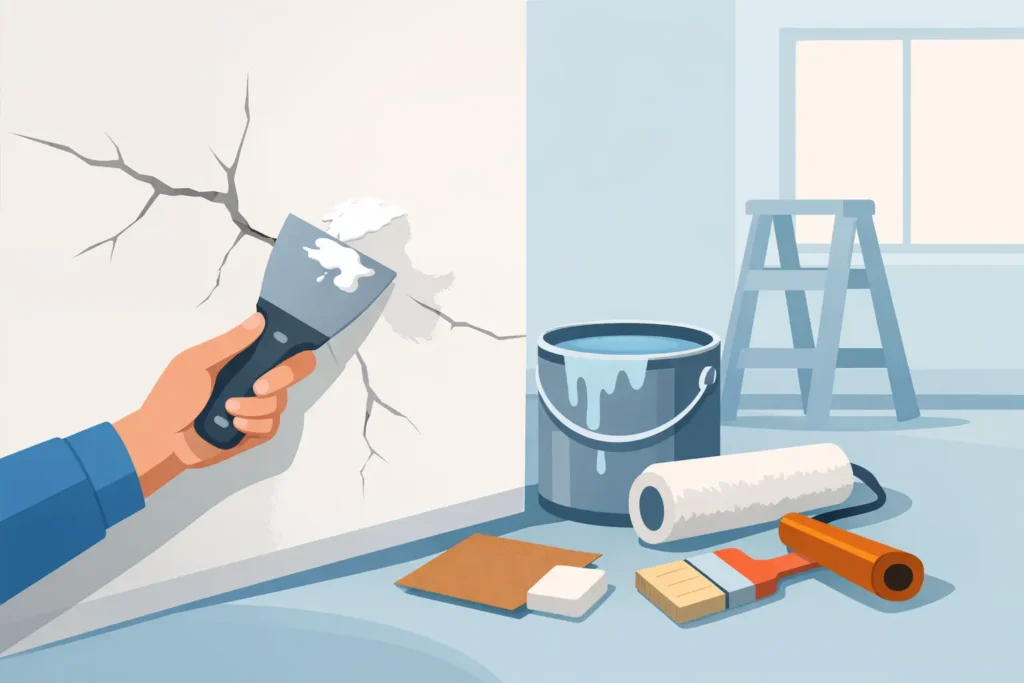
A fresh coat of paint can make a room feel new, but it will not make a drywall crack disappear for long. Can cracked drywall be painted? Technically, yes. Practically, paint should come after the cause of the crack is understood and the damaged area is repaired. Otherwise, the crack often shows through the new finish or opens again within months.
For Oklahoma homeowners, small drywall cracks are common. Homes expand and settle, framing moves with seasonal temperature changes, and doors opening and closing can create minor movement around corners and seams. Most cracks are repairable, but the right approach depends on the crack’s size, location, and whether it is still moving.
Can Cracked Drywall Be Painted Without Repair?
Painting directly over a crack is rarely the right long-term fix. Standard wall paint is not designed to bridge an open crack. Even if the crack seems tiny, paint can sink into it, leave a visible line, or split as the wall shifts.
There are a few exceptions. A very faint surface line in old paint, sometimes called a paint crack or crazing, may improve with proper surface preparation and a high-quality primer. But if the crack reaches the drywall paper, follows a joint, appears at a corner, or has any width to it, it needs repair before painting.
Caulking a narrow crack can be useful in certain areas, such as where trim meets a wall. It is not usually the best repair for a crack across the middle of a drywall wall or ceiling. Caulk can leave a different texture, attract dirt over time, and fail when applied to moving joints. A proper drywall repair uses joint compound and drywall tape where needed to restore a smooth, stable surface.
Start by Looking for the Cause
Before reaching for a paintbrush, take a close look at the crack. A hairline crack that has not changed in years is different from a wide crack that suddenly appeared after a storm, plumbing leak, or foundation concern.
Small vertical or diagonal cracks near doors, windows, and corners are often caused by normal settling or minor framing movement. Cracks along a straight drywall seam may mean the original tape has loosened or the joint was not properly finished. Ceiling cracks can result from truss movement, loose drywall, or moisture damage.
Pay closer attention when a crack is wider than about 1/8 inch, continues to grow, appears with sagging drywall, or is accompanied by sticking doors, uneven floors, or gaps around windows. Those signs do not automatically mean there is a serious structural issue, but they do call for a professional evaluation before cosmetic work begins.
Moisture is another issue that should never be painted over. Brown staining, soft drywall, bubbling paint, or a musty odor can point to a roof, plumbing, or condensation problem. The source of water must be corrected first. Wet or weakened drywall may need replacement rather than a simple patch.
How to Repair a Typical Drywall Crack
For a stable, minor crack, the repair process is straightforward, but the finish work matters. The goal is not simply to fill the line. The goal is to reinforce the area so it blends into the wall and holds up after painting.
First, lightly open and clean the crack with a utility knife or drywall tool. This removes loose compound and creates enough space for fresh material to bond. Avoid aggressively cutting into the wall or enlarging damage that does not need to be enlarged.
Next, apply joint compound. For cracks that follow a seam or are wider than a hairline, embed paper tape or fiberglass mesh tape in the first coat. Tape is the reinforcement that helps prevent the repaired seam from reopening. Skipping it may save time today, but it often leads to the same crack returning through the paint.
After the first coat dries, apply one or two wider, thin coats of compound. Each coat should extend farther beyond the repair than the last. This feathering process prevents a raised ridge from being visible under paint, especially when light from a window or overhead fixture hits the wall at an angle.
Once the final coat is completely dry, sand it carefully until it feels smooth and level with the surrounding wall. Wipe away dust before priming. Rushing this stage is one of the most common reasons a repaired crack remains noticeable after painting.
Prime Before You Paint
Joint compound is more porous than finished drywall, so it absorbs paint differently. Applying a drywall primer over the repaired area helps create an even surface and reduces flashing, which is the patchy difference in sheen that can appear after painting.
Use a quality interior primer, allow it to dry as directed, and inspect the wall in bright side lighting. If the repair is still visible, apply another thin coat of compound, sand, and prime again. It is much easier to correct a flaw before the finish paint goes on.
Then apply paint to the repaired area and, when possible, repaint the full wall from corner to corner. Touching up only the patch may work with newer flat paint, but color fade, slight sheen differences, and roller texture can make spot painting obvious. Full-wall painting produces the cleanest result.
Choose the Right Paint for the Room
The best paint depends on the room and the existing finish. Flat or matte paint hides minor surface irregularities well and is often used on ceilings and low-traffic walls. Eggshell and satin finishes are easier to clean, making them common choices for living areas, hallways, kitchens, and bathrooms. Their added sheen also makes poor drywall repairs more noticeable.
For bathrooms, laundry rooms, and other humid spaces, choose a quality moisture-resistant interior paint after confirming there is no active leak or ventilation issue. Paint can help protect a properly prepared wall, but it cannot repair water-damaged drywall behind the surface.
If you are matching an existing wall, check both the color and the sheen. A perfect color match in the wrong sheen will still stand out. Keep in mind that paint colors can look different as they age, particularly in rooms with strong sunlight.
When a Professional Repair Is the Better Choice
A small, stable crack can be a manageable do-it-yourself project for someone comfortable with patching and sanding. The trade-off is time and finish quality. Drywall work is unforgiving under good lighting, and a repair that looks fine at night may show every edge in daylight.
Professional help is often worthwhile for recurring cracks, ceiling cracks, long seam failures, textured walls, water damage, or repairs in highly visible rooms. Matching orange peel, knockdown, or other textures takes experience, as does diagnosing why a crack keeps returning. Commercial properties may also need repairs completed around operating hours, with clean containment and a consistent finish across larger areas.
KCS Drywall helps homeowners and property owners throughout the Oklahoma City metro address the repair behind the paint problem, not just cover the visible line. A properly repaired, primed, and painted wall should look clean from across the room and up close.
A Better Finish Starts Before the Paint Can Opens
Painting is the final step, not the repair itself. If a drywall crack is stable, dry, and properly reinforced, paint can give the wall a durable, finished appearance. If it is widening, staining, sagging, or returning after previous repairs, pause before painting and have the underlying issue checked.
Taking that extra step protects the time and money you put into repainting your space. It also gives you a wall that stays smooth and presentable long after the paint has dried.