
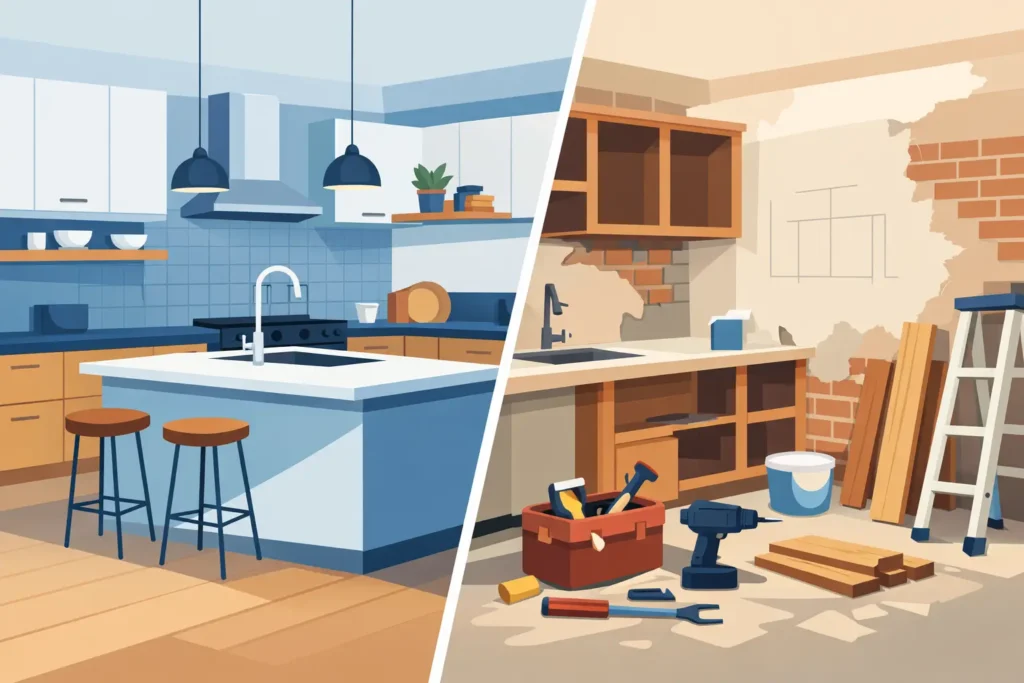
A kitchen that feels cramped, dated, or difficult to use can make every meal and gathering more frustrating than it needs to be. But before choosing finishes or requesting estimates, homeowners should understand the difference between a kitchen remodel versus renovation. The terms are often used interchangeably, yet they can describe very different levels of work, cost, and disruption.
For Oklahoma homeowners, the right choice usually comes down to one question: Does the kitchen need to work better, or does it simply need to look better? A well-planned project starts with an honest answer.
What Is a Kitchen Renovation?
A kitchen renovation updates or restores the existing space without significantly changing its layout, structure, or core function. The room remains a kitchen in essentially the same arrangement, but worn or outdated elements are repaired, replaced, or refinished.
A renovation may include repainting walls and cabinets, replacing flooring, installing new countertops, updating the backsplash, changing light fixtures, or replacing older appliances. If cabinets are in good condition, refinishing or repainting them can make a major visual difference without the cost of full replacement.
Renovation is often the better path when the kitchen layout already works. Maybe the sink, range, refrigerator, and storage are positioned well, but the finishes are tired. Maybe drywall has cracks, water stains, holes, or an outdated texture that makes the entire room feel neglected. Correcting those visible issues and updating surfaces can bring the space back to life.
The biggest benefit is efficiency. Because the footprint stays largely intact, renovations usually require fewer trade changes, less demolition, and a shorter project timeline. That can help control costs while still delivering a noticeable improvement in appearance and comfort.
What Is a Kitchen Remodel?
A kitchen remodel changes more than the finishes. It improves how the room functions, often by changing the layout, building new features, or modifying major systems.
For example, a remodel may involve removing a wall to open the kitchen to the living area, relocating plumbing for a new sink location, adding an island, expanding cabinet storage, moving electrical outlets, or installing new framing and drywall. It may also include replacing cabinets, updating lighting plans, adding a pantry, or redesigning the room to improve traffic flow.
A remodel is the right fit when the existing kitchen creates daily problems. Common signs include limited counter space, poor storage, narrow walkways, inadequate lighting, damaged cabinetry, or a layout that makes it hard for more than one person to cook at a time.
Because remodeling can involve demolition, framing, electrical, plumbing, drywall, painting, and finish work, it requires more planning and coordination than a surface-level update. The result, however, is a kitchen designed around the way your household actually lives.
Kitchen Remodel Versus Renovation: The Key Differences
The most practical difference between a kitchen remodel versus renovation is scope. A renovation refreshes what is already there. A remodel rethinks the space to solve functional problems.
Budget is another major factor. Renovations can range widely depending on the materials selected, but they generally cost less because they avoid substantial layout changes. Keeping plumbing and appliances in their original locations can reduce labor, permits, and unexpected complications.
A remodel often carries a larger investment because it may involve structural work and multiple trades. Moving a sink, range, or refrigerator can require plumbing and electrical changes. Taking down a wall may require new framing, drywall repair, texture matching, painting, and possibly structural review. These details matter because clean finish work is what makes a new kitchen look complete rather than pieced together.
Timeline is also different. A simple renovation may be completed with less interruption, especially when the project does not require major demolition. A full remodel can take longer due to design decisions, material lead times, inspections, and the sequence of construction work.
Neither option is automatically better. The right one is the project that fixes the problems you have without paying for changes you do not need.
When a Renovation Makes More Sense
Renovation is a smart choice when your kitchen is structurally sound and reasonably functional, but its appearance no longer matches your home or your preferences. Homeowners often choose this route before selling a property, after purchasing an older home, or when they want a meaningful update on a more controlled budget.
Consider a renovation if the cabinet boxes are solid, the current layout provides enough workspace, and plumbing and electrical locations meet your needs. New paint, repaired drywall, updated cabinet hardware, modern lighting, and durable flooring can have a strong impact without turning the project into a full construction zone.
It is also a practical option for rental properties and commercial break rooms where durability, clean finishes, and efficient scheduling matter most. In these situations, replacing damaged materials and modernizing the look may provide a better return than a complete redesign.
Still, it is worth looking beyond the surface. Painting over recurring water damage, covering poor drywall work, or installing new finishes around failing cabinets only delays a larger repair. A dependable contractor should identify these concerns before the work begins.
When a Remodel Is Worth the Investment
A remodel is usually worth considering when the kitchen itself is holding the home back. If you constantly run out of storage, struggle with a cramped layout, or avoid using the room for entertaining, replacing finishes alone may not solve the real issue.
Older Oklahoma homes can present specific challenges, including closed-off floor plans, limited lighting, undersized kitchens, and years of previous repairs hidden behind walls. Remodeling gives homeowners the opportunity to address those concerns while improving the room’s appearance.
A thoughtful remodel can create room for a larger refrigerator, more usable cabinets, better task lighting, a functional island, or wider pathways for family members and guests. It can also correct poorly repaired drywall, uneven ceilings, outdated wall textures, and damaged framing that become more visible once new cabinetry and finishes are installed.
The key is to prioritize function before appearance. A beautiful backsplash will not make up for a kitchen with no prep space. New cabinets will not solve poor lighting if the electrical plan remains inadequate. Build the project around how the room needs to perform, then select finishes that fit the budget and style of the home.
Plan the Scope Before Choosing Materials
Many kitchen projects become more expensive because homeowners begin selecting countertops, tile, and paint before deciding the actual scope of work. That can lead to change orders when a contractor discovers damaged drywall, old wiring, moisture issues, or framing problems after demolition begins.
Start by making a clear list of what does not work in the current kitchen. Be specific. Is storage the problem? Is the room too dark? Are cabinets damaged? Do you need more seating or better access to the dining area? This list helps separate cosmetic wants from functional needs.
Next, decide which existing elements are worth keeping. Keeping appliances in place may save money. Retaining a workable layout may make renovation the stronger value. On the other hand, if the kitchen needs major drywall repair, new framing, cabinet replacement, and electrical changes, a remodel may be more practical than completing a series of smaller updates over several years.
It also helps to reserve part of the budget for conditions behind walls or beneath flooring. Older homes do not always reveal their full story until work begins. Planning for reasonable surprises protects the project and reduces stress.
Choose a Contractor Who Can Handle the Details
Kitchen work depends on more than attractive materials. Walls need to be straight, drywall seams properly finished, corners clean, textures consistent, and paint applied with care. When demolition and construction are involved, the quality of the work behind the cabinets matters just as much as what is visible after installation.
Look for a contractor who communicates clearly about the project scope, scheduling, prep work, and cleanup. You should know what will happen first, how your home will be protected, and who is responsible for each stage of the job. Reliable crews arrive prepared, maintain an organized jobsite, and address questions before they become problems.
For homeowners in the Oklahoma City metro, KCS Drywall brings drywall, painting, framing, and remodeling experience together to help projects move from damaged or outdated to clean and finished. The goal is not simply to change a kitchen. It is to complete the work with craftsmanship that holds up.
A kitchen should make daily life easier, whether that means a well-executed renovation that refreshes the room or a full remodel that gives it a better purpose. Start with what your home truly needs, and build from there.