
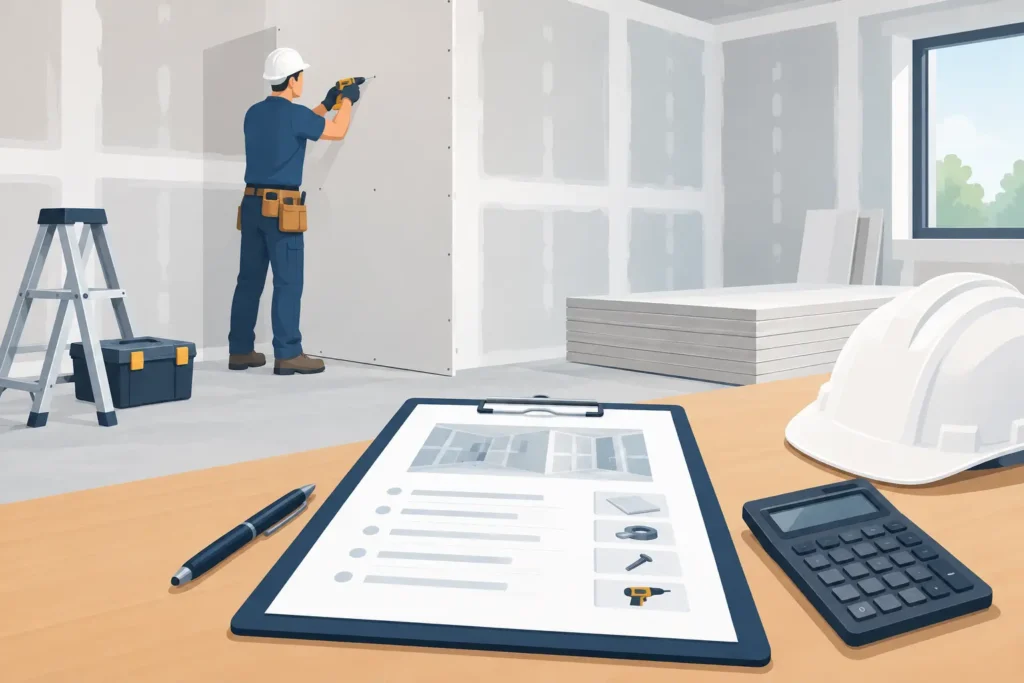
A room can look straightforward until the drywall comes down or new framing goes up. Then details such as ceiling height, damaged studs, existing texture, access, and finish expectations can change the scope quickly. Clear drywall installation estimates give homeowners, property managers, and builders a practical picture of what the work requires before materials arrive and crews get started.
A good estimate is not simply a price at the bottom of a page. It is a written plan for the work, the materials, the finish level, and the conditions that could affect the final cost. When the scope is clear from the start, it is easier to compare contractors fairly and move forward with confidence.
What a Drywall Installation Estimate Should Cover
Every project is different, but a professional estimate should explain what is included well enough that you are not left guessing. For a small repair, that may be a brief description of the damaged area, the patch method, and the expected texture match. For a new home addition, office build-out, or remodel, the scope should be more detailed.
The estimate should identify the spaces or surfaces being addressed, whether the work includes walls, ceilings, soffits, bulkheads, or specialty assemblies. It should also state whether the contractor is providing materials, hanging drywall, taping, floating joints, applying texture, sanding, priming, or painting. These steps are often grouped together in conversation, but they are separate stages of the job.
For example, installing drywall board is not the same as delivering a paint-ready wall. A wall may need multiple coats of joint compound, sanding between coats, corner bead, caulking at transitions, and a specific texture before it is ready for primer. If the estimate says only “drywall work,” ask for clarification on the finish that is included.
The Details That Affect Your Price
Square footage matters, but it is not the only factor in a drywall estimate. Two rooms with the same floor area can require very different amounts of labor and material. A clean, open room with standard-height walls is generally more efficient than a room with tall ceilings, stairwells, many windows, tight corners, or extensive framing changes.
Drywall type and thickness
Standard drywall is common for many interior walls and ceilings, but it is not right for every location. Bathrooms, laundry rooms, garages, utility areas, and commercial spaces may require moisture-resistant, fire-rated, impact-resistant, or sound-control products. Thicker board can also be needed for certain ceilings, assemblies, or code requirements.
Specialty materials cost more than standard panels, and they may take additional care to install correctly. The estimate should identify the board type when it is relevant to the job. If a contractor recommends a different material than you expected, ask why. The answer should connect to the room’s use, building requirements, or long-term durability.
Framing condition and preparation
Drywall performs best when the framing behind it is straight, secure, and properly spaced. In remodels and repairs, the existing framing is not always ready for new board. Water damage, settling, previous repairs, bowed studs, missing blocking, and loose fasteners can all need attention before installation.
A thorough estimate may include framing repair or note that hidden conditions could require additional work. That is not a red flag by itself. It is an honest recognition that some problems are only visible after old finishes are removed. What matters is how the contractor communicates the issue, explains the options, and gets approval before moving beyond the original scope.
Finish level and texture
The final finish has a major effect on labor. A basic textured wall can hide minor variations that would stand out under smooth paint. Smooth walls and ceilings, especially those receiving satin or semi-gloss paint, require more precise taping, floating, sanding, and inspection.
Texture matching is another factor in repair work. Orange peel, knockdown, skip trowel, and hand-applied textures all require different techniques. An exact match can be difficult when the original texture has been painted several times, aged, or applied inconsistently. A reliable estimate should set realistic expectations about blending the repaired area into the surrounding surface.
Access, protection, and cleanup
The working conditions on site influence the price and schedule. Moving drywall through a narrow hallway, carrying sheets upstairs, working around occupied offices, or protecting furnished rooms takes more time than working in an empty new-build space.
Ask how floors, furniture, cabinets, and nearby finishes will be protected. The estimate should also address debris removal and jobsite cleanup. Clean work practices are part of professional drywall service, not an optional extra. Fine drywall dust travels easily, so proper containment and cleanup matter in occupied homes and commercial properties.
How to Compare Drywall Installation Estimates Fairly
The lowest number is not always the best value, especially if it leaves out finishing, materials, protection, or cleanup. When comparing estimates, line up the scope before comparing the totals. One contractor may include tape, texture, and primer while another is pricing hang-only work. Those are not equivalent proposals.
Look for specifics about materials, labor, finish expectations, and exclusions. If one estimate is much lower, it is reasonable to ask what is not included. A professional contractor should welcome that conversation and provide a direct answer.
Pay attention to how the estimate handles changes. Remodeling often reveals conditions that cannot be fully evaluated until work begins. The goal is not to find a contractor who promises there will never be a change. The goal is to work with one who documents changes clearly, communicates promptly, and does not proceed without your approval.
For commercial clients and builders, scheduling can be as important as price. Ask whether the estimate accounts for coordination with electrical, plumbing, insulation, painting, and other trades. Drywall crews need the work area ready before hanging begins, and finish work needs enough drying time between coats. A realistic schedule protects quality and helps keep the broader project on track.
Questions Worth Asking Before You Approve
Before signing off, confirm who will be responsible for each stage of the work. Ask whether the price includes material delivery, demolition or removal of old drywall, framing adjustments, corner bead, tape and mud, texture, sanding, debris haul-off, primer, and paint. Not every project needs every service, but each item should be discussed.
It is also wise to ask about the planned start date, expected duration, payment schedule, and how additional work will be approved. If you are repairing damage from a leak, make sure the source of moisture has been corrected before new drywall is installed. Replacing the surface without fixing the cause can lead to another repair later.
For occupied homes, discuss daily access and how the crew will protect your space. For rental properties and commercial buildings, clarify whether work will occur during business hours, after hours, or in phases to limit disruption. A dependable contractor will build those practical needs into the plan rather than treating them as an afterthought.
When an On-Site Visit Matters Most
Photos can help with an initial conversation, particularly for a small hole or isolated crack. But an on-site visit usually produces a more accurate estimate for larger repairs, remodels, additions, ceiling work, or projects with water damage. It allows the contractor to measure correctly, inspect the framing and surrounding finishes, evaluate access, and understand the result you want.
At KCS Drywall, clear communication begins before the first sheet is hung. The right estimate should make the next steps easy to understand, with a defined scope, straightforward expectations, and workmanship that supports a clean, durable finish.
A drywall project should not leave you wondering what happens next or why the price changed. Take the time to review the scope, ask direct questions, and choose a contractor who treats your property, schedule, and finished walls with the care they deserve.